From the four humours to fMRI

The excellent Cognition and Culture blog found a fascinating lecture by the energetic medical historian Noga Arikha about the four humours theory of medicine and how its legacy influences our modern day ideas about the mind and brain.

The four humours theory suggested that the function of the mind and body was determined by the balance of four fluids in the body: black bile, yellow bile, phlegm, and blood.

While specific diseases were explained in this way, so were character traits and, in their excess, mental illness.

Indeed, some of the old names for these fluids still survive as descriptions of character traits (for example, we can still describe someone as phlegmatic or sanguine) even if we’re unaware of their origins.

However, Arikha outlines that its possible to trace the thinking behind humoural theories right through history into our current ideas about mind and brain in the age of brain scans and cognitive neuroscience.

The talk is based on her book, called Passions and Tempers: A History of the Humours, and the video is a bit shaky at times but worth sticking with as it’s an engrossing lecture.

Link to video of talk by Noga Arikha.

Phantom portraits

I’ve just found a gallery of one of my favourite art science projects of all time which used digital photo manipulation to illustrate the phantom limbs of post-amputation patients.

The images are incredibly striking, because they vividly illustrate that phantom limbs are often only phantom part-limbs. Sections can be missing, even in the middle, so a phantom hand can be felt even if a phantom elbow cannot.

Or perhaps a phantom hand can feel as if it protrudes directly from the point of amputation at the shoulder, or perhaps it feels distorted, or perhaps has no intervening phantom arm, or perhaps it is stuck in one position, and so on.

The project was the brainchild of neuropsychologist Peter Halligan, neurologist John Kew and photographer Alexa Wright. Actually, Peter is an ex-boss and I spent several years of my PhD with a huge picture of RD (above) in my office and it never failed to amaze me.

Unfortunately, the pictures in the online gallery are a viewable but a little small, although there are some larger versions if you scroll down in this essay.

Link to After Images online gallery.

Reverse psychology in a pill: anti-placebo

Photo by Flick user ArneCoomans. Click for sourceYou may be aware of the placebo effect, where an inert pill has an effect because of what the patient thinks it does. You may even be aware of the nocebo effect, where an inert pill causes ‘side-effects’. But a fascinating 1970 study reported evidence for the anti-placebo effect, where an inert pill has the opposite effect of what it is expected to do.

Storms and Nisbett were two psychologists interested in attribution, the process of how we explain the causes of events and the impact this has on how we feel.

We know that attributions have a big impact on our level of physical and emotional health. For example, your heart is racing when you’re about to give a talk. If you attribute it to a weak heart, you may start worrying whether you might pass out and become incredibly stressed, but if you attribute it to the situation, you might just think its a natural reaction for the event and feel primed and ready.

In anxiety disorders, we know that people often attribute natural bodily reactions to frightening causes, which makes people feel more on edge, and hence, their body kicks into an even higher gear, and so on. The cycle continues, to fever pitch. In essence, it’s anxiety-fuelled anxiety.

Insomnia has an element of this. People can be worried that they’re not sleeping, and so get anxious thoughts when they go to bed, and so feel on edge, ad nocturnum, until the early hours.

So rather than getting people to fill in questionnaires about causes of insomnia, a typical method in attribution research, Storms and Nisbett wanted to test these ideas in the real world.

They recruited a group of patients with insomnia and told them they were doing a four-night study on dreaming and asked them to rate their difficulty in falling asleep each night.

The first two nights were exactly that, a sleeping and rating exercise, but on the third night the participants were given pills. One group was told that the pill would make them feel more aroused, like a shot of caffeine, while the others were told that the pill would make them feel more relaxed, like a sleeping pill.

On the fourth night, the group were given the ‘opposite’ pill, but in reality, all the pills were identical and completely inert, containing nothing more than sugar.

Now here’s the thing. The insomnia patients taking the ‘relaxation’ pills slept really badly, and the patients taking the ‘arousal’ pills slept much better.

What seemed to be happening was that patients taking ‘uppers’, normally trapped in a cycle of anxious self-monitoring, could attribute any arousal they had to the pill. Any sign of feeling wired wasn’t them, it was the pill, so they could relax and fell asleep easily.

In contrast, those who had taken the ‘downers’ thought that any arousal must be their insomnia causing them problems, and it must be really bad, because it was getting to them despite the supposed sleeping pill they’d taken. In other words, they were freaking out because they couldn’t sleep despite the ‘medication’.

It turns out that this simple experiment wasn’t easily replicated but the problem was solved in 1983 when it was realised that this effect only held for people with insomnia who obsessively self-monitored.

But what these experiments tell us is that the effects of medication, the symptoms of illness and even the process of ‘being sick’ is partly dependent on our own ideas about what’s happening.

Link to PubMed entry for original Storms and Nisbet study.
Link to 1983 replication.

Taking pride in your posture

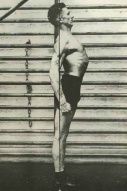
A simple but elegant study just published in the European Journal of Social Psychology found that getting people to generate words about pride caused them to unknowingly raise their posture, while asking them to generate words about disappointment led to an involuntary slouch.

The research team, led by psychologist Suzanne Oosterwijk, asked people to list words related to ‘pride’ and ‘disappointment’, and some emotionally neutral control categories of ‘kitchen’ and ‘bathroom’, while being secretly filmed.

‘Pride’ caused a slight increase in posture height, while ‘disappointment’ caused the participants to markedly slouch.

The researchers suggest that the activation of the concept of disappointment led to a spontaneous bodily simulation of the feeling. They link this to the idea of embodied cognition that suggests that our mental life is fundamentally connected to acting on the world.

As we discussed last year, research has suggested that bodily expressions of pride and shame are the same across cultures, indicating that this connection between action and emotion may be a core part of our emotional make-up.

Link to abstract of study (via the BPSRD).

The medieval senses and the evil eye

The latest edition of neurology journal Brain has an extended review of three books about the history of the senses which gives a fascinating insight into how the meaning of our sensory experiences has changed over the centuries.

This paragraph is particularly interesting as it relates medieval theories of perception to the superstition of the ‘evil eye‘ where you could curse someone by looking at them.

While we now think of vision as a system for interpreting passively received light, the ‘evil eye’ makes much more sense when you realize that medieval people thought that light rays could fundamentally influence what they touched and even that the eyes actively sent out rays that could influence the objects within sight.

In 1492, learned debates also influenced how the world was perceived. As medical historians Nancy Siraisi and James T. McIlwain, also a neuroscientist, point out, medieval scholars would have located sensory perception in the brain (Siraisi, 1990; McIlwain, 2006). However, they would have perceived the five senses as active entities conveying information about the outside world to the internal senses of common sense, imagination, judgement, memory and fantasy (the ability to visualize).

Scholars differed considerably over how this worked in practice: for example, were rays emitted from the eyes towards the viewed object or was it the other way round? Either theory allowed for these rays to influence both viewer and object, thus explaining the widespread concept of the evil eye, or a belief still current in the 18th century that what a mother saw affected her foetus. The brain, however, was not the only sensitive organ of the body.

The heart was believed to be the centre of the animal soul, and thus closely associated with more carnal senses such as touch. The brain, the centre of the rational soul, was more closely associated with sight; the eyes often viewed as the ‘windows of the soul’. Sight, therefore, was given pre-eminence in the pre-modern world as it is today, but often for spiritual reasons due to the inter-dependence of religion and rational knowledge (scientia).

Thus even if the brain functioned in the past very much as it does today, the emotional and moral meaning of sensory experience differed dramatically.

The whole review is worth reading in full, not just because of the insights into medieval psychology, but also because these new books introduce ‘sensory history’ – a history of ideas about how we experienced the world through our bodies.

Link to review.
Link to DOI entry for same.

Predicting the determined self-castrator

The Journal of Sexual Medicine has a surprising study looking at psychological attributes that predict which castration enthusiasts who will actually go on to remove their own testicles, in contrast to those who just fantasise about it.

This is the abstract from the scientific paper:

A passion for castration: characterizing men who are fascinated with castration, but have not been castrated

Roberts LF, Brett MA, Johnson TW, Wassersug RJ.

J Sex Med. 2008 Jul;5(7):1669-80.

Introduction. A number of men have extreme castration ideations. Many only fantasize about castration; others actualize their fantasies.

Aims. We wish to identify factors that distinguish those who merely fantasize about being castrated from those who are at the greatest risk of genital mutilation.

Methods. Seven hundred thirty-one individuals, who were not castrated, responded to a survey posted on http://www.eunuch.org. We compared the responses of these “wannabes” to those of 92 men who were voluntarily castrated and responded to a companion survey.

Main Outcome Measures. Respondents answered the questionnaire items relating to demographics, origin of interest in castration, and ambition toward eunuchdom.

Results. Two categories of wannabes emerged. A large proportion (‚àº40%) of wannabes’ interest in castration was singularly of a fetishistic nature, and these men appeared to be at a relatively low risk of irreversible genital mutilation. Approximately 20% of the men, however, appeared to be at great risk of genital mutilation. They showed a greater desire to reduce libido, change their genital appearance, transition out of male, and prevent sexually offensive behavior. Nineteen percent of all wannabes have attempted self-castration, yet only 10% have sought medical assistance.

Conclusions. We identify several motivating factors for extreme castration ideations and provide a classification for reasons why some males desire orchiectomies. Castration ideations fall under several categories of the Diagnostic and Statistical Manual of Mental Disorders, 4th Ed. (DSM-IV), most notably a Gender Identity Disorder other than male-to-female (MtF) transsexual (i.e., male-to-eunuch) and a Body Identity Integrity Disorder. Physicians need to be aware of males who have strong desires for emasculation without a traditional MtF transsexual identity.

We reported on an earlier study by the same research group last year, which discovered that ‘voluntary eunuchs’ report that they are pleased that they have had their testicles removed and seem mentally healthy.

Link to PubMed entry for study.

Inside Britain’s highest security psychiatric hospital

The Independent has an article giving a rare look inside Broadmoor Hospital, one of only four high security psychiatric hospital in the UK, which houses some of the most severely dangerous offenders with mental illness.

Broadmoor is the oldest and most well-known high secure hospital in Britain, having housed a string of high profile murders and other violent offenders since Victorian times to the present day.

The article focuses on the Paddock Centre, a new section to treat people with a dangerous and severe personality disorder (DSPD).

DSPD is not a medical diagnosis, it is a category created by the UK government to classify a group of offenders with a diagnosable personality disorder who are thought to be at risk of violent offending in the future.

The category was devised because the government wanted to find a way in which psychiatrists could treat persistently violent offenders with an antisocial personality disorder diagnosis, because the mental health act only allowed people to be detained if their condition was treatable.

Since there was no treatment, psychiatrists couldn’t detain such people and refused to do so, so the government created the category and changed the law so they could.

Hence we now have the rapidly expanding DSPD Programme and Broadmoor houses the Paddock Centre, the biggest DSPD centre in the country.

The category has caused a great deal of ethical debate and even heated argument, as it allows currently untreatable people to be detained on the basis of risk, rather than for committing a specific crime.

However, the Independent article is more focused on the day-to-day running of the unit, talking to its lead psychiatrists and giving a picture of how it functions.

Journalistic insights into Broadmoor are incredibly infrequent, so this is a rare opportunity to get a glimpse of what goes on. The only other recent example I can think of was a 2004 edition of BBC All in the Mind that you can still listen to online.

Link to Independent ‘Exclusive: Inside Broadmoor’.

The risks of cognitive enchantment

The New Yorker has a fantastic in-depth article about ‘cognitive enhancement’ that talks to some of the neuroscientists studying the effects and some of the mind tweakers who regularly pop pills to give themselves an edge.

One of the issues it touches on is whether cognitive enhancers really ‘enhance’ people, and there’s good evidence that for the highest achievers, the pills might not be of much benefit.

Even worse, it’s also likely that the amphetamine-based drugs (Ritalin, Adderall) could actually impair your performance even though you might feel as if you’ve had a mental boost.

Amphetamine has the effect of increasing focus, confidence and giving a euphoric feeling. Although the effects are less marked in the slow release amphetamines used for ADHD and appropriated for illicit mind tweaking, the effect is certainly still there.

What we do know, however, is that people with certain genotypes actually show a decrease in working memory performance when they take amphetamine.

And it turns out that these are the people most likely to already be at the high end of mental performance. This is from a classic study on the effect:

Amphetamine enhanced the efficiency of prefrontal cortex function assayed with functional MRI during a working memory task in subjects with the high enzyme activity val/val genotype [of the COMT gene], who presumably have relatively less prefrontal synaptic dopamine, at all levels of task difficulty.

In contrast, in subjects with the low activity met/met genotype who tend to have superior baseline prefrontal function, the drug had no effect on cortical efficiency at low-to-moderate working memory load and caused deterioration at high working memory load

In other words, it’s possible that high achievers might be popping stimulants, feeling like it boosts their performance, when in fact, it’s doing exactly the opposite.

The article explores more than just this area though, and is incredibly wide-ranging, looking at the neuroscience, the underground use of the drugs, legal aspects, new and current compounds, and so on.

It’s also one of the most interesting articles I’ve read on the subject for a while, which, for an area which attracts of lot of attention, has got to be a good thing.

Link to ‘The underground world of ‚Äúneuroenhancing‚Äù drugs’.

Choice blindness

New Scientist has a fascinating article on some ‘I wish I’d thought of that’ research that looks at how we justify our choices, even when the thing we’ve chosen has been unknowingly swapped. It turns out, most of the time we don’t notice the change and precede to give reasons for why the thing we didn’t choose was the best choice.

It’s a fantastic use of stage magician’s sleight of hand to make a change outside conscious awareness.

We have been trying to answer this question using techniques from magic performances. Rather than playing tricks with alternatives presented to participants, we surreptitiously altered the outcomes of their choices, and recorded how they react. For example, in an early study we showed our volunteers pairs of pictures of faces and asked them to choose the most attractive. In some trials, immediately after they made their choice, we asked people to explain the reasons behind their choices.

Unknown to them, we sometimes used a double-card magic trick to covertly exchange one face for the other so they ended up with the face they did not choose. Common sense dictates that all of us would notice such a big change in the outcome of a choice. But the result showed that in 75 per cent of the trials our participants were blind to the mismatch, even offering “reasons” for their “choice”.

The idea riffs on the well-known psychological phenomenon of change blindness but this is also a lovely example of what Daniel Dennett called “narratization”, the ability of the mind to make a coherent story out what’s happening, with you as the main character, even when it’s clear that the outcome was determined externally. In a well-known article, Dennett cites this process as the key to our understanding of the ‘self’.

This was vividly demonstrated in split-brain patients who can be shown images to each independent hemisphere.

Each hand picks out a different picture, because the information is only accessible to the side that controls action for one side of the body, but when asked why they chose the two, they give a story of why the two pictures are related, even though they’re not conscious of initially seeing both pictures.

There’s a great summary in this New York Times piece from 2005, that comes highly recommended.

The New Scientist article covers this new technique for investigating this process with a nifty video of the slight-of-hand in action.

Link to NewSci on ‘Choice blindness: You don’t know what you want’.

Seized by the anti-storm

Newsweek has an excellent article on the neuroscience and personal impact of epilepsy. It’s well-researched, gripping in parts and bang up-to-date as it takes us through how neurologists tackle the seizure-prone brain.

I was particularly impressed by the following section as it avoids the common clich√© of the epileptic ‘brain storm’ because, as we’ve discussed before on Mind Hacks, a seizure is not a storm of random brain activity.

In fact, it’s completely the opposite. During a seizure neurons become super-synchronised, pulsing together, so they can’t do their normal job. In effect, it’s an anti-storm.

Conceptually, the job of the cardiologist is straightforward: he needs to restore a damaged heart to its normal rhythm. But epilepsy is the opposite. A normal brain is governed by chaos; neurons fire unpredictably, following laws no computer, let alone neurologist, could hope to understand, even if they can recognize it on an EEG. It is what we call consciousness, perhaps the most mathematically complex phenomenon in the universe.

The definition of a seizure is the absence of chaos, supplanted by a simple rhythmic pattern that carries almost no information. It may arise locally (a “partial” seizure), perhaps at the site of an old injury, a tumor or a structural malformation. A network of neurons begin firing in unison, enlisting their fellows in a synchronous wave that ripples across the brain.

Or it may begin everywhere at once (“generalized” epilepsy), with an imbalance of ions across the cell membrane, usually the result of an inherited mutation. At a chemical signal, whose origin is still a mystery, billions of neurons drop the mundane business of running the body and join in a primitive drumbeat, drowning out the murmur of consciousness. And so in contrast to the cardiologist, the epilepsy doctor must attempt to restore not order, but chaos.

The article is very much epilepsy from the medical perspective, but it is probably the single best mainstream piece I’ve read that attempts to tackle this area.

If you only read a handful of epilepsy articles in your life, make this one of them. Well done Newsweek.

Link to Newsweek article ‘In the Grip of the Unknown’.

Moses extreme reactions

Photo by Flickr user mac steve. Click for sourceSome statistical tests with wonderful names. From SPSS, one of the standard data analysis software packages used by psychologists.

Kendall’s W
Cochran’s Q
LSD post-hoc
Two-step cluster
Fisher’s exact test
Wald-Wolfowitz runs
Moses extreme reactions

UPDATE: Thanks to everyone who has added to our list of wonderfully named statistical tests used by psychologists. Grabbed from the comments, they include:

Tukey’s Honest Significant Difference
Smoothed Bootstrap
Jackknife Variance
Roy’s Largest Root

Psychologists central to war on terror interrogations

The Washington Post has an article exploring recently released ‘war on terror’ interrogation memos, showing that “psychologists, physicians and other health officials” played a key part in interrogations widely condemned as torture.

It’s an interesting revelation because during the long debates, and some say heal-dragging, over whether the American Psychological Association should ban its members from participation, one of their main arguments was that psychologists should participate to prevent any unethical behaviour.

Instead, it looks like the presence of psychologists and other health officials was used to justify the interrogations as reasonable, despite the fact that the Red Cross’s condemnation of techniques as “tantamount to torture” has now been justified by the release of official documents.

Their names are among the few details censored in the long-concealed Bush administration memos released Thursday, but the documents show a steady stream of psychologists, physicians and other health officials who both kept detainees alive and actively participated in designing the interrogation program and monitoring its implementation. Their presence also enabled the government to argue that the interrogations did not include torture.

Most of the psychologists were contract employees of the CIA, according to intelligence officials familiar with the program….

The CIA dispatched personnel from its office of medical services to each secret prison and evaluated medical professionals involved in interrogations “to make sure they could stand up, psychologically handle it,” according to a former CIA official.

The alleged actions of medical professionals in the secret prisons are viewed as particularly troubling by an array of groups, including the American Medical Association and the International Committee of the Red Cross.

The documents apparently describe instances where psychologists guided interrogations and provided information about mental weakness of detainees so they could be specifically exploited by interrogators.

Link to WashPost on ‘Psychologists Helped Guide Interrogations’.

Mad, Bad and Sad: A Historical Romance

Lisa Appignanesi’s book Mad, Bad and Sad: A History of Women and the Mind Doctors from 1800 to the Present is a romantic tour through the last 200 years of psychiatry and the feminine, although probably not in the sense you’re thinking of.

The romantic movement was a literary and artistic phenomena that emerged in the 1800s as a backlash to the rationalism of the enlightenment. They railed against science as a dehumanising force, although this view was not its most lasting legacy.

Perhaps the biggest impact of the romantic movement was to seed the idea that the scientific and the humane were contradictory and incompatible, suggesting that it is not possible to be both scientific and compassionate, rational and poetic, or objective and understanding at the same time.

These are the two cultures, of which C. P. Snow famously spoke, and applied to the mind the romantic view suggests that an interpretative psychology touches the very core of our humanity, whereas the empirical barely scratches the surface.

It’s a false dichotomy because we are neither the facts of biology nor the feelings of the mind. We are at all times, both. Each is just a shadow of the whole that, paradoxically, has no single identity.

The colours of romanticism run through Appignanesi’s book, who hails from a cadre of the feminist literati who have become respected psychoanalytic thinkers. As she notes in her book, heavyweights like Julia Kristeva and Juliet Mitchell were literature PhDs before training as analysts, and although Appignanesi maintains a critical distance, the same vein runs through her work.

This is most apparent in her explorations of the lives of famous women who have shaped our ideas about the feminine and mental illness. It is Freudian literary analysis which forms the backbone of personal explanations in the book, as each person’s inner life is poetically explored without significant recourse to other ways of interpreting their motivations and desires.

It is also the case, however, that this period of history is the most gripping of the book, not least because it features the players for which Appignanesi has the most passion, but also because of her careful historical work, weaving the developments in the understanding of the mind to the social, to the personal, and back again.

But it is not the focus on the poetic psychologies that gives the book its romantic tone, so much the coldness for science which most clearly shows itself as the book rolls on to the present.

This is partly reflected in the numerous minor neglectful errors that pop up in the final section: atypical antipsychotics are described as have ‘far fewer side-effects’ than the older types when we’ve known this not to be the case for many years; the ‘diazepams’ are described as a drug class when diazepam is a single specific medication; cognitive therapy is described as being based on an ‘underlying assumption that people are rational beings and ever-capable of self-assessment, without any self-deception’ when it is based, and always has been, on exactly the opposite premise.

With this section also comes unconcealed hostility for new evidence-based methods of mental health: psychometric tests are dismissed as ‘fun as parlour games’, cognitive therapy is bizarrely accused of being akin to ‘brainwashing’ and standardised questionnaires as pathologising teenagers.

The fact that these could be the effective tools of humane and sensitive clinicians seems almost impossible in this light. The rise of science in psychological treatment is portrayed as antagonistic to empathy and the true work of understanding the soul, when, in fact, they are complementary to it.

The likes of Elaine Showalter’s Hystories does not share this romantic slant, and manages to remain more broad in its overview, although is more limited in its scope.

But despite the slant, I found Mad, Bad and Sad both powerful and enlightening, gripping in places, and compelling in many of its arguments.

It is perhaps, the best romantic history of psychiatry available, although, it is not as purely historical as it claims.

 
Link to book details.

2009-04-17 Spike activity

Quick links from the past week in mind and brain news:

The neuroscience of envy and schadenfreude is explored by Pure Pedantry.

The Economist has an article on connectomics and the project to create a complete white matter map of the brain.

Panic! The Journal of Consulting and Clinical Psychology has an article on drinking on your 21st birthday. Extremely extreme apparently.

O’Reilly Radar has an interesting piece on navigating robots that run on the power of cute.

To the bunkers! US Military wants to offload ‘deep learning’ to computers according to Wired.

What can stage magic tell us about the brain? Asks Science News.

CNN thinks naltrexone is from “a new generation of anti-addiction drugs”. If by new generation they mean from 1974, then yes, they’re right.

Are smart drugs the answer to bad moods and a bad economy? ask Discover Magazine. I’m sure you can guess the answer to that one.

Neurotopia has an excellent piece on the neuroscience of amphetamine.

Research on a ‘video game’ that reduces aggression is covered by Cognitive Daily. Not really a video game, but fascinating research nonetheless.

Medical News reports that increases in psychotic symptoms are more likely to make the person a victim of violence than a perpetrator.

Mind Hacks gets a write-up from Gehirn & Geist magazine. Sadly, I can’t read a word of German but I have it on good authority that it is very flattering (thanks Rich!).

Stanford Magazine has an interview with Henry Greely, co-author of the recent Nature article on why cognitive enhancing drugs should be legally available.

A simple psychological intervention that boosts school performance of ethnic minority students is discussed by The BPS Research Digest.

Eric Schwitzgebel mulls whether scientific ideas about moral development are inherently politically biased.

Epilepsy drug valproate during pregnancy can lower babies IQ, reports The New York Times.

Another from The New York Times: “There are no rules of etiquette for dealing with a person who has a neurological disorder.” Short personal piece on Parkinson’s disease.

The Frontal Cortex has a good piece on the neuroscience of admiration and why Twitter won’t make you immoral.

Psychologist Jesse Bering takes a tour through quirky studies on the effects of alcohol in Scientific American.

A classification of royal stalkers

A fascinating new study on the types of people who stalk or harass the British Royal Family has just been published online by the journal Psychological Medicine.

A group of forensic psychologists examined, by hand, twenty thousand files held by SO14, the Metropolitan Police Service’s Royalty Protection unit, to study people who had made inappropriate approaches or communications with the British royals.

This is the classification of harassers and stalkers by motivation:

Delusions of Royal Identity (i.e. pretenders to the throne or to royal kinship). This was the largest group, accounting for 67 cases (26.9%). Seventeen (6.8%) expressed delusional beliefs that they were the true sovereign. This group often wrote lengthy letters accompanied by family trees and multiple annotated documents in support of their claims. Claims of kinship to the sovereign were made by a further 50 (20.1% of the whole sample). There was often evidence in their writings of complex delusional systems.

Amity Seekers were the 41 (16.5%) subjects who offered their friendship and advice, which they expected to be taken, apparently oblivious to the unrealistic nature of their endeavour.

The Intimacy Seekers consisted of 30 (12%) individuals. Fourteen (5.6%) had clearly erotomanic preoccupations, 10 of whom were male. All expressed the conviction that they were loved by or already married to their royal target. Those who were infatuated but not clearly erotomanic (16; 6.4%) usually wished to express their love or offer their hand in marriage to a royal. They understood that the royal personage did not yet love them or even know of their existence, but they still expressed confidence that they would succeed in their suit.

Sanctuary and Help Seekers made up 22 (8.8%) of the sample and were asking for royal assistance with personal adversity or royal protection from supposed persecutors.

The Royally Persecuted were a small group of only eight (3.2%) subjects, who claimed to be victims of organized persecution orchestrated by a member of the Royal Family.

Counsellors who, though similar in some ways to the Amity Seekers, were a group of 28 (11.2%) individuals who saw it as their role to offer advice and opinions to the Royal Family on how they should live their lives and respond to political situations.

Querulants formed a group of 16 (6.4%) people who were pursuing a highly personalized quest for justice and vindication. They were seeking royal assistance with their claims, or complaining of royal indifference to their cause.

The Chaotic comprised a group of 37 cases (14.9%), where no clear motivation could be assigned because their writings and/or their statements to police were so difficult to follow or understand. It was not that there was insufficient information to assign another category. Rather, their thought processes and behaviour were so disturbed as to make a singularity of purpose unlikely.

The most famous stalker of the British Royal Family was probably Klaus Wagner, a German ex-doctor who believed that the Queen was the beast prophesised in Revelations and that Princess Diana was being persecuted by the Royal Family.

He was eventually sent to jail for stalking Diana, and apparently remained on his quest to defeat the ‘Elizardbeast’ until his death in 2007.

Wagner came to prominence in a controversial UK TV documentary called I’m Your Number One Fan that featured three stalkers of high profile celebrities. It used to be available on the net but has since disappeared, although occasionally turns up on torrent servers.

Interestingly, one of the first cases of what we now call erotomania or de Cl√©rambault’s syndrome, the delusional belief that another person – usually of higher status – is in love with you, featured the British Royal Family.

de Clérambault described the case of a 53 year old French woman who believed King George V was in love with her and would interpret twitches in the curtains of Buckingham Palace as secret love signals from the monarch.

Link to study.
Link to PubMed entry for same.

Head first into brain scanner technology

Nature has a great open-access article on the technology of MRI neuroimaging, responsible for the majority of ‘brain scans’ that are used in medical examinations, scientific studies and media reports.

Understanding the technology of MRI scanners is not just of interest to medtech geeks, it is essential to be able to interpret and design brain imaging studies.

We tend to think that all brain scanners do the same thing, but comparing raw data across just two scanners can be a big problem.

Imagine if there were two different ways of measuring the layout of a room, one involving placing paper squares on the floor and another by tying string between all the objects. The conclusions might be similar but trying to merge all the raw results into one big data set would be a pain.

A similar problem affects researchers using brain scanners, because manufacturers may use different magnetic pulse sequences, different coils, different processing software and have to tweak the settings for each individual installation.

As a consequence, various studies are now developing ways (mainly data processing algorithms) to ensure that even relatively simple procedures, like structural scans, can be reliably compared across different scanners.

But even using just one scanner, it’s important to know what the technology is doing because this determines what aspects of the body’s physiology it measures.

The Nature article focuses on the latest developments in MRI scanner technology but also functions as a great brief guide to how scanner go from magnetic coils to measuring brain activity.

Link to Nature on ‘How to get ahead in imaging’ (via @mocost).