Laughter the best medicine or a bitter pill to swallow

Photo by Flickr user lintmachine. Click for sourceScience News has a fascinating article on people with gelotophobia, a fear of being laughed at. It seems the phobia might be driven by a problem in perceiving the social meaning of laughter, so even light-hearted chuckles are perceived as scornful snickers.

The piece covers the surprising amount of research on the phobia, tracing the perceptual problems from possible learnt responses during childhood to difficulties in picking up visual cues from body language.

To scientists’ surprise, those that scored high for fear of being laughed at didn’t react more strongly to the sounds of negative laughter than did those with no fear. The gelotophobes did, however, perceive positive laughter, such as hearty or cheerful laughter, as unpleasant or spiteful.

The scientists also measured participants’ moods before and after the experiment. Those with no fear of laughter reported feeling more cheerful after hearing the sound tracks, while gelotophobes reported no change in mood, the researchers reported in the February Humor.

Laughter is a remarkably complex form of social communication that is still not well understood by cognitive scientists although one of the best accessible explorations of the topic was in an edition of RadioLab from last year.

Link to Science News on ‘When Humor Humiliates’.

The wisdom of crowds

Photo by Flickr user gaspi *your guide. Click for sourceNew Scientist has an excellent piece on how new research on the psychology of crowds is challenging the idea that people become an ‘unruly mob’ in large numbers. In fact, recent research shows that people tend to cooperate and quickly achieve an altruistic and bonded group identity when in large numbers.

This partly relies on the fact that our group identity is fluid, as demonstrated by an elegant experiment by crowd psychologist Mark Levine that the article touches on:

The fluidity of group psychology was also demonstrated in a 2005 experiment on English soccer fans by Mark Levine at the University of Lancaster, UK. He found that supporters of Manchester United who had been primed to think about how they felt about their team were significantly more likely to help an injured stranger if he was wearing a Manchester United shirt, rather than an unbranded shirt or one of rival team Liverpool.

However, fans who were primed to think about their experience of being a football fan in general were equally likely to help strangers in Liverpool shirts and Manchester United shirts, but far less likely to help someone wearing an unbranded one (Personality and Social Psychology Bulletin, vol 31, p 443). This shows the potency of group membership, and also how fluid the boundaries can be.

The article mentions several studies of dangerous crowd situations where there seems to have been large scale spontaneous co-operation that seemed to have averted more serious problems.

We recently covered research that found that the more people present at a confrontation, the less likely there is to be a violence outcome, although there were specific turning points where violence could go either way.

As the piece mentions, this is particularly interesting in light of a tactic called ‘kettling’ commonly employed by UK police to control large crowds. It involves surrounding the crowd and letting individuals leave but not letting anyone back in.

The psychology of this tactic was discussed by Bob Hughes, the head of training at the Metropolitan Police’s Public Order Unit, on a 2004 edition of BBC All in the Mind.

Interestingly, he describes it in terms of Maslow’s hierarchy of needs, where eventually the need to protest will be overtaken by the need to eat, drink, rest and so on, and so people will slowly disperse.

This is a distinctly individualistic approach to crowd psychology. It assumes that the crowd will be violent and so needs to be contained but that it can be broken down on an individual basis.

One implication from this new research on crowd psychology is that the kettling process itself may trigger violence on the first place, because it sets up a confrontational situation and strengthens the crowds’ group identity at the same time.

Link to NewSci piece on the ‘wisdom of crowds’.

More real than real

An interesting aside from a 1983 study that describes how some elderly psychiatric patients experienced photos and TV images as real people with whom they could interact:

A new sub-type of perceptual disorder was identified in 7 patients who treated T.V. images and newspaper photographs (e.g. a nude calendar girl) as if they were real and existed in the three-dimensional space. These patients talked to the images, saw them moving freely and on occasions offered them food and drink. This disorder which the authors would like to term the “picture sign” can best be described as a “sensory delusion”; no significant association between this sign and sex, age, underlying pathology, impending death or cognitive score was identified.

I’ve often heard the clich√© that patients with dementia believe that people on television are in the room with them, but this is the nearest I’ve come to discovering any published research on the topic. If you know of any, do let me know.

However, if you’re a Spanish speaker, there was an interesting incident captured on a phone-in TV game show, where an elderly and presumably somewhat confused contestant calls the show, hears her own voice coming from the television and thinks it is someone else joining in the conversation.

Brilliantly, the exasperated game show host sticks with it and everything gets delightfully surreal.

Aimless excursions

Photo by Flickr user Y. Ballester. Click for sourceNPR has an interesting short article on wandering in dementia. Conditions likes Alzheimer’s disease can cause patients to embark on seemingly aimless walks and sometime epic journeys, but nobody is quite sure why it happens.

We are fascinated by the pilgrim, the lost soul, the sovereign wayfarer. In others. In ourselves. The literature of wandering ‚Äî Homer’s Odysseus, Coleridge’s Ancient Mariner, Steinbeck’s Dust Bowl families, Star Trek’s questing starships, for instance ‚Äî fills shelves and shelves. “One wanders through life as if wandering through a field in the dark of night,” writes Lemony Snicket.

For dementia-driven wanderers, the desire to ramble can be amplified…

Scientists are also not sure why dementia often leads to roaming. But there is this sobering statistic from the Alzheimer’s Association: About 50 percent of people who wander will suffer serious injury or death if they are not found within 24 hours.

For this reason, wandering has been a subject of a fair amount of medical research. Unfortunately, it is still largely a mystery and all we know for certain is that patients who wander tend to be physically fitter but more cognitively impaired.

This had led to a number of innovative ideas to prevent patients getting lost, from electronic tracking by mobile phone to decoy bus stops on hospital grounds.

Link to NPR on wandering in dementia.

A reflector for violence

I don’t know what to make of this, but the discovery is quite startling. It’s data from a World Health Organisation study on lethal violence, finding that the ratio between murder and suicide differs between countries, and in some countries differs between sexes.
It suggests an interesting hypothesis, that cultural differences affect whether lethal violence is typically directed outwards (murder) or inwards (suicide). Skip to the findings if you just want the bottom line.

An Analysis of WHO Data on Lethal Violence: Relevance of the New Western Millennium.

Rezaeian M.

Asia Pac J Public Health. 2009 Jul 2. [Epub ahead of print]

INTRODUCTION: Suicide and homicide are considered to be lethal violent acts with a clear difference in their directions, that is, inwardly “killing oneself” or outwardly “killing another,” respectively. There are some studies in which these 2 violent acts are considered under the same framework mostly within Western countries. This article for the first time investigates this issue throughout the world. Material and methods. The present study uses data that have been estimated by Global Burden of Disease (GBD) project for 2000 for the 6 different regions of the world proposed by WHO. The suicide/homicide ratio has been calculated by dividing the suicide rate by the sum of the suicide and homicide rates within each age and sex groups.

FINDINGS. Three distinct groups have emerged. In the first group, that is, Southeast Asia, Europe, and Western Pacific, lethal violence in both males and females usually directs inward whereas in the second group, that is, Africa, lethal violence in both males and females directs outward. In the third group, that is, America and Eastern Mediterranean, in males lethal violence generally directs outward whereas in females it often directs inward.

CONCLUSION: Under the same framework if a factor causes external blame for the people’s failures it will increase the likelihood that the suicide/homicide ratio is expressed as homicide and vice versa. Although this might explain the observed pattern to some extent, more in-depth studies are needed to better understand the causal root of the pattern.

Link to PubMed entry for study.

For whom the ball tolls

I was just re-reading the excellent Prospect magazine article on psychotherapy and cricket when I was struck by a bit about the high rate of suicides in professional cricket players that I’d not noticed before.

It mentions David Frith’s book Silence of the Heart which specifically focuses on the large numbers of ex-cricket pros who have taken their own lives. This from the New Statesman review:

Is this grim roll call of any significance? In 1998, 1.07 per cent of the 264,707 male deaths in the UK were attributable to suicide; according to David Frith’s research, of the 339 England Test cricketers who had died by July 2000, 1.77 per cent were suicides. The figures are even higher for Australia (well, they have to beat us at everything, don’t they?), South Africa (an astonishing 4.12 per cent) and New Zealand. In all, Frith has unearthed more than 100 examples from all levels of the game.

I looked in the medical literature and it seems it has also been discussed there. A paper in Australasian Psychiatry examined mental illness in professional Aussie cricketers and found high rates of mood disorders, suicide, and drug and alcohol issues, along similar lines to a recent study on professional jazz musicians.

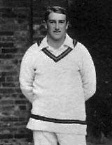
During my search I came across the astounding and tragic life of South African cricketer Aubrey Faulkner (pictured), who came from a violent background to be a cricketing legend, war hero, sports mentor and finally a suicide statistic.

It’s not clear whether cricket is particularly associated with mental illness, or whether this just reflects a trend in all elite level sportsmen, but it’s an unusual connection that I’d never come across before.

Link to New Statesman review of ‘Silence of the Heart’.
Link to PubMed entry for paper on mental illness and cricket.

Countering the fixated threat

Photo by Flickr user ashley.adcox. Click for sourceI’ve just found this interesting 2007 article on the Fixated Threat Assessment Centre, a combined unit of the British Police and health service that attempts to divert disturbed and potentially dangerous stalkers to mental health services before they attempt violence.

[Psychiatrist] David James – whose research helped to found the centre, and who now co-directs it – outlines its mission: ‘We have discovered that letters written to prominent individuals can be a powerful tool in detecting people suffering from untreated psychotic illness,’ he says.

But FTAC isn’t just about preventing murders that haven’t yet occurred, and is much less about protecting the powerful by using psychiatrists’ powers to detain patients under the Mental Health Act. Its real innovation is to marry crime prevention with a new way of finding and helping those with therapeutic needs:

‘This is an area where the interests of security and public health overlap,’ James says. ‘We’re not just providing protection: we’re helping to find care and treatment for those whose lives are being destroyed by untreated mental illness.’ Some of the patients first identified by FTAC, James says, are now leading ‘functional and relatively normal’ lives.

We’ve featured research from the Fixated Threat Assessment Centre before on Mind Hacks, when we discussed a recent study on ‘a classification of royal stalkers’.

As the article notes, the centre seems to have caused some controversy when it opened with news reports concerned that it would some sort of shadowy persecutor of oddballs and the obsessed.

For reasons that don’t seem entirely clear, it’s recently been the focus of interest from two British members of parliament who asked various written questions about the centre. You can read their questions and the answers provided by the government online which are another useful source of information about the service.

Link to Observer article on the Fixated Threat Assessment Centre.

Honey, I’m shrinking the kids

I’ve just discovered a New York Times article from earlier this year about psychologists who are studying their own kids in the service of top flight scientific research.

Studying one’s own kids has a long and proud tradition in psychology. Perhaps the first person to do so formally was Charles Darwin, who in 1877 published his paper A Biographical Sketch of an Infant which was based on observations of his own children.

Freud, of course, studied and analysed his own children (most famously Anna Freud) but perhaps the most influential was child psychologist Jean Piaget who based many of his ideas on observations of his own three children.

Also notable was one of the first women ever to be awarded a PhD in psychology, Milicent Washburn Shinn, who did her research on her own niece.

The New York Times piece covers many modern cognitive science projects that are based on observations of the researchers’ children to get the sort of in-depth data it would otherwise be impossible to obtain.

The ‘human speechome’ project is probably the most well-known where developmental psychologist Deb Roy is recording virtually every sound made by his young child from birth to “observe and computationally model the longitudinal language development of a single child at an unprecedented scale”.

Roy discusses the project and additional audio and video illustrates the article with more detail on the project.

The article also tackles some of the ethical issues of using your own children as research participants. This is an important topic because currently, there are no widely agreed guidelines on this long-established practice.

This exact topic sparked an article in the prestigious Journal of the American Medical Association earlier this year to mull over the rights and wrongs of the situation.

The article covers a wide range of studies although is quite US-centric. One of the most notable examples this side of the pond resulted in a book by UK psychologist Charles Fernyhough released as A Thousand Days of Wonder in the US and The Baby in the Mirror in the UK which describes the development of his daughter through her first three years of life.

Link to NYT ‘Test Subjects Who Call the Scientist Mom or Dad’.
Link to JAMA article on ‘Parent investigators: a dilemma’.
Link to PubMed entry for same.

The effect of the rats on the rat race

Photo by Flickr user B Tal. Click for sourceNot Exactly Rocket Science covers an intriguing study on how people try less hard in a competition as the number of competitors increases.

The researchers started off with a simple observation that US students tended to get better marks when they took their exams in smaller exam rooms.

This could have been for many reasons of course, so they set about running several experiments to see if the effect was genuinely down to competitiveness.

These additional studies found that smaller groups do indeed increase competitiveness, and several also allowed them to attempt to explain why:

…they told 50 students that they would have a week to win $100 by adding as many Facebook friends as possible. They found that the students felt more motivated to compete when facing 10 competitors compared to 10,000, and they were also more likely to compare themselves against the others within the smaller contest. The number of competitors predicted the students’ motivations to compete, but that association disappeared after adjusting for their tendency to compare themselves with others.

This same experiment allowed them to rule out the possibility that the students were more motivated in the smaller group, simply because they thought the task would be easier. They certainly felt that way (albeit wrongly – in both cases, the prizes went to the top 20% and the students understood that) but it didn’t affect their behaviour. Adjusting for this perception of difficulty didn’t strongly affect the link between number of competitors and motivation.

In other words, the effect of the number of competitors on our motivation seems to work through how likely we are to compare ourselves to others.

But contrary to what we might expect, those who compare themselves most to others are more likely to be competitive when there are fewer people.

The authors suggest that this may be because personal comparisons are easier when we can think of our competitors as individuals rather than having a more abstract idea of a nebulous ‘group’.

Anyway, another great piece from Not Exactly Rocket Science, where you can get a more detailed low-down on the study.

Link to NERS on competitors and the motivation to compete.

It’s just a booty call

Photo by Flickr user millylillyrose. Click for sourceI’ve recently discovered the NCBI ROFL blog which collects funny and unusual studies from the PubMed medical research database. The latest post is an academic study on the booty call as an ‘adaptive mating strategy’:

The “Booty Call”: A Compromise Between Men’s and Women’s Ideal Mating Strategies.

J Sex Res. 2009 Feb 27:1-11. [Epub ahead of print]

Jonason PK, Li NP, Cason MJ.

Traditionally, research on romantic and sexual relationships has focused on 1-night stands and monogamous pairs. However, as the result of men and women pursuing their ideal relationship types, various compromise relationships may emerge. One such compromise is explored here: the “booty call.” The results of an act-nomination and frequency study of college students provided an initial definition and exploration of this type of relationship. Booty calls tend to utilize various communication mediums to facilitate sexual contact among friends who, for men, may represent low-investment, attractive sexual partners and, for women, may represent attractive test-mates. The relationship is discussed as a compromise between men’s and women’s ideal mating strategies that allows men greater sexual access and women an ongoing opportunity to evaluate potential long-term mates.

I suspect this study was completed just to allow the world’s most awesome chat-up line to come into existence: “Hi, my name’s Dr Jonason and I’m researching booty calls. Would you be interested in taking part in my study?”

Actually, where’s that grant application form…

Link to NCBI ROFL blog.
Link to PubMed entry for booty call study.

Mass hysteria and dancing manias

The July edition of the The Psychologist has an absolutely fantastic article on the ‘dancing manias’ that swept through Europe in the middle ages and triggered an exhausting compulsion to dance.

The piece looks at the history of these manias and discusses them in terms of dissociation, the ‘unconscious compartmentalisation of normally integrated mental functions’, which is something we discussed the other day with respect to modern day possession and trance rituals.

Dissociation is usually discussed as something individual, whether the person induces it deliberately through ritual, lets themselves be affected through hypnosis, or is affected involuntarily, as in the case of ‘conversion disorder‘.

However, there are hundreds if not thousands of cases of ‘mass hysteria’ or ‘mass psychogenic illness’ that have been documented and are that are thought to involve a similar mental process.

Unfortunately, these ‘mass hysterias’ tend to be widespread but fleeting affairs, meaning they’re hard for researchers to study.

One of the commonest findings, however, is that they often occur where people find themselves in an intolerable situation that they’re not able to influence or otherwise complain about.

If you’re interested in learning more, I really recommend a 2002 article from the British Journal of Psychiatry by sociologist Robert Batholomew and psychiatrist Simon Wessely as an excellent introduction to the field.

Otherwise, Batholomew’s books are excellent. My favourite is his 2001 book Little Green Men, Meowing Nuns and Head-Hunting Panics: A Study of Mass Psychogenic Illnesses and Social Delusion (ISBN 0786409975).

Anyway, The Psychologist article is a great place to start and one of the most enjoyable articles I’ve read on the topic for a while.

Link to The Psychologist on ‘Dancing plagues and mass hysteria’.
Link to article from the British Journal of Psychiatry.

Full disclosure: I’m an occasional columnist and unpaid associate editor of The Psychologist. I also love dancing manias.

Hushed thunder

ABC Radio National has a fantastic programme on El, a 27 year old woman with selective mutism – essentially a speaking phobia that enforces an anxiety-driven silence with everyone except her family.

The documentary is deeply poignant but has several moments of sublime irony that really stopped me in my tracks.

El stopped speaking to anyone except her family as a young child and has spent the large part of her life not being able to utter a word to anyone else.

The programme details the painful impact this has had on her life, how she was verbally attacked by pupils and staff in school, and how she has found it difficult to get a job, or hasn’t been respected in the work she’s done.

In one aside, she mentions she has a degree in communication.

In my mind, a thousand stories were unfurled by the breeze of this simple fact.

El, by the way, is an incredibly articulate communicator. The photo to the right is one of her own artworks and her words, spoken by an actress, are clear and evocative.

The ending to the programme is like hushed thunder.

The documentary is part of an innovative ABC Radio National series entitled Stories of Silence that explores the many meanings of quiet.

Link to El’s story (via AITM Blog).

A phantom head

I’ve just been reminded of one of the most remarkable case studies in the psychiatric literature, of a patient who believed he had two heads and who seriously injured himself with a gunshot wound trying to remove the ‘second’ head.

He described a second head on his shoulder. He believed that the head belonged to his wife’s gynaecologist, and described previously having felt that his wife was having an affair with this gynaecologist, prior to her death. He described being able to see the second head when he went to bed at night, and stated that it had been trying to dominate his normal head.

He also stated that he was hearing voices, including the voice of his wife’s gynaecologist from the second head, as well as the voices of Jesus and Abraham around him, conversing with each other. All the voices were confirming that he had two heads; the voice from the second head had been telling him that it was the ‘king pin’, and would also say to him that it was going to take his wife away. He did not describe any other hallucinatory or delusional experiences.

“The other head kept trying to dominate my normal head, and I would not let it. It kept trying to say to me I would lose, and I said bull-shit.” “I am the king pin here” it said and it kept going on like that for about three weeks and finally I got jack of it, and I decided to shoot my other head off.”

He stated that he fired six shots, the first at the second head, which he then decided was hanging by a thread, and then another one through the roof of his mouth. He then fired four more shots, one of which appeared to have gone through the roof of his mouth and three of which missed. He said that he felt good at that stage, and that the other head was not felt any more. Then he passed out. Prior to shooting himself, he had considered using an axe to remove the phantom head.

I was reminded of the case study by McKay and colleagues chapter in the academic book Delusion and Self-Deception. I’ve been sent a free copy to review for an academic journal and am currently ploughing through it. It’s not very accessible for the general reader but is full of thought provoking theories on the cognitive science of delusions.

Link to case study.
Link to PubMed entry for same.

Possession and trance

Neuroanthropology has collected videos of trance states in religious rituals, where intense movement, music and mental involvement lead to profoundly altered states of consciousness.

Trance is a fundamental part of many (probably most) religions. Although it is typically associated in the popular mind with ‘voodoo’ it’s also common in many Christian denominations.

Indeed, there’s a video of trance states in Candombl√©, a fusion of Catholicism and voodoo-related Orisha worship, and one of trance states in a charismatic Christian church in the US.

Trance is usually described as involving ‘dissociation’ – originally defined by the French psychiatrist Pierre Janet as the ‘unconscious compartmentalisation of normally integrated mental functions’.

Dissociation is thought to underlie a wide range of phenomena, including hypnosis, reaction to trauma, trance and some forms of spirit possession, hysteria, conversion disorder and, more controversially, multiple personality disorder.

One of the best guides to the range of experiences and the possible neuroscience behind these states is an excellent article by anthropologists Rebecca Seligman and Laurence Kirmayer.

One notable omission from the list on Neuroanthropology is video of the female possession rituals of the Zar Cult from Northern Sudan which has been quite widely discussed in the anthropology literature.

There’s some brief footage of it online and in another video anthropologist Gerasimos Makris discusses the structure and social meaning of the possession rituals.

Link to Neuroanthropology collection of trance videos.
Link to article on trance, dissociation and neuroscience.
Link to good page on anthropology of possession.

Beautiful otherness

New Scientist has a gallery of artwork by savant artists, people who show exceptional artistic talents despite having impaired mental abilities in other areas.

Savantism is typically associated with autism to the point where many people assume that having a stand-out exceptional ability is present in everyone with the diagnosis.

This is not the case and although many people with autism-spectrum conditions will have a special interest, only about 10% will have what autism researchers Francesca Happ√© and Uta Frith call ‘the beautiful otherness of the autistic mind’.

Perhaps the most famous artist with autism is Stephen Wiltshire who can create stunningly vivid landscape paintings from a barely more than a single glance.

However, my favourite such artist is Jessica Park who paints the most striking paintings of buildings and architectural features but in the most inventively colourful way.

The New Scientist gallery is interesting take on the area as each picture has been selected to illustrate something about the psychology of savant abilities.

Link to New Sci ‘Savant art: A window into exceptional minds’.
Link to excellent Happé and Frith article on savantism.

Why sigh?

An interesting study from Psychophysiology attempting to understand why we sigh by studying in what contexts these wistful expressions are most likely to occur. It seems, we are most likely to sigh when relieved.

Why do you sigh? Sigh rate during induced stress and relief.

Psychophysiology. 2009 May 21. [Epub ahead of print]

Vlemincx E, van Diest I, de Peuter S, Bresseleers J, Bogaerts K, Fannes S, Li W, van den Bergh O.

Whereas sighing appears to function as a physiological resetter, the psychological function of sighing is largely unknown. Sighing has been suggested to occur both during stress and negative emotions, such as panic and pain, and during positive emotions, such as relaxation and relief. In three experiments, sigh rate was investigated during short imposed states of stress and relief. Stress was induced by exposure to a loud noise stressor or by anticipation of it. Relief was induced by the end of the stressor or the anticipation that no stressor would follow. Breathing parameters were recorded continuously by means of the LifeShirt System. Results consistently showed that more sighing occurred during conditions of relief compared to conditions of stress.

Link to