Web making us worried, but probably not stupid

The cover article of this month’s Atlantic magazine argues that our increasing reliance on internet technology means we’re becoming less able to focus and absorb ourselves in a task because we’re so used to mentally ‘jumping around’. It’s a common concern, but is almost entirely devoid of evidence.

Similar arguments have been put forward before, and they usually take the form of suggesting that digital technology influences how we think to point of it affecting our fundamental ability to concentrate and reflect for sustained periods (tellingly, the example usually given is ‘reading books’).

Probably the first version of the argument was put forward by Jane Healy in her 1990 book Endangered Minds, and expanded in the 1998 book Failure to Connect.

Healy argues that children’s increasing exposure to computers has created a “toxic environment” that leads to patterns of “disorganized thinking” and “mental restlessness” akin to ADHD.

Interestingly, computer use has been linked to the symptoms of child ADHD in a 2006 study, but it only reported an association between computer use and symptoms reported by parents – no measure of attention was used.

One other study found that ADHD kids have more problems playing the games, but the only study I know of that actually measured sustained attention during video gaming found that ADHD kids could concentrate equally as well as other kids.

In other words, their inability to focus seemed to ‘disappear’ when using a computer, which might explain the association mentioned earlier. In other words, kids with ADHD might use computers more because they help them focus.

Nevertheless, the argument has now broadened to encompass the effects of adults, the ‘brain plasticity’ is almost always mentioned as an explanation.

While the Atlantic article warns against conclusions drawn from anecdotes, it is almost entirely anecdotal. Tellingly, it quotes not a single study that has measured any of the things mentioned as a concern by the author or anyone else.

So here’s what we’d want to do to test this concern out: use some neuropsychological tests of sustained attention to investigate whether internet use is linked to worse concentration.

A cross-sectional study that just compared heavy web users with light web users would provide suggestive, but ultimately weak, evidence, because it may just be that those with worse concentration find the web more attractive (like the ADHD kids with games).

A longitudinal study would be more useful. It would need to test a group of people at the beginning to make sure they were all equivalent and would then re-test everyone at a later date and see whether those who became heavy web users had worse sustained attention.

A randomised controlled trial would be the best evidence, and it would randomly assign a group of equivalent people to heavy or light web use and then it would measure the effects on the ability to concentrate.

As far as I can tell, not a single study has been completed that has actually tested sustained attention in web users – even for the weakest form of evidence. If you know of one, do let me know, because I’d be interested to find out. So far though, I know of none.

There have been some related studies on video games, but they tend to show the reverse, that video games are linked to better mental performance.

The improvements here all almost all in divided attention or visual search – the ability to take in information over a wider space – so it’s difficult to generalise to sustained attention.

In terms of any new technology, it’s obvious having tools to hand changes the strategies we use to solve problems, but so far, there is no strong evidence that Google, YouTube, Facebook or any other part of the web affects the fundamentals of how we think.

As the article mentions, concerns about new technology go back to Plato’s worries that writing will make people mentally dull because it encourages ‘laziness’.

Until the hard evidence comes in, anxieties about the web remain fear rather than fact. The data just doesn’t exist.

Link to Atlantic article ‘Is Google Making Us Stupid?’.

Long live the new Encephalon! Edition 47 arrives

According to the 1983 movie Videodrome, the television screen is the retina of the mind’s eye. The latest edition of psychology and neuroscience writing carnival Encephalon is hosted by the Channel N video blog, showing us that the online video screen is equally a window into the psyche.

An article on a rather dubious link between synaesthesia and metaphor is one of my favourites, as is a video of a robot choreographed by input from a sleep EEG.

Sadly, it seems, someone has removed the archive of the Karen Carpenter biopic focusing on her struggle with anorexia, echoing its banning some years earlier. It seems to be working!

After all, there is nothing real outside our perception of reality, is there?

Link to Encephalon 47.

Uncle Clonazepam’s Army

This week’s Time magazine has a cover article on ‘America’s Medicated Army’, discussing the widespread use of antidepressant and anxiety-reducing drugs in US Army troops in Iraq and Afghanistan.

The saying goes that ‘military psychiatry is to psychiatry what military music is to music’, and, certainly, military mental health clinicians have quite different objectives to their civilian counterparts.

Treating someone who has been traumatised by a war zone with the priority of returning them to combat is an unusual way of working from a civilian perspective.

While military psychiatry has traditionally relied on rest from combat operations using the ‘PIE‘ principle of minimal withdrawal from the theatre of war, for the first time, the American military are now allowing deployed troops to be prescribed psychiatric medication, principally to treat depression and anxiety.

The article is an interesting angle on the sorts of intense stresses that soliders endure, but it’s probably worth remembering that having soldiers medicated against the traumas of war is not particularly new.

Traditionally, however, soldiers have medicated themselves with whatever substances were to hand.

Drug use by US troops in the the Vietnam War has been widely portrayed in Hollywood films but it is based on hard medical evidence. Contemporary medical studies reported that approximately 1 in 5 soldiers was addicted to heroin, with marijuana and alcohol use even more widespread.

I looked and couldn’t find any data on illicit drug use in troops in Iraq, but a recent report notes that 11% of US soldiers in Iraq who sought mental health care had ‘severe misuse of alcohol’, rising to 18% if ‘moderate’ cases are included.

These figures are hard to compare directly, but that’s 18% of soldiers referred to military psychiatrists, not 18% of the total troop population, which makes me think there’s probably less self-medication occurring during this war than the Vietnam war at least, and possibly others.

Even if this rather rough estimate turns out to be true, it’s impossible to say whether the availability of prescribed medication is reducing drug and alcohol misuse, or whether it is being used to shore up the troops in an geographical area where recreational substances are just harder to come by.

The history of military psychiatry has told us that the single best way of preventing mental illness (and death, injury and civilian causalities) is to not deploy troops into combat.

Unfortunately, history has also told us that the blindingly obvious has never been particularly popular with political leaders, and until that time, the military may simply be trying to avoid widespread illicit self-drugging by making army approved medication available to its depressed and anxious soldiers.

Link to Time article ‘America’s Medicated Army’.

35, single and psychoneurotic

The Bonkers Institute for Nearly Genuine Research has added a gallery of vintage drug adverts to its site, showcasing some of the more outlandish psychiatric advertising from the 20th century.

One of the most striking things is the Thorazine gallery, that highlights how the drug, also known under its generic name chlorpromazine, was advertised for pretty much everything.

This included alcoholism, hostility, menopause, senility, arthritis and cancer to name but a few.

While we now think of chlorpromizine and other selective D2 dopamine antagonists (blockers) as ‘antipsychotics’, it’s important to remember that the fact we now describe these compounds in terms of their effect on psychosis was a marketing coup in itself.

For example, Thorazine was also sold under the name ‘Largactil’, to give the impression it was ‘large acting’ and could be used in a number of different conditions.

In fact, these drugs were originally marketed as major tranquillisers, then neuroleptics, then antipsychotics, and now, history has come full circle, as drug companies are now trying to reposition ‘atypical antipsychotics’ as general psychiatric medicines by getting them licensed as treatments for more general conditions such as depression and anxiety.

It’s a classic marketing technique to sell products as solutions to problems, but we simply don’t understand enough about the neurobiology of mental illness to design medication to selectively treat a specific diagnosis.

In other words, labels like ‘antidepressant’, ‘antipsychotic’ or ‘mood stabiliser’ tell us next to nothing about the action of the drug and only inform us how they are used.

It’s like the word ‘shampoo’. While the product may have a few tweaks that make it better for washing hair, it doesn’t mean it cleans your hair and nothing else. That’s just how this particular soap product is used and sold.

So if someone decides to promote antipsychotics to treat anxiety, or shampoo to wash your car, the same principle applies as if they’re being marketed to treat psychosis or clean your hair.

Don’t take the labels as evidence, and look for the scientific data for their effectiveness.

Link to Bonkers Institute Gallery.

BBC All in the Mind kicks off its summer season

BBC Radio 4’s seasonal mind and brain programme All in the Mind has just started its summer run, and the first programme discusses virtual paranoia, heroics and the politics of detaining people with mental health problems.

Rather than the usual host of psychiatrist Raj Persuave (I realise it’s not spelt like that but it seems to fit better), this season is fronted by the excellent Claudia Hammond – a rare breed of journalist who obviously knows her stuff about psychology and neuroscience.

The first programme looks at the use of virtual reality to study paranoia, talks to Philip Zimbardo about the psychology of heroism in the face of systemic abuse, and discusses whether changes in UK mental health law will mean abuses are less likely to be detected.

It’ll be broadcast weekly for the next 5 week, so catch the archive which appears online every Wednesday.

Link to BBC Radio 4’s All in the Mind.

NeuroPod on music and free will

I’ve just noticed that the month slipped past without me realising that the May edition of Nature’s NeuroPod show hit the net, covering musical neuroscience, the vagaries of free will and Huntingdon’s disease.

One highlight is neuroscientist John Dylan Haynes arguing that free will is dead, and while we’re still waiting for the conclusive scientific data, we can probably bank on it being an illusion.

There’s also a fascinating piece on the psychology and neuroscience of music and its value as a social force.

As a musical aside, you may be interested to know the the BBC broadcast a documentary last night based on the Oliver Sacks’ book Musicophilia. If you live in the UK, you can watch it online via the BBC, although sadly only for the next 6 says.

Link to Nature NeuroPod archive.
Link to BBC documentary on Musicophilia (UK only).

In the midst of the video game fury

The BPS Research Digest has just alerted me to an excellent cover article from Prospect magazine on the effects of computer games on young minds and why the scaremongering is largely hot air.

One of the biggest mongers of scare is the otherwise excellent Susan Greenfield, who seems to be convinced, mostly on the basis of speculations from some rather obliquely-related neuroscience studies, that video games and electronic culture and doing dreadful things to young minds (although not to elderly minds, who should apparently buy the ‘brain training’ software she’s endorsed).

There is indeed evidence of an association between violent video games and aggression aggression in some young people, but there’s also plenty of evidence of the benefits of children playing games.

Psychologist Tanya Byron wrote a remarkably well-researched report on the topic for the UK government, which is rightly highlighted by the Prospect article as one of the high-points of the debate.

The Prospect piece is a great overview of some of the things less often touched on by the academic literature, such as the real-life management skills needed to succeed in some of the massively multiplayer online role-playing game’s like World of Warcraft or Second Life.

Link to Prospect article ‘Rage Against the Machines’.

Placebo is not what you think

The New York Times covers an interesting development in the world of consumer medicine – a company selling placebos to consumers that they can use to ease their children’s ills.

For doctors, the use of placebos to treat medical conditions is explicitly banned by most medical associations but their use is widely debated.

Thousands of clinical trials have shown us that placebo is one of the most effective and safest of medicines (although it is not entirely without side-effects).

However, it is also one of the most misunderstood of treatments.

An article in this month’s Journal of the Royal Society of Medicine (which has been debating placebo over the past year or two) dispels some of the myths.

The placebo effect is usually equated with the average response of patients receiving placebo controls in randomized trials. However, it’s not quite that simple.

For example, not every improvement that happens after someone is given a placebo treatment is the ‘placebo effect’ (some symptoms will just get better by themselves) and not every improvement after medication is the active effect of the drug, some of that will be ‘placebo effect’ too.

Placebos are not ‘ineffective’. In fact, when three condition trials are run (no treatment vs placebo vs medical treatment), placebo consistently out performs ‘no treatment’ and of course, not uncommonly, the medical treatment condition as well.

Placebos are not a ‘non-specific’ treatment. A study on people who take the dopamine-boosting drug L-DOPA for Parkinson’s disease but who took a placebo L-DOPA pill, showed almost identical brain changes, as if they’d taken the real thing.

Furthermore, studies done in the 1970s showed that when heroin users inject water (sometimes done deliberately to alleviate cravings when drugs are in short supply), they can experience drug-like euphoria and have been observed to show opiate-like physiological signs such as pupil constriction.

This last point also demonstrates that placebo is not solely about expectancy, belief or ‘being fooled’, as the heroin users knew they were injecting themselves with water. Conditioned responses play a role.

This can also be seen from the fact that these specific effects of placebo tend to fade after a while, as the conditioning becomes extinguished.

The fact that placebo can be a relatively safe, effective, and sometimes selective treatment has led some to argue that doctors should be able to use it officially (although, of course, many use it unofficially).

Law professor Adam Kolber (who you may know from the excellent Neuroethics and Law blog) wrote a fascinating paper last year that reviewed the research and argued that in limited circumstances, placebos could be ethically used.

The article is available online and I really recommend reading the ‘Avoiding Deception’ section if nothing else – for series of recommendations on how placebo could be used without straight up deception.

Link to NYT on buy-your-own placebos for kids.
Link to JRSM article on placebo. Full text here (thanks Ines!).
Link to Adam Kolber’s article (scroll down for free full text download).

Decline of a Baghdad psychiatric hospital

The New York Times covers the disturbing state of the Ibn Rushid hospital, one of only two psychiatric hospitals in Baghdad that serves the entire population of 6 million.

The article is equally moving and disturbing as it describes how the local citizens are suffering the effects of war with little available assistance while the doctors resort to desperate measures to try and help.

The hospital’s fortunes have changed markedly during the occupation. Apparently in decline since the days of Saddam Hussein, a 2004 Psychiatric News article described how it had been refurbished after being looted by armed men shortly after the beginning of the war.

It now seems that a sharp decline is in progress once more as medication is increasingly scarce and ECT is being given on faulty equipment without anaesthetic or muscle relaxants.

One aspect of Iraq’s mental health system which has been consistently reported since the occupation is the fact that many Iraqi psychiatrists have left the country owing to violence and kidnapping that has targeted doctors.

Both major Baghdad hospital have been sacked by armed looters and have been affected by nearby fighting.

The NYT article is accompanied by a photo essay that documents a day in the life of the Ibn Rushid hospital.

Link to NYT article ‘War Takes Toll on Baghdad Psychiatric Hospital’.
Link to NYT photo essay.

How neurotech will change the world, one brain at a time

High end business magazine Condé Nast Portfolio has a feature article on the latest developments in the 120 billion dollar neurotech industry that aims to develop drugs and devices to cure diseases and optimise our brains.

The article takes a broad view of the industry, but also highlights a few areas which are looking hot and gives a guide to the sort of business thinking that motivates both the neurotech giants and the fledgling startups.

It seems the industry is currently a high stakes, high risk investment prospect as the majority of companies do not make money, so investors are betting long-term or hoping they’re backing a blockbuster.

The piece also mentions the work of Zack Lynch of the neurotech industry group NIO, who in partnership with his co-director and wife Casey Lynch, seems to have been lobbying the US government for significant support for the sector:

The couple’s new push is to get more federal dollars channeled toward the industry. Zack has been traveling back and forth to Washington, sometimes taking along neurotech C.E.O.’s, to promote a $1 billion “national neurotechnology initiative” that Representative Patrick Kennedy, a Rhode Island Democrat, recently announced he will introduce in Congress. The legislation asks the federal government to spend $200 million a year for five years on neurotech, including $30 million for the Food and Drug Administration to train more experts, $80 million for the National Institutes of Health to coordinate the neuroresearch efforts that are now run by 16 different institutes, and $75 million to increase small-business grants for neurotech companies.

One issue the article touches on is the deregulation of the industry so they can develop pharmaceuticals for cognitive enhancement of healthy people without having to get their medication licensed for a specific medical disorder.

While some remain suitably demure about the possibilities (at least in public), this is obviously the neurotech holy grail and is undoubtedly high on the long-term goals of the industry.

The article also has a couple of fantastic interactive features accompanying it – one on drugs and the other on implants. Also check the right-hand column for a series of related articles from the same publication.

Link to Cond√© Nast Portfolio article ‘The Ultimate Cure’ (via BrainWaves).

Pharmaceutical product placement rife in TV shows

Treatment Online reviews some recent research showing that there is an increasing trend for pharmaceutical drug brand names to appear in prime-time TV shows in what looks increasingly like widespread product placement advertising.

Unsurprisingly, the main culprits tend to be popular medical shows, where the rate of pharmaceutical name-dropping seems to be increasing.

You might think that drug brand names are just being mentioned so the shows can be realistic and use the names of real medications. But it is possible to mention drugs without mentioning brand names, and this is probably more more realistic.

Medical drugs have two common names. One is the generic name which refers to the compound, one is the brand name, which refers to a specific drug company’s version.

For example, aspirin is a generic drug often sold under the name Anadin. Fluoxetine is the generic drug often sold under the name Prozac.

So, there’s not really any particular reason for TV shows to use brand names (in fact, doctors more commonly use the generic names). But despite this, the trend is growing and there is evidence that some of the name dropping is actually paid advertising through the back door [insert your own suppository joke here].

Industry watchdog Nielsen Product Placement notes that the number of casual references to name-brand pharmaceuticals is higher than ever before and continues to rise with each new TV season. Medical shows in particular lend themselves to this form of non-advertising, and they are among the most popular prime-time programs. Shows like “House,” “Scrubs,” and “Grey’s Anatomy” routinely feature medical environments where sexy doctors and nurses drop references to brand-name drugs in settings both private and professional.

Studies reveal that the authority granted to these characters leaves viewers less likely to notice or question their implied endorsements of the products at hand – and, by the very nature of the fiction, a TV doctor recommending Vicodin is not as overbearing an advocate as the same character might be when marveling over the many great features of his brand-new Hummer.

Some companies actually admit to negotiating placement deals despite the industrywide contention that the vast majority of these references do not fulfill any contract. While these placements are not illegal, necessary federal oversight remains very poor if it exists at all.

Link to Treatment Online on drug company product placement.

The history of the brain

BBC Radio 4’s legendary history of ideas programme In Our Time takes an in-depth and fascinating look at the history of the brain.

The programme tracks the earliest Western ideas on the function and purpose of the brain from the times of the ancient Greeks.

What’s most fascinating is how some completely false ideas about the brain survived centuries, despite the fact that it would have been easy to see how they were incorrect, if it weren’t for the reluctance to actually do dissection studies on humans.

However, there were rare exceptions in the ancient world. For example, Herophilos and Erasistratus dissected the brains of live criminals!

It’s a wonderfully erudite and in-depth discussion, and thoroughly delightful if you’re interested in the history of the seat of human thought.

Link to webpage with permanent streamed audio (thanks Ben!).
mp3 of programme (disappears after a week).

Soft money in psychiatry muddies manuals, airwaves

Mental health blog Furious Seasons has just alerted me to some recent revelations about conflicts of interest in psychiatry. More than half of the new committee members in charge of the next edition of the psychiatrists’ diagnostic ‘bible’, the Diagnostic and Statistical Manual of Mental Disorders (DSM), have ties to the drug industry.

Furthermore, an article for Slate reveals that a supposedly ‘independent’ NPR national radio show on the safety of antidepressants had three guests, a host and the production company, all of whom received money from drug companies.

While the financial interests of the DSM committee must be declared, drug company links were not revealed in relation to the radio programme and the production company seem to be being evasive about discussing the situation.

Apparently, the committee for the new DSM (the DSM-V) largely parallels the situation with the previous version, where over half of the members had drug company ties.

Because of the way the US health system woks, US health insurers tend only to pay for treatments when a specific diagnosis has been made, so it is in the drug companies’ interest to influence the classification of mental illnesses to make prescribing more likely.

However, there are rumours that the insurance industry and getting rather fed up of having to pay out on potentially drug company influenced diagnoses, and are considering funding research of their own into the validity of diagnoses to counter this trend.

The two news items mentioned above seem to be the work of the Centre for Science in the Public Interest that campaigns for transparency in science education and policy.

At the end of the Slate article, the organisation note that they have a list of leading scientists who do not have links to industry. Journalists are welcome to contact them if they want a source free of potential biases.

Link to Slate article ‘Stealth Marketers’.
Link to CSPI news item on DSM-V committee.

Sexual PsyOps

We’ve covered some of the historical archives of propaganda material before on Mind Hacks, but ex-US PsyOps Sergeant Major Herbert Friedman has created an archive of historical propaganda that was specifically themed to target sexual insecurities.

The page is not the easiest to read owing to the rather rough and ready formatting, but it has a fascinating archive of 20th century wartime propaganda that used sexual images to rally the civilian population or lower moral in enemy troops.

The images are NSFW but are most are not particularly pornographic by today’s standards, although a few are obviously designed to be particularly offensive.

Most images aimed at civilians use the theme that the enemy are sexual deviants who will defile the country’s women if they’re not defeated, while most aimed at enemy soldiers suggest that their girlfriends and wives will be unfaithful while they’re away – or simply highlight the contrast between staying and fighting or, for example, returning home to drink cocktails with topless women.

Some of the leaflets are quite complex for the time, using see-through covers to make them visually more appealing, while they were often specifically designed to take advantage of the specific insecurities of allied forces.

For example, this section discusses German sexual propaganda leaflets dropped to allied soldiers in World War II:

There are two major differences between the leaflets aimed at the Americans and those aimed at the French. The American leaflets are much cruder and the pictures not nearly as well drawn. The second difference is that while the leaflet to the French showed British soldiers with the women, thus attacking an ally, the leaflet aimed at the GIs showed American civilians with the wives and girlfriends, so the propaganda theme might be considered more “anti-slacker” or “anti-draft-dodger”.

A fascinating collection, and if you’re interested in a browsing through probably the most comprehensive archive of propaganda leaflets on the net (including examples from as recent as last year), I notice the PsyWar website is back online.

UPDATE: The original page seems to be a bit unreliable, but thanks to Will for posting a link to a mirror of the page which you can read here.

Link to NSFW Sex and Psychological Operations archive.
Link to PsyWar archive.

Man, controller of the neuroverse

The medical journal Neurosurgery is celebrating its 30 year anniversary and I’ve just noticed that their February edition had this wonderful cover.
It’s the detail from a painting by Mexican artist Diego Rivera called Man, Controller of the Universe. A beautiful image, although never let it be said that our neurosurgical friends miss an opportunity to express their grandiosity.

Nevertheless, the edition contains a large number of wonderful Rivera prints in between article such as ‘Ballistics for the Neurosurgeon’, ‘A New Multipurpose Ventriculoscope’ and ‘Enchanced Tumor Growth Elicited by L-Type Amino Acid Transporter 1 in Human Malignant Glioma Cells’.

It makes for slightly surreal but completely delightful read.

The journal has a tradition of having an article by a neurosurgeon commenting on the cover image, which is often a great article in itself and is usually has nothing directly to do with neuroscience.

Sadly, the journal is closed access, but their free sample issue has an excellent ‘Cover Comment’ article [pdf] on Herman Melville and his classic novel Moby Dick.

Link to image of entire painting.
pdf of Neurosurgery article on Moby Dick.

Solar powered EEG headset

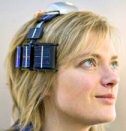
The New Scientist Tech Blog has an interesting article on a new prototype EEG machine that, like all others, is designed to read electrical activity from the brain. The novelty is that it is totally enclosed in an earphones-like headset and is solar-powered. Apparently, it also generates power from the body’s own heat.

The new headset can generate at least 1 milliWatt of power in most circumstances. That is more than the 0.8mW needed to detect electrical activity observed in the brain, and transmit it over wifi to a computer.

“Using both power sources, you get twice as much power, so it’s roughly half the size,” say Chris van Hoof, also of IMEC, comparing the new headset to the previous device.

Van Hoof says small, preclinical trials show the headset collects data identical to those of EEGs used in hospitals. The portable headset should provide a look at the brain in environments it has not been studied in before.

This looks like it builds on research that has been going on at Imperial College in London on low power technology for ‘wearable cognition systems’.

The ‘cognition’ bit is only likely to be very approximate to what psychologists think of as cognitive processes (as we discussed previously), but I suspect the trick will be developing new applications for the technology, rather than using the technology to try and replace the precision of already existing systems.

A paper on the technology was recently published by the Imperial team. Unfortunately, I can’t find the full-text online but the summary itself is well-worth a read.

Link to article on NewSciTechBlog (via Neurophilosophy).
Link to summary of low power tech for wearable cognition paper.