Interfacing consciousness, action and vision

Consciousness research journal Psyche has just released a new issue that tackles the limits of vision and visual cognition.

The issue starts with an article summarising the main arguments in the book Ways of Seeing by philosopher Pierre Jacob and neuroscientist Marc Jeannerod.

The book tackles the interface between vision and our other psychological abililties and particularly focuses on the visual pathways.

These are the two main pathways that run from the visual cortex at the back of the brain either through the dorsal stream to the parietal lobes, or the ventral stream to the temporal lobes.

The dorsal stream is sometimes called the ‘where’ stream as it seems to process the location of objects, whereas the ventral stream is sometimes called the ‘what’ stream as it seems to process the identification and meaning of objects.

After brain injury, one stream could be damaged and the other left intact, so a patient, when shown an object, might be able to tell you what it’s for, but would not be able to point to its location.

This distinction is particularly important when considering how we act based on visual information, as it is known that we don’t always access both these streams of information to the same degree for different types of action, and we aren’t always conscious of all the visual information we use during action.

Exactly how the interaction between conscious and unconscious information occurs, and the exact function of the streams, is still a mystery and this exactly what Jacob and Jeannerod tackle in their Psyche article:

Visually guided actions raise a different (almost complementary) puzzle: how can actions directed towards a target be so accurate in the absence of the agent’s awareness of many of the target’s visual attributes? Ways of Seeing (WoS) has three related goals, the first of which is to make the case for a broadly representational approach to the above set of puzzles.

The second goal of WoS is to argue that the version of the ‘two-visual systems’ model of human vision best supported by the current empirical evidence has the resources to solve the puzzle of visually guided actions, which has been at the center of much recent work in the cognitive neuroscience of vision and action.

The third goal of WoS is to draw attention to some of the tensions between acceptance of the two-visual systems model of human vision and some influential views about the nature and function of the content of visual experience espoused by philosophers in response to the puzzles raised by visual experience.

The remaining articles in the issue are debate from philosophers and cognitive scientists who question whether these two visual systems really create distinct forms of mental content, and whether the object-based actions and social actions are handled differently by the brain.

The journal is open-access, so all articles are freely available online.

Link to Psyche.

The dramatic history of anaesthetics

BBC Radio 4’s In Our Time had a recent programme on the history of anaesthetics, covering their discovery and their application from the first pain killers to their use in modern day surgery.

It starts with Humphrey Davy testing a wide selection of seemingly randomly chosen gases on himself and discovering ‘laughing gas’ or nitrous oxide.

The programme continues to cover the development of other important Victorian anaesthetics such as ether, chloroform and cocaine, including dramatic demonstrations, usually involving public operations or tests on unwary research assistants.

Link to In Our Time on anaesthetics (with audio).

Violence linked to price of beer

A research report published in Applied Economics has found that the number of patients with violence-related injuries treated in hospital emergency rooms is related to the price of beer.

The paper is available online as a pdf and is from Cardiff University’s Violence and Society Research Group.

The researchers examined admissions to 58 hospital accident and emergency departments over a five year period and found that as the price of beer increased, violence-related injuries decreased.

In general, studies have found that alcohol consumption increases both the risk of being a victim of violence and the perpetrator of it.

There are three main theories on why alcohol and violence are linked: i) due to the drug effects on the brain; ii) because people use alcohol as an excuse for violent behaviour; iii) because people who use alcohol might be more likely to be violent, perhaps due to personality factors like sensation-seeking, impulsivity or risk-taking.

Of course, these theories are not in competition and all the factors are likely to have some influence, but researchers are keen to find out how they interact to better understand the problem.

Interestingly, the Applied Economics study also looked at a number of other factors linked to violence and found that increases in poverty, unemployment, diversity of ethnic population, the summer months and major sporting events also independently predicted an increase in violence.

This combination of an economic and psychological approach to understand violence is particularly important for designing and implementing government or health service policies.

Cardiff University’s Violence and Society Research Group has an interesting history.

It was started by dentist and surgeon Prof Jonathan Shepherd who noticed the amount of facial glass injuries turning up in hospital.

Many turned out to be due to alcohol-fuelled violence and the Group’s research has shown that everything from glass type to availability of recycling facilities can reduce the number of injuries.

The research extended to include violence in general and now takes a comprehensive look at how both social and individual factors influence violent behaviour.

pdf of paper on price of beer and violence.
Link to Violence and Society Research Group page (with full-text papers).

Is waking a sleepwalker dangerous?

Scientific American has a short article that tackles the common idea that it is dangerous to wake people who are sleep walking. It turns out, it’s often dangerous not to rouse them from their sleep.

The article discusses what causes sleepwalking, and the curious ways in which it can express itself.

Still, more disconcerting than the occasional nocturnal stroll is the potential peril caused by sleepwalking. “Sleepwalkers can harm themselves and others, and even kill themselves and others, and they can engage in highly complex behaviors such as driving long distances, and hurt others with sleep aggression and violence,” Schenck says. “So there are a number of ways that sleepwalkers can be dangerous to themselves and others during their episodes.” For example, Schenck notes, Sandy, a slender female in her teens, tore her bedroom door off the hinges one night. She was unable to replicate that strength when awake. And a young man frantically drove to his parent’s house 10-miles away. He woke to the sound of his own fists beating on their front door. In dramatic cases like these, doctors will prescribe benzodiazepines to ease the patient’s nighttime activity.

Link to article ‘Fact or Fiction?: Waking A Sleepwalker May Kill Them’.

The ethnobiology of the Haitian zombi

I just found this study summary on PubMed about the drug which is supposedly used by Haitian priests to ‘create’ zombies:

The ethnobiology of the Haitian zombi

Davis EW.

Journal of Ethnopharmacology. 1983 Nov;9(1):85-104

For many years students of Haitian society have suggested that there is an ethnopharmacological basis for the notorious zombies, the living dead of peasant folklore. The recent surfacing of three zombies, one of whom may represent the first potentially verifiable case, has focused scientific attention on the reported zombi drug. The formula of the poison was obtained at four widely separated localities in Haiti. The consistent ingredients include one or more species of puffer fish (Diodon hystrix, Diodon holacanthus or Sphoeroides testudineus) which contain tetrodotoxins, potent neurotoxins fully capable of pharmacologically inducing the zombi state. The ingredients, preparation and method of application are presented. The symptomology of tetrodotoxication as described in the biomedical literature is compared with the constellations of symptoms recorded from the zombies in Haiti. The cosmological rationale of zombies within the context of Voodoo theology is described. Preliminary laboratory tests are summarized.

The paper is by ethnobotanist Wade Davis, who also wrote a book on the same topic called The Serpent and the Rainbow.

Davis’ book was the only ethnobiology study that I know of that was also turned into a horror film of the same name – directed by Nightmare on Elm Street director Wes Craven!

Link to PubMed entry for ‘The ethnobiology of the Haitian zombi’.

Science of the female orgasm

ABC Radio’s Health Report has just had a special on the female orgasm with neurophysiologist Prof Beverly Whipple.

We covered a curious review of Whipple’s new book, The Science of Orgasm (ISBN 9780801884900), recently on Mind Hacks.

In the radio programme Whipple discusses the brain functions and peripheral nervous system structures that support the female orgasm, as well speculating on possible evolutionary explanations for its existence.

The interview is wide-ranging and also tackles the effect of SSRI antidepressant medication (known to delay or prevent orgasm in both men and women), the role of desire in sexual satisfaction and the importance of communication in sexual relationships.

Link to Health Report on ‘The Female Orgasm’.

Hacking the senses

An article in this month’s Wired looks at how new technology is being developed that crosses over sensory information from one mode to another, to compensate for impairment or disability – or even to extend the body to include completely new senses.

We humans get just the five. But why? Can our senses be modified? Expanded? Given the right prosthetics, could we feel electromagnetic fields or hear ultrasound? The answers to these questions, according to researchers at a handful of labs around the world, appear to be yes.

It turns out that the tricky bit isn’t the sensing. The world is full of gadgets that detect things humans cannot. The hard part is processing the input. Neuroscientists don’t know enough about how the brain interprets data. The science of plugging things directly into the brain ‚Äî artificial retinas or cochlear implants ‚Äî remains primitive.

So here’s the solution: Figure out how to change the sensory data you want ‚Äî the electromagnetic fields, the ultrasound, the infrared ‚Äî into something that the human brain is already wired to accept, like touch or sight. The brain, it turns out, is dramatically more flexible than anyone previously thought, as if we had unused sensory ports just waiting for the right plug-ins. Now it’s time to build them.

The article describes how researchers have built devices to provide pigeon-style magnetoreceptors, so the wearer feels where they are pointing in relation to north, and devices that translate visual information into touch sensation on the tongue.

We previously covered on Mind Hacks how some people have implanted magnets in their fingers to get a sense of touch for magnetic fields.

Link to Wired article ‘Mixed Feelings’.

The military applications of augmented cognition

Wired has an article on the increasing military excitement about augmented cognition (AugCog for short) – technology which reads and responds to cognitive states to allow devices to be used more efficiently.

As has been noted recently, augmented cognition is becoming a hot topic, especially since the millions of dollars investment by US military research agency, DARPA, are starting to result in some finished products.

Indeed, military research centres have been heavily focusing on the technology for the last few years, hoping it can increase the efficiency of military personnel especially when in high-stress situations.

The article includes a cautious comment from Zack Lynch (who you might know via his blog, Brain Waves), and an interesting aside about the possible commercial applications of the research:

Zack Lynch, executive director of the Neurotechnology Industry Organization, says he’s a bit suspicious of the claims because the improvements sound almost too dramatic. But “all in all, there are clearly tremendous advances” being made under the AugCog program, he notes in an e-mail. “(That progress) will bring benefits well outside the defense community,” he says. “All you have to do is imagine what Wall Street will do when they get their hands on technology that can increase trading performance.”

Link to Wired article ‘Pentagon Preps Mind Fields’.
Link to good post on AugCog from Neurophilosopher.

St Anthony’s Fire

The gangrenous and convulsive ergot syndromes that can follow the ingestion of C. purpurea have long been known. Art depicts the classic signs and symptoms of poisoning, such as the strange dancing syndrome shown in woodcuts from the middle ages in Germany and Poland.

The Temptation of St Anthony, a famous painting by the German artist Matthias Gr√ºnewald, depicts people with gangrenous digits, lurid rashes, ulcerations and dystonic postures. At the time of the painting, circa 1500 AD in the middle ages, this condition was known as St Anthony’s Fire.

From Mike Schachter’s chapter in Ergot-derived Drugs: A Cross Therapy Evidence-based Review (ISBN 1853156140).

Albert Hoffman discovered LSD when researching ergot, and LSD is still synthesised from ergot today.

Artists look differently at visual scenes

Cognitive Daily has a fantastic piece on a eye-tracking study looking at how artists and non-artists look differently at visual scenes.

The study concluded that artists spend more time looking at areas of the visual scene that the rest of us pass over as less important.

So why do artists look at pictures — especially non-abstract pictures — differently from non-artists? Vogt and Magnussen argue that it comes down to training: artists have learned to identify the real details of a picture, not just the ones that are immediately most salient to the perceptual system, which is naturally disposed to focusing on objects and faces.

The study is reminiscent of research completed in collaboration with artist Humphrey Ocean, whose eye movements were similarly recorded by eye-tracking technology when completing various drawings.

Ocean was also put in a fMRI scanner while he drew, and his brain activation was compared to a non-artist. The study reported that Ocean had much greater activation in the parietal lobe – an area heavily implicated in visual and spatial abilities.

Link to CogDaily article ‘Artists look different’.

The cognitive evolution of good and evil

This week’s New Scientist podcast is a special edition entirely dedicated to an interview with psychologist Prof Marc Hauser who specialises in understanding the evolutionary psychology of moral judgements.

Hauser has been the subject of much popular interest since the publication of his book Moral Minds (ISBN 0316728152) which argues that we have an innate ‘moral grammar’ that promotes moral decision making and a sense of justice.

It’s a bold and controversial argument, not least because it argues for inherited psychological concepts (almost always controversial), but also because it extends the idea of what could be inherited to new territory.

On a related note, if you catch the print edition of the magazine, it has an interview with Douglas Hofstadter who discusses his theories about the self.

This is based on ideas from Hofstadter’s forthcoming book, with the wonderful title I Am a Strange Loop.

Link to NewSci podcast page.
mp3 of NewSci interview with Marc Hauser.

UK’s Ministry of Defence researching parapsychology

According to BBC News news story, a Ministry of Defence report shows that the UK government agency carried out tests to see if participants could demonstrate the psychic ability of ‘remote viewing‘ in 2002.

The document was obtained under the Freedom of Information Act and reportedly outlines experiments to test whether participants could ‘see’ information hidden in envelopes.

During the study, commercial researchers were contracted at a cost of £18,000 to test them to see if psychic ability existed and could be used for defence purposes.

Some 28% of those tested managed a close guess at the contents of the envelopes, which included pictures of a knife, Mother Teresa and an “Asian individual”.

The MOD joins a long list of government agencies from around the world who have reportedly investigated psychic abilities.

The most famous supposedly being the CIA’s remote viewing experiments from the 1970s.

Link to BBC News story ‘MoD defends psychic powers study’.
Link to more from The Scotsman.

The iris is the window to the soul

A fascinating paper just released online suggests that patterns in the iris of the eye can give an indication of personality.

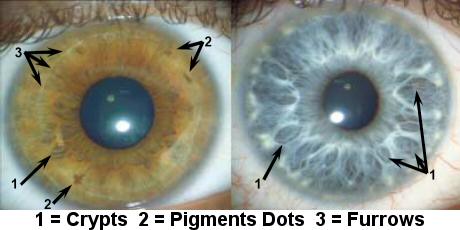
The research has been led by psychologist Mats Larsson and looks at relationship between measures of personality and the ‘crypts, pigment dots, and contraction furrows’ of the iris.

BBC News covers the research, as does a post on the Living the Scientific Life blog. There’s also some excellent background material to the research on a page from Larsson himself.

The paper itself is only available to subscribers to Biological Psychology. It seems the free summary isn’t available online yet, but this is an interesting excerpt from the introduction of the paper on previous studies:

The idea that personality differences are related to iris characteristics is not new. In 1965, Cattell observed differences in cognitive styles between blue and brown eyed subjects (Cattell, 1965) and since then eye color has been found to be related to a great variety of physiological and behavioral characteristics. Dark eyed people have on average higher scores on extraversion, neuroticism (Gentry et al., 1985), ease of emotional arousal (Markle, 1976) and sociability (Gary and Glover, 1976). However, there are a number of studies that fail to replicate the personality findings, typically because the effect tends to fade after early childhood. For instance, Rubin and Both (1989) found that blue-eyed children in kindergarten and Grade 2 were overrepresented in groups of extremely withdrawn youngsters, whereas no association could be found in Grade 4 or between eye color and extreme sociability in any grade.

According to Larsson’s more recent research, a gene called Pax6 is involved in both the development of the eye, and the development of an area of the frontal lobe called the anterior cingulate cortex or ACC.

The ACC is known to be involved in attention and inhibiting automatic responses, and there’s plenty of evidence to link it to personality-relevant traits like empathy and self-control.

Larsson found that ‘crypts’ were significantly associated with five personality characteristics (Feelings, Tendermindedness, Warmth, Trust and Positive Emotions) whereas ‘contraction furrows’ were associated with Impulsiveness.

I can’t say I’m entirely clear what ‘crypts’ and ‘contraction furrows’ look like, but there’s a description on Wikipedia and you can click here to see the diagram from Larsson’s paper in a popup window.

If it comes as a surprise that the same gene could influence both the eye and brain development, it’s actually not that strange an idea based on what we already know.

The retina, like the brain, is part of the central nervous system, so genes that code for the eye could also be associated with brain development.

Furthermore, the face develops from some of the same cells as the brain during the early stages of embryo growth.

This is why disorders that cause learning disabilities are sometimes associated with distinctive facial features (e.g. Down syndrome, Williams syndrome).

One other recent development worthy of note is that governments and businesses are now set on storing iris information to use as ID.

For example, the UK government wants to encode iris information on passports and keep copies on database to use in iris recognition systems in a system that is being trialled at the moment.

This might mean that personality profiles could be generated from biometric data.

How accurate they might be remains another question, but as with any centralised population sample, the concern is that those with unusual results may be scrutinised more closely using other methods, or deemed to be ‘risky’.

Link to BBC News story “How irises ‘reveal personalities'”.
Link to Living the Scientific Life post.
Link to Larsson’s page on his research.

The science of happiness

The Harvard Magazine has an in-depth article on the psychology of happiness and personal growth.

Whereas this was previously the domain of pop psychology and self-help books, the development of ‘positive psychology’ in the last decade has attracted serious researchers determined to understand how the mind and brain support positive attributes and emotions.

We covered this topic before when The New York Times published a very well researched article on the field.

Positive psychology was initially treated with scepticism but now seems to be largely in the mainstream of psychology research and is gathering significant public attention.

Link to ‘The Science of Happiness’ from Harvard Magazine.
Link to NYT article ‘Happiness 101’.

The promise of heroin

Andrew Tyler describes the attraction of heroin, from p275 of Street Drugs (ISBN 0340609753).

The book is considered one of the best guides to the culture, markets and effects of society’s common illicit drugs and is widely read by professionals who deal with drug users.

So what is this strange romance with heroin? Why, when people discuss it, do they leave their shoes and talk in symbols and metaphor? The heroin experience, for those who don’t let the drug run away with them, is warm, woozy, and carefree. Nothing matters any more in their beautiful bubble. For everyday users who have lost control, the experience is ultimately a mediocre one. The drug does not open doors to other worlds (like LSD) but closes them. It stupefies and kills feeling.

Perhaps the key to understanding heroin is to recognise that, for most of these compulsive users, it serves as an antidote to a wretched existence – lives that might be full of pain, might be too complicated to manage, or – conversely – empty of any meaning whatsoever. Heroin promises neutrality. It promises nothing.

If you’re not familiar with the pharmacology of heroin, you may be interested to know that heroin itself is largely inactive as a drug.

Heroin is a type of prodrug – meaning that it only becomes active after it is absorbed and metabolised.

The heroin molecule gets converted into morphine, which binds to the opioid receptors in the brain to have the desired effect.

Ironically, in it’s early days, heroin was marketed as a non-addictive treatment for morphine addiction.

Link to Wikipedia page on heroin.

I won’t be complete until I lose a limb

Today’s Guardian has a fascinating first person account by someone with ‘body identity integrity disorder’ or BIID. The condition is where people are uncomfortable with their bodies, usually a particular healthy limb, and want to have it amputated.

Importantly, people who have this desire are not psychotic, and it’s not a sexual fetish, they just have this intense desire that they should be an amputee.

Individuals will often go to extreme lengths to have a limb amputated. A recent case in the medical literature described how a man used bandages and pipe clamps to try and cut the blood off to his legs so they would require amputation.

His legs were finally amputated after suffering irreversible frostbite after applying dry ice to them for 7 hours. Interestingly, a similar technique was used by the woman in The Guardian article.

A 2005 article in The New York Times also discussed this fascinating condition, and it was the subject of a 2003 documentary by film maker Melody Gilbert.

How we represent the body and our body image in the brain is still quite mysterious.

For example, after amputation about 90% of people will experience a phantom limb – sensations of touch and movement seeming to arise from the previous location of the amputated limb.

However, people who have a limb missing at birth (who never had one to start with) can also experience phantom limbs, suggesting that we can develop with curiously distorted body representations from the very beginning.

Link to article ‘I won’t be happy until I lose my legs’ (thanks Tom!).
Link to NYT article on BIID.
Link to info on BIID documentary Whole.
Link to full text paper on phantom limbs from birth.