Jesuit hypochondria in early modern Naples

I always assumed Early Science and Medicine was what happened during 9am ward meetings, but it’s apparently an academic history journal.

In a recent issue, it has a curious article that discusses a ‘plague’ of ‘hypochondria‘ (an unfounded fear of serious illness) that apparently swept through the Jesuit community in 17th century Naples.

The first sentence of the abstract is completely priceless.

Poetry or pathology? Jesuit hypochondria in early modern Naples.

Early Science and Medicine, 12 (2), 187-213.

Haskell Y.

In their didactic poems on fishing and chocolate, both published in 1689, two Neapolitan Jesuits digressed to record and lament a devastating ‘plague’ of ‘hypochondria’. The poetic plagues of Niccol√≤ Giannettasio and Tommaso Strozzi have literary precedents in Lucretius, Vergil, and Fracastoro, but it will be argued that they also have a real, contemporary significance. Hypochondria was considered to be a serious (and epidemic) illness in the seventeenth century, with symptoms ranging from depression to delusions. Not only did our Jesuit poets claim to have suffered from it, but so did prominent members of the ‘Accademia degl’Investiganti’, a scientific society in Naples that was at odds with both the religious and medical establishments.

Link to PubMed entry.

Mapping emotions onto the city streets

Christian Nold maps cities. But instead of mapping their physical layout, he maps their emotional geography.

He uses a technique he invented called biomapping where participants walk the area connected to a system that measures galvanic skin response – a measure of the electrical resistance of the skin which is known to give a rating of arousal and stress.

The system is also connected to a GPS device, so the stress response of each person is physically mapped onto the landscape.

His maps describe an area in terms of how stressful it is, and so far, he’s mapped Greenwich in London, San Francisco and Stockport.

He’s also done a project that maps the sensory experiences of Newham.

I had the pleasure of meeting Christian the other night and one of the best things is is that he’s persuaded Ordinance Survey, the UK’s mapping agency, to print the maps!

I have a copy of the Greenwich map and so far everyone I’ve showed it to has been blown away.

You can buy paper copies of the maps, but also view them in full detail online.

Link to Emotion Map.
Link to Christian Nold’s website.

Higher price makes cheap wine taste better

A new brain scanning study has supported what we’ve suspected all along, more expensive wine tastes better partly because we expect it to.

Neuroscientist Hilke Plassman led a brain-scanning study [pdf], shortly to be published in the Proceedings of the National Academy of Sciences, where volunteers were asked to taste and rate five different wines, each individually priced.

What the volunteers didn’t know was that there were only three different wines, and two of them were tasted twice. One one occasion it was described as costing $90 a bottle, on another as costing $10 a bottle.

The volunteers rated the ‘more expensive’ wine as significantly more likeable despite being identical to the ‘cheaper’ wine.

In addition, the brain scans showed when the volunteers tasted the wine they thought was more expensive, their brains showed increased activity in the medial orbitofrontal cortex (mOFC) and its surrounding area, the rostral anterior cingulate cortex (rACC), both areas of the frontal lobes.

The orbitofrontal cortex is known to be involved in the regulation of emotions and encoding the ‘value’ of experiences. Unsurprisingly, it has been identified as a key area in studies of gambling.

However, it has also been previously found to correlate with ratings of pleasantness of smells, tastes and even music.

Interestingly, there was no difference in the brain areas directly related to experiencing taste, and the researchers suggest that the belief that the wine is more expensive probably doesn’t directly change our sensory experience, but leads us to think that the experience is more ‘valuable’.

The results echo behavioural studies which have found that the same wine is rated differently when served in different quality bottles.

pdf of full-text paper.
Link to write-up from The Times.

Fighting over inner experience

Salon has an entertaining review of the new book Describing Inner Experience which is sort of a combination of an argument and a self-consciousness showdown between philosopher Eric Schwitzgebel and psychologist Russell Hurlburt.

Schwitzgebel is sceptical that we can accurately describe our inner thoughts and experiences, while Hurlburt feels that we are capable of doing so, when properly directed.

If you think that it’s obvious we can describe our inner mental states, start by reading the review and you’ll get a flavour of what the problem is.

At the beginning of the book’s central section, Hurlburt and Schwitzgebel meet their volunteer. Her pseudonym is Melanie. She is in her 20s, and she has an interest in psychology but no experience in these debates. Hurlburt explains the rules to her: She will simply tell them what was on her mind just before each beep, and they will try to figure out if her reports are accurate.

Hurlburt handles the direct questioning, then turns her over to Schwitzgebel for cross-examination. They have six sessions, each about an hour long. And over the course of these sessions, something unexpected happens, a novelistic twist that is subtle, hilarious and hard to describe. A battle for interpretive credibility emerges, as the doubt Schwitzgebel casts upon Melanie’s self-understanding rebounds upon himself.

The preface and first chapter of the book are freely available online if you want to learn more, and the book itself has just been published.

Link to Salon review.
Link to details of book and sample preface and chapter.

Knock, knock, room service

NPR has a short piece on a fascinating study where the researchers informed hotel maids that their normal work counted as exercise, which had the effect of making them more physically fit, despite them not seeming to change their activity levels.

Unfortunately, the NPR segment seems to suggest that the study ‘challenges the placebo effect’, based on the faulty assumption that the placebo effect only alters ‘subjective perception’.

In fact, placebos are known to affect outcome in a range of physical illnesses (and even produce placebo ‘side-effects – known as the nocebo effect), and they have been shown to directly stimulate the same brain circuit when they are used to replace a drug to treat Parkinson’s disease.

Furthermore, the study itself [pdf] claims to demonstrate the placebo effect in a new domain.

Despite this, it’s a fascinating study and raises a number of intriguing questions, such as whether the placebo effect is directly affecting body metabolism, or whether the information given to the maids just made them behave differently, and actually do their work in a way to give more health benefits.

Link to NPR piece on the study.
pdf of full-text of study.

ECT: the blues and the electric avenue

Electroconvulsive therapy, ECT or electroshock therapy is the most controversial treatment in psychiatry, and it’s also the most misunderstood.

It’s impossible to discuss ECT without mentioning One Flew Over the Cuckoo’s Nest because the book, the play and the film have given us the most culturally salient image of the treatment.

Kesey depicts it as little more than tool of oppression to subjugate Randal P. McMurphy who is only in hospital because, as far as he can figure out, “I, uh, fight and fuck too much”.

This negative portrayal is almost standard in the film industry but captures little of the reality of the average ECT treatment, which is usually prescribed for depression of the most severe kind (it is sometimes used for psychosis and catatonia, but much less frequently).

ECT treatment involves passing about 800 milliamps of electricity through the brain. 800 milliamps is a bit more than your average mobile phone battery puts out, but is quite significant as far as the brain is concerned and is enough to cause a seizure.

The current can be applied to both sides of the brain (bilaterally, most common) or one side only (unilaterally, less common), and can take the form of a pulse (most common) or a sine-wave (less common). There is evidence to suggest that different versions have different benefits and side effects, but the choice may depend on national guidelines or clinic preference.

This effect on the brain is essentially the same as an epileptic seizure, but it looks quite different. This is because the patient is given a general anaesthetic, so they are unconscious, and a muscle relaxant, so there is barely any movement.

In terms of physical health risks, ECT is thought to be much safer than most drug treatments and is often prescribed to people in the most fragile state of health (e.g. pregnant women, the elderly) for exactly this reason.

The biggest risk to health is actually the anaesthetic and muscle relaxant drug, which is the main reason a heart and general medical check-up is given before treatment.

ECT is usually given in doses of 6-12 treatments over a similar number of weeks (psychiatrists seem to have a superstition about giving an odd number of treatments for some reason, and so it is usually given in ‘pairs’ of doses), although can be given as a ‘maintenance’ treatment, less frequently, over longer periods.

We still don’t know how ECT works, although effects on brain plasticity (physical change and adaptation) and neurochemistry are being investigated.

In terms of its effectiveness and impact, the whole business of ECT is a complicated issue, but here’s what the current evidence suggests.

At least in the short-term, it is one of the most rapid and effective treatments for severe depression.

It is associated with ongoing memory difficulties, even after the treatment has stopped.

Patients generally view it much less favourably than clinicians, and it is generally viewed negatively by the public and carries significant stigma.

Now here are the caveats: because ECT is typically given to the most severely depressed patients (who likely already have cognitive problems), it is difficult to do ideally balanced, gold standard randomised controlled trials that give a good matched measure of both benefit and side-effects. In fact, these sorts of studies have not been done.

This is why there is disagreement, even with the medical and scientific community, about its effects, both good and bad.

Furthermore, Dr Richard Abrams, one of the leaders in ECT research and author of the standard clinical textbook, has a financial interest in, and reportedly owns, Somatics, one the world’s biggest suppliers of ECT machines and equipment. This makes some people suspicious of his promotion of the treatment.

However, Dr Harold Sackheim, probably the other ‘big name’ in ECT research, has no financial interests in any ECT company and does not receive financial compensation for consultation with the ECT industry.

Importantly, there is considerable individual variation in how people respond to ECT, in terms of their symptoms, post-treatment cognitive impairment, their subjective experience, and their attitudes.

Some people find ECT ineffective and damaging, others feel their life has been saved and their illness properly treated for the first time.

There are many articulate and moving accounts of the treatment on the web. Journalist Liz Spikol found ECT largely unhelpful and suffered debilitating cognitive effects, while surgeon Sherwin Nuland found it was the only thing that helped him recover and return to work.

Perhaps the most controversial topic is involuntary or forced treatment.

The majority of ECT patients volunteer for the treatment (usually on the suggestion of their doctors) and sign a consent form for treatment.

In some countries, where law allows, a minority of patients are treated with ECT against their will, usually if they are deemed to be a danger to themselves or others, and where other treatments have failed.

In a nutshell, it seems to be the most effective treatment for severe depression, seems to impair memory, is disliked and stigmatised, and is difficult to research. Most notably, as a patient, your mileage may vary. Some people have no benefit, some have huge improvement; some have no side-effects, some have ongoing difficulties. Most have some of each.

It’s also really hard to have a sensible discussion about ECT because of the emotions it stirs up. Like any treatment that provokes such opposite reactions from both those that have had it, and those that haven’t, it’s worth learning more with a cool head and an open heart.

I’ve avoided giving my own opinions on the treatment, which, like the evidence are complex, but I hope you’ll learn more, decide for yourself and be able to consider both new scientific evidence and reaction from people you meet who have had, or are considering ECT.

Link to Wikipedia page on ECT.

When a Rose Is Not Red

There’s an interesting article in January’s Journal of Cognitive Neuroscience about a brain injured patient who has a curious form of simultanagnosia – the inability to perceive more than one object at once.

In this case, he also seemed unable to report more than one attribute, like colour or name, at a time, while looking at the object.

Simultanagnosia: When a Rose Is Not Red.

J Cogn Neurosci. 2008, 20 (1), 36-48

Coslett HB, Lie G.

Information regarding object identity (“what”) and spatial location (“where/how to”) is largely segregated in visual processing. Under most circumstances, however, object identity and location are linked. We report data from a simultanagnosic patient (K.E.) with bilateral posterior parietal infarcts who was unable to “see” more than one object in an array despite relatively preserved object processing and normal preattentive processing. K.E. also demonstrated a finding that has not, to our knowledge, been reported: He was unable to report more than one attribute of a single object. For example, he was unable to name the color of the ink in which words were written despite naming the word correctly. Several experiments demonstrated, however, that perceptual attributes that he was unable to report influenced his performance. We suggest that binding of object identity and location is a limited-capacity operation that is essential for conscious awareness for which the posterior parietal lobe is crucial.

This is particularly interesting because it relates to a key question in understanding consciousness, known as the ‘binding problem‘.

The brain deals with different parts of perception (for example movement, colour, light-dark differences) in different parts of the brain, yet when we perceive an object, it all seems to be integrated into one conscious experience.

For example, our experience of an object’s colour and movement never seem to be ‘out of synch’. How this happens is the essence of the binding problem.

This case report is of someone whose brain injury seems to prevent ‘binding’.

Looking at what brain injured patients can no longer do and matching this with the damaged areas can give us a clue to how the brain works because “you don’t know what you’ve got ’till it’s gone”.

Strictly speaking, this is called the transparency assumption in cognitive neuropsychology but I call it the Joni Mitchell principle as the quote is a song lyric of hers (I got this from a student essay I once marked so thank you insightful mystery student!).

In this case, the patient suffered damage to both sides of the back of the parietal lobes because of a stroke (“bilateral posterior parietal infarcts”), suggesting the parietal lobes might be key in binding perceptual elements for consciousness.

Unfortunately, I can’t get to the full-text of the paper yet, so I’m not sure what insights the authors themselves have offered. Still, a fascinating case.

Link to PubMed abstract.

Not just a pretty face

The Economist has a fascinating article on the link between beauty, intelligence and success. It reviews research showing that beautiful people are actually, on average, slightly more intelligent and it’s probably a result of genetics.

The first half of the article looks at the psychological research that has found that beauty, and particularly symmetry, is linked to health and intelligence.

Interestingly, visual beauty is only a clue to intelligence at certain stages in life:

They found that the faces of children and adults of middling years did seem to give away intelligence, while those of teenagers and the elderly did not. That is surprising because face-reading of this sort must surely be important in mate selection, and the teenage years are the time when such selection is likely to be at its most intense—though, conversely, they are also the time when evolution will be working hardest to cover up any deficiencies, and the hormone-driven changes taking place during puberty might provide the material needed to do that.

Nevertheless, the accumulating evidence suggests that physical characteristics do give clues about intelligence, that such clues are picked up by other people, and that these clues are also associated with beauty.

The second half of the article reviews an innovative approach to the effect of beauty by economist Daniel Hamermesh.

He’s found a robust link between financial success and beauty (interestingly which differs across cultures), but has also looked at the cost-effectiveness of using cosmetics and clothing to boost attractiveness.

It turns out, it’s a poor investment. His research study [pdf] found that the financial boost generate by using clothes and beauty treatments only covers 15% of their cost.

Link to Economist article on beauty and success.
pdf of Hamermesh’s paper ‘Dress for Success: Does Primping Pay?’.

Alcohol, the cause and solution to all of life’s problems

As the Christmas season is upon us, what better time to think about alcohol, aptly described by Homer Simpson as the “the cause and solution to all of life’s problems”.

The British Medical Journal has a wonderful article that tells you everything you wanted to know about alcohol (but were too drunk to ask) in one concise package.

It covers the effect of alcohol on the body and brain, and describes what affects how alcohol is absorbed into the body:

Rate of absorption of alcohol depends on several factors. It is quickest, for example, when alcohol is drunk on an empty stomach and the concentration of alcohol is 20-30%. Thus, sherry, with an alcohol concentration of about 20% increases the levels of alcohol in blood more rapidly than beer (3-8%), while spirits (40%) delay gastric emptying and inhibit absorption. Drinks aerated with carbon dioxide—for example, whisky and soda, and champagne—get into the system quicker. Food, and particularly carbohydrate, retards absorption: blood concentrations may not reach a quarter of those achieved on an empty stomach. The pleasurable effects of alcohol are best achieved with a meal or when alcohol is drunk diluted, in the case of spirits.

It also notes that blood alcohol level is affected by stage of the menstrual cycle in women. Apparently, it is highest premenstrually and at ovulation (evolutionary psychologists, start your engines).

Different effect are compared to the amount of alcohol in the blood stream, so it’s a really handy summary.

The BMJ also published a systematic review of hangover cures and preventions later in the year, and found, rather sadly, that:

No compelling evidence exists to suggest that any conventional or complementary intervention is effective for preventing or treating alcohol hangover. The most effective way to avoid the symptoms of alcohol induced hangover is to practise abstinence or moderation.

Bugger.

Link to BMJ article ‘ABC of Alcohol’.
Link to BMJ systematic review on hangover cures and preventions.

What IQ doesn‚Äôt tell you about race

IQ has suddenly become a hot topic again, owing to a certain DNA-discovering Nobel laureate putting his foot in his mouth and the publication of a couple of books on the subject. Malcolm Gladwell has written a great article for the New Yorker that summarises many of the recent arguments and suggests why comparing IQ scores of different races is doomed to failure.

IQ is designed so it always has a mean of 100 and a standard deviation of 15. However, during the past decades people have been scoring better on IQ tests, something known as the Flynn effect, meaning the new versions have been re-adjusted to make sure the mean stays at 100.

This is important, because it means that comparing IQ from the 1950s is not a far comparison to IQs from the 2000s, because they use tests with different standards.

Some of the people who argued that certain races are more intelligent than others have failed to include these changes in their calculations, and, as Gladwell points out, when these are accounted for, many of these differences completely disappear.

The best way to understand why I.Q.s rise, Flynn argues, is to look at one of the most widely used I.Q. tests, the so-called WISC (for Wechsler Intelligence Scale for Children)…

For instance, Flynn shows what happens when we recognize that I.Q. is not a freestanding number but a value attached to a specific time and a specific test. When an I.Q. test is created, he reminds us, it is calibrated or “normed” so that the test-takers in the fiftieth percentile—those exactly at the median—are assigned a score of 100. But since I.Q.s are always rising, the only way to keep that hundred-point benchmark is periodically to make the tests more difficult—to “renorm” them. The original WISC was normed in the late nineteen-forties. It was then renormed in the early nineteen-seventies, as the WISC-R; renormed a third time in the late eighties, as the WISC III; and renormed again a few years ago, as the WISC IV—with each version just a little harder than its predecessor. The notion that anyone “has” an I.Q. of a certain number, then, is meaningless unless you know which WISC he took, and when he took it, since there’s a substantial difference between getting a 130 on the WISC IV and getting a 130 on the much easier WISC.

Link to Malcolm Gladwell article in the New Yorker.

Almost perfect

The New York Times has a short article on mental health and perfectionism, the tendency to measure success and self-worth by the completion of often unrealistic goals.

Over the last two decades this concept is being increasingly seen as a core component in some types of types of depression, anxiety and obsessive-compulsive and eating disorders.

A recent study identified several key features of perfectionism as, primarily, excessive concern over making mistakes, with other influences including high personal standards, the perception of high expectations and criticism from parents, doubting of the quality of your own actions, and a preference for order and organisation.

One of the key papers [pdf] in the field that really cemented the idea of perfectionism as an important psychological idea, suggested perfectionism could be focused inward (stringently evaluating and censuring your own behaviour), other-oriented perfectionism (having unrealistic standards for other people) and socially prescribed perfectionism (living up to unrealistic standards which the person perceives others are setting).

For people who already have negative ideas about themselves, perfectionism is thought to work like a constant test. If you can prove to yourself you can pass the test, you feel like a good person.

However, if the standards are unrealistic, you’re always going to fail, and ironically, concern and anxiety about achieving these high standards can actually lead to putting things off, or doing the tasks worse.

This can lead to a vicious circle where people feel their emotional well-being is dependent on them reaching impossible goals, but trying to reach the goal makes them feel even worse.

One of the difficult things in psychological treatment, is often trying to persuade people that performing worse is actually a good thing. ‘Good enough’ rather than ‘perfect’.

Link to NYT article on perfectionism.
pdf of key paper ‘Perfectionism in the Self and Social Contexts’.

Does stress turn your hair grey?

Scientific American has a short article which examines whether there’s any truth to the common theory that stress makes your hair go grey. It’s turns out there’s some circumstantial evidence that stress may have an effect, but no definite causal link has been found.

Apparently, the gradual loss of melanocyte stem cells, ones that are key for hair colouring, lead to the loss of pigment.

Does stress accelerate this demise of the melanocyte population? “It is not so simple,” Fisher says, noting that the process of graying is a multivariable equation. Stress hormones may impact the survival and / or activity of melanocytes, but no clear link has been found between stress and gray hair. Suspicions ‚Äî and hypotheses ‚Äî abound, however.

“Graying could be a result of chronic free radical damage,” says Ralf Paus, professor of dermatology at the University Hospital Schleswig-Holstein in L√ºbeck, Germany. Stress hormones produced either systemically or locally (by cells in the follicle) could produce inflammation that drives the production of free radicals ‚Äî unstable molecules that damage cells ‚Äî and “it is possible that these free radicals could influence melanin production or induce bleaching of melanin,” Paus says.

“There is evidence that local expression of stress hormones mediate the signals instructing melanocytes to deliver melanin to keratinocytes,” notes Jennifer Lin, a dermatologist who conducts molecular biology research at the Dana-Farber / Harvard Cancer Center in Boston. “Conceivably, if that signal is disrupted, melanin will not deliver pigment to your hair.”

And general practice physicians have observed accelerated graying among patients under stress, says Tyler Cymet, head of family medicine at Sinai Hospital in Baltimore, who conducted a small retrospective study on hair graying among patients at Sinai. “We’ve seen that people who are stressed two to three years report that they turn gray sooner,” he says.

Link to SciAm article ‘Fact or Fiction?: Stress Causes Gray Hair’ (via 3Q).

Seeing red can really affect performance

Cognitive Daily discusses the findings of two interesting studies that suggest that simply seeing the colour red makes us perform worse on tests.
The articles discuss a couple of elegant studies by a research team, led by psychologist Andrew Elliot, which confirmed that seeing red makes us tend to do worse on tests. They then set about trying to understand why.

In a second study, students were given test booklets with the title in one of several possible colours. Interestingly, those who had booklets with red titles tended to choose easier questions, which led to a direct test of a neuropsychological idea about brain symmetry and avoidance:

Students who saw the red test cover chose significantly more easy test questions than either those who saw green or gray test covers. There was no significant difference between the students who saw green and gray.

So it seems that the color red in this context may cause people to avoid challenging or difficult situations. In their final experiment, the researchers took advantage of a robust experimental finding about avoidance. For more than two decades, nearly a hundred studies have found a characteristic brain activity associated with avoidance — asymmetrical activity in the right frontal cortex. This is easily measured using non-invasive EEG equipment.

The research team used exactly this technique and found that relatively greater right hemisphere was found for red material, but not other colours, suggesting red triggers part of the avoidance system.

As Cognitive Daily note, we can’t tell from these experiments whether the red and avoidance link is with us from birth, or whether we’ve just learnt it through cultural exposure.

It’s a really elegant couple of studies though, and as always, they’re wonderfully explained by the CogDaily team.

Link to ‘Does the color red really impair performance on tests?’.
Link to ‘Why does seeing red make test-takers choke?’

The absinthe minded green fairy

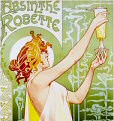
The New York Times has a brief but wonderfully illustrated article on the cultural history of absinthe, the highly alcoholic spirit that was adopted by numerous famous artists.

Wikipedia also has a fantastic article on absinthe which looks at the history of its creation, popularity, prohibition and revival.

It also exposes the myth that wormwood, a key flavouring ingredient, causes hallucinations. A scientific article looked at the evidence for this and found that the effects of the drink are almost entirely due to its alcohol content.

While thujone, an active ingredient in wormwood, can causes seizures in high enough quantities, there isn’t enough in absinthe to have a significant effect.

However, erroneous concerns about the drink leading to dangerous forms of ‘madness’ led it to be banned in most European countries in the early 1900s, giving it an instant notoriety and cultural impact that far goes beyond its pharmacological influence.

Link to NYT on ‘Absinthe Returns in a Glass Half Full of Mystique…’
Link to Wikipedia article on absinthe.
Link to scientific article ‘Absinthism: a fictitious 19th century syndrome…’

Music in dreams

From a footnote on p282 of Oliver Sacks Musicophilia:

There have been very few systematic studies of music in dreams, though one such [pdf], by Valeria Uga and her colleagues at the University of Florence in 2006, compared the dream logs of thirty-five professional musicians and thirty non-musicians. The researchers concluded that “musicians dreams of music more than twice as much as non-musicians [and] musical dream frequency is related to the age of commencement of musical instruction, but not to the daily load of musical activity. Nearly half of all recalled music was non-standard, suggesting that original music can be created in dreams.” While there have been many anecdotal stories of composers creating original compositions in dreams, this is the first study to lend support to the idea.

The finding has an interesting parallel with findings on the ‘age-of-acquisition effect’ in language research.

It was known for years that things like the ability to name objects or remember words was influenced by the how common the word is, and how ‘concrete’ it is. For example, concrete words like tree, apple and house tend to be more robust than abstract words like hope, love or like.

Largely due to the work Andy Ellis it’s been found that many of these effects are actually a function of at what age the word was first learnt, with earlier words being more robust in terms of being more easily processed or accessed during cognitive processing.

The Uga study hints that a similar process may be at work with music.

Link to PubMed entry for study on music and dreams.
pdf of full-text of music and dreams study.
Link to Google Scholar search for age-of-acquisition effect.

Hypnosis as a surgical tool

The editorial of the Journal of the National Cancer Institute discusses a recent study that found that hypnosis can be successfully used in breast cancer surgery to reduce pain, nausea, painkiller use, tiredness and emotional impact of the surgical procedure.

The study was a randomized controlled trial of patients who were undergoing breast surgery either to treat a cancer or to test a lump to see if it was cancerous.

Patients were randomly assigned to either a brief 15-minute hypnosis condition, or to another where the patient discussed their concerns with an empathic psychologist (to make sure the effects weren’t just due to having someone their to ‘calm their nerves’).

The study found that patients given hypnosis needed less painkilling medication, were less nauseous, less emotionally upset, and experienced less pain intensity than the patients in the ’empathic listening’ condition.

The editorial notes that the results suggest hypnosis is a powerful tool for helping patients, discusses why it isn’t being used more widely, and what we know about how it affects the brain:

Thus, the study in this issue contributes to an impressive body of research using randomized prospective methodology in sizeable patient populations to demonstrate that adjunctive hypnosis substantially reduces pain and anxiety during surgical procedures while decreasing medication use, procedure time, and cost. If a drug were to do that, everyone would by now be using it.

So why don’t they? For one thing, there is no mediating industry to sell the product‚Äîdangling watches are out of fashion for hypnotic inductions. Plus, there is still lingering suspicion that hypnosis reeks of stage show trickery. After all, the magic wand originated with Mesmer’s use of a magnetic stick to presumably alter magnetic fields in patients’ bodies. Yet hypnosis is the oldest Western form of psychotherapy. Hypnosis is a state of highly focused attention, with a constriction in peripheral awareness and a heightened responsiveness to social cues. It is most similar to the everyday state of becoming so absorbed in a good movie or a novel that one enters the imagined world and suspends awareness of the usual one, a condition playwrights refer to as the “suspension of disbelief.” This state can exert powerful influence on mind and body.

Altering perception using hypnosis results in brain changes that literally reduce pain perception [rather than merely altering the response to pain]. Indeed, simply changing the wording of the hypnotic instruction from “you will feel cool, tingling numbness more than pain” to “the pain will not bother you” alters the brain location of the analgesia from the somatosensory cortex to the anterior cingulate gyrus. Hypnotic alteration of color perception results in bidirectional changes in blood flow in the portions of the visual cortex that process color vision‚Äîblood flow in this region increases when color is imagined rather than seen and decreases when color is hypnotically drained from a colorful stimulus. Thus, there is good neurophysiologic reason to believe that hypnosis is potentially a powerful tool to alter perception of pain and associated anxiety.

If you’re interested in volunteering for research into the neuropsychology of hypnosis in London (which doesn’t involve anything painful!), we’re still recruiting participants for sessions at 2pm on Saturday 17th and 24th November.

There’s more information at our study web page.

Link to Journal of the National Cancer Institute editorial on hypnosis.
Link to abstract of RCT study.
Link to information on our neuropsychology of hypnosis study.