Rolling thunder

Neurophilosophy covers the discovery of a new type of synaesthesia – where movement is experienced as sound. In fact, the researchers have put the test online so you can test yourself.

Synaesthesia is where the senses are ‘crossed’ so people might experience visual figures, such as letters, as tastes. This is one type, but letter to colour, sound to colour or number to space are most common.

This new study was initiated when the researchers were testing people with other forms who synaesthesia who happened to mention that they could ‘hear’ a moving pattern on a computer monitor.

Neurophilosophy picks up the story where the researchers sought to confirm this with an elegant experiment:

Saenz and Koch devised a task which could be used to objectively confirm the reports of the 4 participants, a task on which they would out-perform non-synaesthetes who do not experience the “extra” sensation. The task involved judging rhythmic patterns – in each trial, the participants were presented with pairs of sequences of either visual flashes or auditory beeps, and then asked if the two were the same.

Typically, non-synaesthetes are much better at judging auditory than visual sequences. But the hearing-motion synaesthetes should be at an advantage when presented with sequences of visual flashes, because they can hear, as well as see, the pattern. This is exactly what was found: the 4 synaesthetes and the 10 non-synaesthete controls performed equally well in the trials of sound sequences, with an accuracy of around 85%. But in the trials with sequences of visual flashes, the synaesthetes remained accurate, with a score of about 75%, whereas the performance of the controls fell to 50%, which is what would be expected by chance.

Link to Neurophilosophy on study.
Link to full text of study.

Don’t get high on your own supply

An article from Forensic Sciences International investigated evidence for addiction in anaesthetists by analysing hair samples.

The paper reports on four court cases where anaesthetists were suspended for suspected addiction to the drugs they use to put people to sleep or kill pain during operations.

Each case involved hair analysis to gather evidence, owing to the fact that many drugs will leave traces in the hair as it grows, leaving a timeline of drug use.

Chemical dependency is a disease that can affect all professions. Among the health care professionals, anesthesiologists represent a specific group. Numerous factors have been proposed to explain the high incidence of drug abuse among anesthesiologists. These include: easy access to potent drugs, particularly narcotics, highly addictive potential of agents with which they are in contact, and easy diversion of these agents since only small doses will initially provide an effect desired by the abuser.

Opioids are the drugs of choice for anesthesiologists, and among them fentanyl and sufentanil are the most commonly used. Alcohol is mostly abused by older anesthesiologists. Propofol, ketamine, thiopental and midazolam are also abused. In fact, all but quaternary ammonium drugs can be observed. Signs and symptoms of addiction in the hospital workplace include: unusual changes in behavior, desire to work alone, refusal of lunch relief or breaks, volunteer for extra cases, call, come in early and leave late, frequent restroom breaks, weight loss and pale skin, malpractice, behind on charts ….

Toxicological investigations are difficult, as the drugs of interest are difficult to test for. In most cases, half-lives of the compounds are short, and the circulating concentrations weak. It is, therefore, necessary to develop tandem mass spectrometry procedures to satisfy the criteria of identification and quantitation. In most cases, blood and/or urine analyses are not useful to document impairment, as these specimens are collected at inadequate moments. Hair analysis appears, therefore, as the unique choice to evidence chronic exposure.

Depending the length of the hair shaft, it is possible to establish an historical record, associated to the pattern of drug use, considering a growth rate of about 1cm/month. An original procedure was developed to test for fentanyl derivatives. After decontamination with methylene chloride, drugs are extracted from the hair by liquid/liquid extraction after incubation in pH 8.4 phosphate buffer. Fentanyl derivatives are analyzed by GC-MS/MS. The following cases are included in this paper:

Case 1: 50-year-old anesthetist, positive for fentanyl (644 pg/mg); Case 2: 42-year-old anesthetist, positive for fentanyl (101 pg/mg) and sufentanil (2 pg/mg); Case 3: 40-year-old anesthetist, positive for codeine (210 pg/mg), alfentanil (30 pg/mg) and midazolam (160 pg/mg); Case 4: 46-year-old nurse, found dead, positive for alfentanil (2 pg/mg) and fentanyl (8 pg/mg). In these cases, the combination of an alternative specimen (hair) and hyphenated analytical techniques (tandem mass spectrometry) appears to be a pre-requisite.

A recent review article noted that while doctors were generally healthier than the general popular, addiction remains a particular risk for physicians, stating “addiction impairs more physicians than any other disorder or disease. Though alcohol use, abuse, and dependence are no more prevalent among physicians than other professionals, physicians display higher rates of prescription drug abuse and dependence than the general population.”

Link to abstract of study on hair analysis.
Link to abstract of study on prescription drug abuse among physicians.

Magic in mind

Interest in the cognitive science of magic is really hotting up with Nature Neuroscience having just published a review article jointly authored by some leading cognitive scientists and stage illusionists. They argue that by studying magic, neuroscientists can learn powerful methods to manipulate attention and awareness in the laboratory which could give insights into the neural basis of consciousness itself.

The neuroscientists involved are Stephen Macknik and Susana Martinez-Conde, while the magicians are Mac King, James Randi, Apollo Robbins, Teller from Penn and Teller, and John Thompson.

If this collection of names sounds familiar, it’s because this time last year the same group presented a symposium at the Association for the Scientific Study of Consciousness on ‘The Magic of Consciousness’.

The new article rounds up the conference discussion and The Boston Globe has a piece looking at some of the highlights.

This is not the only cognitive science article that explores what neuroscience can learn from the mystic arts. In a forthcoming article [pdf] for Trends in Cognitive Sciences psychologist Gustav Kuhn.

Kuhn has done some fantastic experimental studies looking at eye movements and attention of people watching magic tricks.

It’s not only an academic interest as Kuhn is apparently an illusionist himself and he’s one of a number of psychologists who also happen to be stage magicians. Just off the top of my head psychologists Richard Wiseman and Robert Moverman are also ex-professional conjurers. I’ve come across several others and so its perhaps not so surprising that these new articles have been published, but more that they took so long.

Both articles look at some common and no so common magic tricks and explain the cognitive science behind how they work:

Persistence of vision is an effect in which an image seems to persist for longer than its presentation time12, 13, 14. Thus, an object that has been removed from the visual field will still seem to be visible for a short period of time. The Great Tomsoni’s (J.T.) Coloured Dress trick, in which the magician’s assistant’s white dress instantaneously changes to a red dress, illustrates an application of this illusion to magic. At first the colour change seems to be due (trivially) to the onset of red illumination of the woman. But after the red light is turned off and a white light is turned on, the woman is revealed to be actually wearing a red dress. Here is how it works: when the red light shuts off there is a short period of darkness in which the audience is left with a brief positive after-image of the red-dressed (actually white-dressed but red-lit) woman. This short after-image persists for enough time to allow the white dress to be rapidly removed while the room is still dark. When the white lights come back, the red dress that the assistant was always wearing below the white dress is now visible.

Link to Nature Neuroscience article (via BB).
pdf of Trends in Cognitive Science article.
Link to Boston Globe write-up.

On the edge of truth

Discover Magazine has a brief but interesting interview with ex-NSA psychologist Eric Haseltine, who directed research into interrogation and lie detection.

He discusses the use of new technologies that measure body and brain function – i.e. the still not-yet-very-good ‘brain scan lie detectors’ – but also talks about the skills humans need to be able to pick up when someone is trying to deceive them.

Interestingly, he cites the development of human skills as where the biggest advances are likely to be made in the future:

What is the hottest area today in deception detection?

Human lie detectors. I think the low-tech training of humans to be better interpreters of information is where the most productive work is going to be. The reason being that you can either train a human to do it or train a computer to do it, and human brains are still much better computers than computers are.

Link to Discover Magazine interview with Haseltine.
Link to New Yorker article on the shortcomings of ‘brain scan lie detection’.
Link to past interview with Haseltine on US national security.

Misdirected magic

Just one more on the magic. I just got this email from Mind Hacks readers Stefano suggesting that stage magicians that use psychological language actually pollute the public’s understanding of science. He also gives a much better, and, I’m guessing, more accurate explanation of the hand-raising trick in Keith Barry’s TED performance.
As a psychologist, I have to say I dislike the new sort of mentalism that we’re seeing nowadays. Derren Brown (an incredibly talented performer, as you said) tries to portray his show as something more than old-fashioned magic by introducing psychological terms and studies, somewhat erratically. I understand that his use of scientific terminology might be part of the misdirection, but it really makes me cringe to see he perform ridiculous feats and justify it by citing things like the Milgram study, concentration abilities or persuasion techniques. Almost every time he mentions a psychological concept, he either misrepresents it or uses it to explain absurd stuff that he did with stooges or simply old magic tricks.

I didn’t know Keith Barry, but I have to say his TED lecture made me put him on the same category as Derren Brown: old mentalist tricks disguised as “persuasion and psychological techniques”. He even managed to fool you, it seems: the trick that you attributed to hypnosis has nothing to do with it, being achieved simply by the performer applying pressure on the feet of the subject instead of his hand. Notice how he never says where the pressure will be, and his left leg is covered by the table. His other live tricks are equally simple, and have nothing do with psychology, except for the fact that everything you do to an audience – even cheating/fooling them – is part of it.

Stefano makes an interesting point that these acts rely, in part, on misinforming people about psychology. Derren Brown is a classic example where he often gives explanations after the trick so the viewer feels they are being let in on the secret, but which are obviously misleading and so are part of the more general misdirection that the feats are achieved through the ‘power of the mind’.

In terms of the hand raising trick that Stefano mentions, looking back at the video, this seems a much more likely explanation. In which case, this is a ‘theory of mind‘ illusion, where we are fooled into attributing a different mental state to the person picked from the audience than they actually have.

I hope you don’t mind me publishing part of your email Stefano, I did try and email and ask but unfortunately the address wasn’t valid. Do get in touch if you have a website or blog and I’ll happily link to it and many thanks for your interesting commentary.

Dennett on magic and misdirection

While musing over yesterday’s post on the use of psychological language as a form of a magician’s misdirection, I remembered Dennett’s 2003 article [pdf] on consciousness where he uses exactly this as a metaphor for why consciousness doesn’t exist as some scientists think it does.

Dennett argues that the ‘hard problem‘ is a red herring – the whole question of how conscious first person experience arises from the biological function of the brain assumes that consciousness is a single thing that needs explaining.

He suggests that there isn’t a single thing that is consciousness, just a collection of mental components, but the fact we’ve named it as a single thing fools us.

In his article Explaining the “Magic” of Consciousness, he gives a great analogy of how the use of the word ‘the’ was used in a card trick to make it seem completely mysterious even to fellow professional magicians.

The tempting idea that there is a Hard Problem is simply a mistake. I cannot prove this. Or, better, even if I can prove this, my proof will surely fall on deaf ears, since CHALMERS, for instance, has already acknowledged that arguments against his convictions on this score are powerless to dislodge his intuition, which is beyond rational support. So I will not make the tactical error of trying to dislodge with rational argument a conviction that is beyond reason. That would be wasting everybody’s time, apparently. Instead, I will offer up what I hope is a disturbing parallel from the world of card magic: The Tuned Deck.

For many years, Mr. Ralph Hull, the famous card wizard from Crooksville, Ohio, has completely bewildered not only the general public, but also amateur conjurors, card connoisseurs and professional magicians with the series of card tricks which he is pleased to call “The Tuned Deck”…

Ralph Hull’s trick looks and sounds roughly like this:

Boys, I have a new trick to show you. It’s called ‘The Tuned Deck’. This deck of cards is magically tuned [Hull holds the deck to his ear and riffles the cards, listening carefully to the buzz of the cards]. By their finely tuned vibrations, I can hear and feel the location of any card. Pick a card, any card… [The deck is then fanned or otherwise offered for the audience, and a card is taken by a spectator, noted, and returned to the deck by one route or another.] Now I listen to the Tuned Deck, and what does it tell me? I hear the telltale vibrations, … [buzz, buzz, the cards are riffled by Hull’s ear and various manipulations and rituals are enacted, after which, with a flourish, the spectator’s card is presented].

Hull would perform the trick over and over for the benefit of his select audience of fellow magicians, challenging them to figure it out. Nobody ever did. Magicians offered to buy the trick from him but he would not sell it. Late in his life he gave his account to his friend, HILLIARD, who published the account in his privately printed book. Here is what Hull had to say about his trick:

For years I have performed this effect and have shown it to magicians and amateurs by the hundred and, to the very best of my knowledge, not one of them ever figured out the secret. …the boys have all looked for something too hard [my italics, DCD].

Like much great magic, the trick is over before you even realize the trick has begun. The trick, in its entirety, is in the name of the trick, “The Tuned Deck”, and more specifically, in one word “The”! As soon as Hull had announced his new trick and given its name to his eager audience, the trick was over. Having set up his audience in this simple way, and having passed the time with some obviously phony and misdirecting chatter about vibrations and buzz-buzz-buzz, Hull would do a relatively simple and familiar card presentation trick of type A (at this point I will draw the traditional curtain of secrecy; the further mechanical details of legerdemain, as you will see, do not matter).

His audience, savvy magicians, would see that he might possibly be performing a type A trick, a hypothesis they could test by being stubborn and uncooperative spectators in a way that would thwart any attempt at a type A trick. When they then adopted the appropriate recalcitrance to test the hypothesis, Hull would ‘repeat’ the trick, this time executing a type B card presentation trick. The spectators would then huddle and compare notes: might he be doing a type B trick? They test that hypothesis by adopting the recalcitrance appropriate to preventing a type B trick and still he does “the” trick – using method C, of course. When they test the hypothesis that he’s pulling a type C trick on them, he switches to method D – or perhaps he goes back to method A or B, since his audience has ‘refuted’ the hypothesis that he’s using method A or B.

And so it would go, for dozens of repetitions, with Hull staying one step ahead of his hypothesis-testers, exploiting his realization that he could always do some trick or other from the pool of tricks they all knew, and concealing the fact that he was doing a grab bag of different tricks by the simple expedient of the definite article: The Tuned Deck.

pdf of article Explaining the “Magic” of Consciousness.

Sleight of mind

I’ve just watched a video of an immensley entertaining TED presentation by ‘brain magician’ Keith Barry who does an act with various ‘mind control’ or ‘mind reading tricks’.

It reminded me of an early book by Derren Brown, an English magician who has a similar pitch. Brown is better known for his more recent TV shows and books, but some of his early publications are fascinating because they not only discuss his approach, but also shed light on our increasingly psychology-focused culture.

Keith Barry’s TED presentation contains part suggestion that would be well-known to hypnotists (in fact, the arm raising and lowering is used in standard hypnotisability measures) and part stage magic, all wrapped up in the language of psychology.

He starts the presentation by noting that the redirection of attention is an important part of magic and gives an example of our tendency to follow the magician’s gaze.

In fact, this is preceded by a clasping trick which surely demonstrates this, where the audience’s attention, and rather unfairly for the internet viewer – the camera, are diverted away from him reclasping his hands in a different manner.

I’m not going to pretend that all of the tricks in Barry or Brown’s shows are obvious, as some leave me completely baffled and in awe. I suspect only poor magicians will allow their tricks to be apparent even to the most curious of psychologists.

However, in Brown’s now sadly out-of-print book Pure Effect he makes the fascinating point that the narrative itself is part of the redirection, and describes how framing magic tricks in psychological language leads to certain expectations which, of course, make certain redirections more easily achievable.

This classic presentational ploy that Banachek calls ‘psychological direction’ allows for the illusion of enormous skill, as long as you let the participants figure out for themselves that you are employing such methods. I believe I earn their respect by denouncing psychic ‘psychic power’ as woolly guff and I challenge those lobotomised flower fairies who believe in such nonsense, appealing to their intelligence and belief in themselves as sceptical creatures. The other advantage of this angle is that is allows the effect to sit comfortably with a magic routine that suggests that similar ploys are at work.

The two sets become connected by a seductive undercurrent of apparently deft manipulation of the participant’s minds. At first, these techniques are being employed to produce wonderful, artistic and mystical effects. Then the tone darkens, and the performer, almost with an air of reluctance, sensing the correct rapport in the group, casts aside his props and amusements and begins to rely entirely on his knowledge of human nature to delve into the thought processes of the group. The spectators sense this intensifying of the situation, and adjust their interpretation of the event accordingly. What we are seeing is no longer trickery.

Such an approach uses our cultural familiarity and belief in psychological explanations to redirect our thinking to one place, while the magician is working the ‘magic’ below our level of awareness. In other words, most of the magic is done before the trick even starts.

This is what most impresses me about professional magicians. The slight of hand and the perceptual tricks are cool, but its the cognitive magic, the shaping of expectancies through narrative, that makes them seem so wondrous.

UPDATE: I just noticed this rather well-timed article on Wired Science entitled ‘Magic Tricks Reveal Inner Workings of the Brain’ that expands on the topic. Enjoy!

Link to Keith Barry TED ‘brain magic’ presentation.

Values, taste perception and psychological blind spots

An ingenious study just published in the Journal of Consumer Research has provided a striking demonstration that taste perceptions and product preferences are strongly influenced by our personal values – to the point where people who believe in the importance of social authority perceived a sausage roll labelled as vegetarian as far inferior to a ‘meat’ version, even though they ate the same sausage roll on both occasions.

The same result appeared whether the participants actually ate meat or vegetarian sausage rolls, and the participants couldn’t reliably distinguish the two in any condition.

The study, led by psychologist Michael Allen, is a neat demonstration of how our product preferences are influenced by an interaction of our personal values, the cultural meaning of the product and its physical properties, along the lines of an earlier study that found that wine described as more expensive tastes better, even when it was no different from the same wine described as being cheaper.

Of relevance to this study is that fact that red meat has been consistently associated with social power while grains, fruits and vegetables with social equality. What this new study suggests is that these social meanings interact with our own values to affect our perception.

If you think this effect might be specific to sausages, the study conducted a similar experiment with brands of cola, finding that people who endorsed the values linked to Pepsi (excitement, enjoyment, social power and recognition) perceived a cola labelled as Pepsi as tasting better, regardless of whether it actually was the genuine article, or whether it was a budget supermarket brand.

As we’ve discussed previously, perhaps what’s most interesting is that most consumers tend to think that they select products primarily on the basis of physical properties, despite plenty of evidence to the contrary.

This is the ‘psychological blind spot’ which most marketing is targeted at. Indeed, I’ve always suspected that it’s the people who say “advertising doesn’t affect me” who are the marketers’ dream consumer, largely because they lack insight into the inescapable effects of marketing.

The study is well worth reading in full, or failing that, just the first few pages, as the introduction is a fascinating review of the psychology of product symbolism and how it affects decisions and preferences.

This research suggests that products have important social meanings that much product preference is driven by a need to manage our social appearance and identity.

It’s not that people who strongly identify with the importance of social power and eat red meat, or people who identify with excitement and drink Pepsi, just say they taste better.

The taste is genuinely different for them, but only when they think they are consuming these products. Assuming the products are similar to a certain degree, a significant slice of our perception is actually driven by what we want to be the case because of the values we already hold.

Link to write-up from Medical News Today.
Link to full text of study.

The itch is special

The New Yorker has an excellent article on the neurology of the itch, that curious cutaneous sensation that seems to be handled quite differently from other bodily sensations by the brain.

I warn you, the article is quite icky in places, with a particularly stomach churning case study in one place, but I was quite fascinated to find out that the sensation of the itch seems to rely on itch dedicated nerve cells, distinct from the nerves that transmit pain.

It prompted me to look up some of the literature on the cognitive neuroscience of itch and it turns out there’s quite a healthy number of research studies that are suggesting there may be distinct brain networks for processing itch sensations.

One of the most interesting things is that itch seems to be one of the sensations most sensitive to psychological state. For example, I guarantee you’ll feel more itchy just reading the article (and probably already reading this).

The New Yorker does a great job of relating this work to wider cognitive science discoveries in perception and the neurology of body image, even touching on the fact that people with phantom limbs can feel itches.

Link to New Yorker article ‘The Itch’ (via Frontal Cortex).

Polishing the rough edges of neuroscience

Boss magazine has a great article on both the cutting edge and the rough edges of neuroscience, discussing how the rapid commercialisation of brain science is pushing us into grey areas of social change.

The piece is by ABC All in the Mind journalist Natasha Mitchell and is only hampered by the fact it’s displayed by a bizarre Flash interface that is presumably meant to stop people cutting and pasting.

Over the past year, what has made headlines includes the brains of US voters, murderers, wine drinkers, coma patients, even cockroaches. Studies that caught our attention probed political persuasion, mind-reading, morality, alcoholism, adolescence and ageing. Believe the headlines and we’ve entered an age of neuro-marketing, neuro-economics, neuro-theology, neuro-leadership and even neuro-architecture.

Many people hold much hope for this research. Brain banks are on the increase, with folk bequeathing their most precious organ to the scientific cause. Scientists are starting to better understand the neural and genetic underpinnings of behavioural and neurological problems, and of healthy heads too. But are we at risk of taking this knowledge too far, too fast? Absolutely.

The same goes for Flash programming obviously.

With perfect synchronicity, this week’s edition of ABC Radio National’s All in the Mind covers similar territory, discussing the potential impact of the widespread use of ‘smart drugs’ such as modafinil and methylphenidate.

Link to Flash encased article ‘Studying the species’.
Link to AITM on smart drugs and neuroethics.

Consciousness happens between the panels

A letter in today’s New Scientist noted that artist Scott McCloud’s comments on how we infer the narrative from comic strips might also explain how consciousness works.

It reminded me of this panel from McCloud’s book Understanding Comics.

Understanding Comics is about the visual language of comic books and is written as a comic. It’s fantastically put together but is also fascinating if you’re interested in psychology because it largely discusses how we construct rich and complex meanings from very basic visual input.

One of the crucial points is that the comic itself is not the story, our mind builds it as we go and fills in the gaps with perception, cultural associations and our experience of how the world works.

The New Scientist letter reads:

David Bainbridge’s description of consciousness (26 January, p 40), including, for example, the fact that we do not know where in the brain consciousness happens, was evocative. Scott McCloud, in his book Understanding Comics, describes a comic’s story as whatever is happening in the blank spaces between the panels.

What if our minds function like a comic: they snap pictures, and our consciousness is simply the story the mind constructs around those pictures? – Saskia Latendresse, Montreal, Quebec, Canada

This is a lovely analogy and captures a well-argued approach in cognitive science that suggests that consciousness functions as a ‘narrative maker’ to make sense of the output from the disparate functions of the brain into a coherent sense of self.

Link to previous post on narrative and consciousness.
Link to NewSci letter.
Link to info on Understanding Comics.

A sagacious old dame and some wonderful archives

The placebo effect is usually thought to involve the patient’s belief in a treatment, but as Tom pointed out in an earlier post, the doctor’s belief in a treatment seems also to play a part.

I just found this fantastic footnote on a page from the 1849 edition of The Journal of Psychological Medicine and Mental Pathology, where an elderly lady patient decides to select her doctors based on their faith in her treatment.

An old lady, who was attended by her physician and apothecary, seriously requested them to inform her whether she was likely to die. After a deliberate consultation, they resolved to comply with her request, and they told her they she was near the end. “Very well”, replied the sagacious old dame, “then I must dismiss you, because, if you think so, it is evident that you are not the persons to get me well again!” and she accordingly discharged them both.

There are now several historical texts and journals from the 1800s available online, in full, without restrictions via Google Books.

In fact, May’s edition of The Psychologist (full disclosure: I’m an unpaid associate editor) had an <a href="http://www.thepsychologist.org.uk/archive/archive_home.cfm?volumeID=21&editionID=160&ArticleID=1351
“>article on John Perceval, famous for his influence on 19th century mental health reform after being admitted to several institutions and writing very eloquently about his experiences.

A scanned copy of an original of Perceval’s book is available online. It has the truly wonderful title of:

A Narrative of the Treatment Experienced by a Gentleman During a State of Mental Derangement Designed to Explain the Causes and the Nature of Insanity and to Expose the Injudicious Conduct Pursued Towards Many Unfortunate Sufferers Under That Calamity.

The perils of power tool amputation

Newsweek has a fascinating article on ‘body integrity identity disorder’, a condition where people feel they need to have a limb amputated to become normal and often go to extreme lengths to have their arm or leg removed.

BIID, otherwise known as apotemnophilia, is often confused with amputee fetishism, where sexual gratification is linked to ideas of amputation. However, they seem quite distinct in most cases.

Although its not widely studied, the desire seems to be much more about the feeling of being comfortable in one’s body rather than anything explicitly sexual.

The Newsweek article discusses the condition and looks at some of the latest scientific research on this seemingly strange desire, but suffers from some rather sloppy thinking about the mind and brain. For example:

BIID is attracting the attention of researchers who suspect that the condition may be related to other body image disorders—including anorexia, body dysmorphic disorder, and gender identity disorder—that at first glance may seem entirely psychological, but may be linked to physical differences in the brain.

All psychological changes are related to physical differences in the brain, so this is a completely bogus distinction.

Whenever you read a sentence like this translate it into the language of theories and evidence.

In other words, ‘[conditions] that might seem better explained by solely psychological theories now need to be updated as evidence on biological brain changes becomes available’.

The piece then goes on to repeat a common but trashy fallacy that you can describe any brain difference as something that is ‘hard wired’.

Despite these disastrous misunderstandings of the fundamentals of neuroscience, the piece is actually quite good.

It’s interesting that while the medical viewpoint is that BIID is linked to other body image disorders, the people who have these desires do not feel it is a disorder at all.

I was struck by the fact that a couple of people who have acquired amputations anecdotally report that they feel much better afterwards.

This is in marked contrast to people with body dysmorphic disorder who after plastic surgery to ‘fix’ their self-perceived distorted body part typically do not feel ‘cured’. Or those with anorexia who do not feel satisfied even when they are at a near-fatal point of emaciation.

It would be fascinating to follow-up people who have BIID after they’ve acquired a successful amputation to see how they fare.

If their desires disappear, they do not become newly fixated on amputating another limb, or experience improved mental health and life-satisfaction as a result, how far can we go in saying its a mental illness?

I’ve had a search and, sadly, found no such studies.

Link to Newsweek article ‘Cutting Desire’.

Those who forget history, follow a curve

Cognitive Daily have just concluded a series on three classic studies in early psychology: one on Ebbinghaus who experimented on his own memory, one on Millicent Washburn Shinn who experimented on her own child niece, and another on the Gestalt psychologists whose elegant visual demonstrations have been used to experiment on the rest of us ever since.

Hermann Ebbinghaus achieved a remarkable feat. He published a series of experimental studies on memory, conducted on himself, in 1885, which are still taught today.

As described by the CogDaily article, he created nonsense words and learnt them, again and again, and then tested himself at later times and recorded how quickly he learnt and forgot.

Whenever we use the term ‘learning curve’ in everyday language we’re using a phrase created by Ebbinghaus to describe the rate of learning in his studies. He also mapped out the ‘forgetting curve’ and these two results largely hold true to this day.

Millicent Washburn Shinn was the first woman to gain a PhD at Berkley for which she studied the psychological development of her niece.

As CogDaily note, this involved a painstaking recording of her niece’s early experiences and new abilities and was a forerunner of more recent studies like the ‘human speechome‘ project and Fernyhough’s book on his daughter.

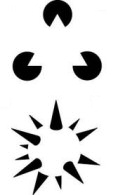
Finally, and with some wonderful visual demonstrations, CogDaily cover the work of the early Gestalt psychologists who fired one of the first broadsides in a key psychological debate over whether it is possible to understand the mind better by breaking it down into smaller and smaller functions.

Using a number of now famous visual examples they demonstrated that there must be some high level grouping processes that capture the ‘whole’ and process concepts on a more global level rather than purely drilling down through the detail.

Link to CogDaily on Ebbinghaus’s memory studies.
Link to CogDaily on Millicent Washburn Shinn’s baby study.
Link to CogDaily on Gestalt psychology.

Miracle fruit trips out flavours

The New York Times have an article on the truly miraculous miracle fruit, a plant that contains a unique protein that transforms even the most intensely acidic flavours into sweet taste sensations.

“You pop it in your mouth and scrape the pulp off the seed, swirl it around and hold it in your mouth for about a minute,” he said. “Then you’re ready to go.” He ushered his guests to a table piled with citrus wedges, cheeses, Brussels sprouts, mustard, vinegars, pickles, dark beers, strawberries and cheap tequila, which Mr. Aliquo promised would now taste like top-shelf Patrón.

The miracle fruit, Synsepalum dulcificum, is native to West Africa and has been known to Westerners since the 18th century. The cause of the reaction is a protein called miraculin, which binds with the taste buds and acts as a sweetness inducer when it comes in contact with acids, according to a scientist who has studied the fruit, Linda Bartoshuk at the University of Florida’s Center for Smell and Taste.

Apparently, some pioneering barmen have been experimenting with miracle fruit cocktails and the article has video of a ‘flavour tripping party’ where people get together to try the small red berry before sampling a while range of foods which take on a strange news flavour.

Link to NYT article ‘A Tiny Fruit That Tricks the Tongue’.

Mental illness following The Exorcist

Horror movie The Exorcist remains one of cinema’s darkest and most frightening classics. So great was its power that rumours circulated about viewers running in fear, feinting, or even going mad after seeing the film. In fact, it caused such concern that it was discussed in the medical literature for its possible role in triggering mental illness.

In 1975 psychiatrist James Bozzuto wrote an article for the Journal of Nervous and Mental Disease entitled ‘Cinematic Neurosis Following The Exorcist’ that reported four cases of previously untroubled people who seemed to develop psychiatric difficulties after watching the film.

I’ll return to the case reports in a moment, but it’s probably worth mentioning that Bozzuto was not alone in discussing the possible ‘destabilising’ effect of the film. In fact, his commentary was remarkably reserved in comparison to some of his contemporaries.

A 1974 Time magazine article quoted some of his less inhibited colleagues:

After seeing the film, two young Chicagoans required hospitalization. “They’re way out in leftfield,” said Dr. Louis Schlan, psychiatrist and medical director of Riveredge Hospital in Forest Park, Ill. “They see themselves possessed by Satan.”

Many others who have seen the film experience nightmares, hysteria and an undefined, but nevertheless profound apprehension. “It is dangerous for people with weak ego control,” explains Dr. Vladimir Piskacek, a Manhattan sociologist and psychiatrist, “but it would not cause psychosis.” Small children may suffer from hallucinations after seeing The Exorcist, but Dr. Piskacek doubts that the film would permanently impair even an immature mind.

Predictably, there are widespread objections to the film’s R rating, which permits youths under 17 to see it if accompanied by a parent. Manhattan Child Psychiatrist Hilde Mosse warns that the film provides a “deadly mixture of sex, violence and evil. The idea that we can solve our problems by magic instead of by rational solutions is destructive. I lived through this before Hitler came to power. He said, ‘Listen to the language of your pure Germanic blood, your unconscious.’ The Jews in Germany then became the devil to be exorcised. The only thing The Exorcist can do,” Dr. Mosse concludes emphatically, “is to pull young people down to a primitive level.”

With Hitler, hallucinating children and Satanic possession being invoked in relation to the film, it’s no wonder that people had anxieties about its influence.

Bozzuto’s explanation for his four case studies is perhaps a little mundane in comparison, but the influence of the media hysteria is plain to see.

One case is particularly striking, owing to gentleman’s florid magical thinking about the Devil and his possible malign influence.

Case 4. Mr. Lyle H. was a 24-year-old black male who initially came to the emergency room for three visits approximately 1 month after seeing “The Exorcist”. At that time, he complained of flashbacks and of getting “nervous”, especially with his two children and his wife; he was frightened that his 5-year-old daughter was possessed, had insomnia, and felt that certain people “looked strange”. He was given Vallium and referred to the Psychiatric Clinic. After being contacted for his first interview, he was fearful of coming for he felt that the therapist may have been involved with the Devil.

The patient stated that he knew little about the movie but had seen it discussed on a TV talk show before. He went with his wife and another couple. He was so upset during the movie that he had to walk out, and afterward he was frightened, feeling that the Devil “would come”. He had immediate insomnia, 15-pound weight loss over the past month, and numerous nightmares of vampires chasing women with himself interfering. He could not look people directly in the eye for fear he might imagine them to be devils…

Also, since seeing the movie, he complained of a stiff neck which he related to an identification with the girl in the movie. He was afraid to use a razor that his brother-in-law had given him because it might be stolen and it would imply he had done something wrong and would therefore be like the Devil.

Bozzuto suggests that each of his patients was already under significant pressure and the film was the last stressful straw that broke the camel’s back.

He also suggests, invoking the spirit of Freud, that the movie’s theme of losing control to the love-hate figure of the Devil may have had special significance for the four, each of which was apparently struggling with an ambivalent relationship.

According to Bozzuto, the similarity triggered repressed feelings, leading to an emotional crisis and a subsequent breakdown.

While the cases remain entirely anecdotal, it’s interesting that they made it into print at all, considering that almost all films have the potential to trigger emotional crises in some.

The fact that the issue of ‘Exorcist madness’ was considered serious enough to appear in a medical journal is more likely testament to the fact that the film touched a raw nerve in the America of the 1970s, than the fact that it raised the hackles of some of its audience members.

Link to PubMed entry for ‘Cinematic neurosis following The Exorcist’.
Link to Time article ‘Exorcist fever’.