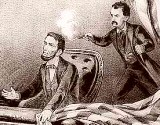
Hypnosis and criminal mind control in 1890s France

The 19th century French neurologist Georges Gilles de la Tourette is best known for Tourette’s Syndrome, but a fascinating article in European Neurology traces his interest in the criminal uses of hypnosis.

It is full of surprising facts, like that he was shot in the head by a delusional patient who believed that she had been hypnotised against her will, and that he eventually died in a Swiss asylum after developing psychosis caused by syphilis.

We now know that hypnosis cannot be used to make people do things against their will, but at the time it was widely believed that women could be hypnotised to be easy prey to sexual predators, and even that otherwise innocent people could be hypnotised to be killers against their will. Sort of like a 19th century Manchurian Candidate.

The murder of a public notary by Michel Eyraud and Gabrielle Bompard in 1889, in which Bompard said she was hypnotised to be a murderer, made headlines around the world (you can still read The New York Times coverage online) and also served as a public battle over whether hypnosis could be used for criminal ends.

France was the centre of hypnosis research at the time and many experiments were carried out where hypnotised people were asked to ‘kill’ people with prop weapons to test their compliance. Neurologists Gilles de la Tourette and Jean-Martin Charcot were famous for their work on hypnosis and hysteria and weighed into the heated legal debate.

The patient who shot Gilles de la Tourette was not hypnotised, however, although was delusional and believed that she was. Hypnosis is a common theme of psychosis even today and your average inpatient psychiatric ward may well contain a patient or two who believe they are being ‘controlled’ or ‘mesmerised’ by hypnosis.

In Gilles de la Tourette’s case, the incident is notable not least because he suffered a bullet in the brain, had it yanked out, and was writing to his friend about the experience later in the day.

…he was shot – for real – at his home in Paris by Rose Kamper-Lecoq, a 29-year-old former patient from La Salp√™tri√®re and Sainte-Anne who later claimed that she had been hypnotized from a distance…

Rose asked him for some money, claiming that she was without resources because her hypnotism sessions had altered her will, and shot him when he refused. There were three shots, with only the first one reaching its target. Fortunately for Gilles de la Tourette, it resulted in only a superficial occipital wound, and he was even able to write to Montorgueil about the event the same evening.

The article has a copy of the letter with the description “The writing is uneasy, but Gilles de la Tourette reassures Montorgueil and explains that the bullet has been removed, ending the letter with the comment ‘What a strange story’ (‘Quelle dr√¥le d’histoire’)”.

Anyway, a fascinating article, freely available, and full of fantastic images and illustrations from newspapers of the time.

Link to full-text of article (scroll down).
Link to PubMed entry for same.

AI predicts poker bets to three decimals places

Photo by Flickr user Jam Adams. Click for sourcePoker is considered one of the most skillful of betting games, but a new study published in the Journal of Gambling Studies reports on an artificial neural network that predicts gambler’s bets to three decimals places.

The system was built by researcher Victor Chan who created a relatively simply backpropogation neural network to predict future plays.

Backprop networks take a bunch of inputs, feed them through layers of loose mathematical simulations of neurons which then make a guess at an output.

Crucially, the network is initially given a set of training data on which it can modify its ‘guesses’ based on how wrong its initial estimation was. The amount of error is fed back through the network and each ‘neuron’ adjusts the strengths of its connections to other neurons to minimise the error next time round.

Chan used the playing patterns of six online Texas Hold ’em players each of whom played more than 100 games each. He entered just an initial series of games for each player to train the network and then asked it to predict how the following plays would go.

…it was to the author‚Äôs surprise that the neural network for M1 upon training turned out to be able to predict a gambler‚Äôs bet amounts in successive games accurately to more than three decimal places of the dollar on average for each of the six gamblers in our data sample across the board.

More importantly, the neural network for M2 upon training was also able to track the temporal trajectory of a gambler’s cumulative winnings/losses, i.e., successively predict the gambler’s cumulative winnings/losses, with a similar accuracy again for each of the six gamblers in our data sample across the board.

…the influence of a gambler‚Äôs skills, strategies, and personality on his/her cumulative winnings/losses is almost totally reflected by the pattern(s) of his/her cumulative winnings/losses in the several immediately preceding games.

In other words, from a sample of initial plays, each gambler’s behaviour was almost completely mathematically predictable in the same way across all six people.

Now, if they could only get a neural network to predict plays in strip poker, I think they’d be onto something.

Link to study.
Link to PubMed entry for same.

Chocolate cravings and the menstrual cycle

Photo by Flickr user ulterior epicure. Click for sourceI’ve just found a remarkable study on how female chocolate cravings vary throughout the hormone cycle and drop off after menopause. While the cravings are not solely explained by hormone changes, some of the effect does seem to be linked.

Perimenstrual Chocolate Craving: What Happens after Menopause?

Appetite. 2009 Jul 9. [Epub ahead of print]

Hormes JM, Rozin P.

About half of American women crave chocolate, and approximately half of the cravers crave it specifically around the onset of menstruation. This study examines whether the primary cause of this “perimenstrual” craving is a direct effect of hormonal changes around the perimenstrum, or rather if the craving is a general response in some individuals to stress or other notable events. Insofar as there is a direct hormonal effect, one would predict a substantial decrease of 38% in total chocolate craving in women post-menopause, corresponding to the proportion of women pre-menopause who report craving chocolate exclusively perimenstrually. Based on a survey of pre- and postmenopausal alumnae of the same University, we report a significant but small decrease in prevalence of chocolate cravings post-menopause. The decrease is only 13.4% and thereby much smaller than a 38% drop predicted by a purely hormonal explanation, suggesting that female reproductive hormones are not the principal cause of perimenstrual chocolate craving.

Last time I posted something about the menstrual cycle, with reference to the effect on race bias, the post attracted some remarkably acerbic comments.

The comment on racism being a “typical British trait” was pure comedy gold, but one asked the question “Why are hormone fluctuations in men not studied as closely or publicized as widely?”.

I did have a look, but as far as I know, men don’t have hormone cycles. If you know different, do let us know as I’d love to know if there is any good evidence for them.

However, the point was that these studies often focus on stereotypes of female behaviour. So this post is offered as food for thought.

Link to PubMed entry for study.

The neuroscience of an unwanted limb

ABC Catalyst has a completely astounding video on someone with ‘body integrity identity disorder’ who deliberately caused a leg amputation to feel satisfied with their body. It goes on to explore the neuroscience of body image and explores some of the best known body swap experiments.

The voice over is a bit cheesy in places but otherwise it’s brilliantly explained, linking an unusual condition with the experimental lab science.

People described as having BIID feel as if a perfectly healthy limb is not really part of them. Like Robert Vickers, the man featured in the documentary, they can sometimes take extreme measures to get it amputated.

Preliminary evidence suggests that it might arise from a distortion of our neurally mapped body image and recent studies using the rubber hand illusion or the body swap illusion have been thought to tap the same sort of body image distorting effects.

One of the most compelling parts of the documentary is when the gentleman with BIID actually takes part in all the experiments.

After he takes part in the rubber hand illusion the presenter asks a really interesting question: “Is this anything like you experienced with your leg?”, “No” he answers, giving her a look like she’s a bit crazy.

This is the sort of question that is almost never asked by cognitive scientists. We create what we think is something similar in the lab, and then study it to death, but rarely do we actually get people with similar distortions to try it out and ask them what they make of it.

Vickers also recently recorded a programme for ABC Radio National’s Ockham’s Razor where he talks incredibly eloquently about the experience of his body, the turmoil of having an unwanted healthy limb and gives a remarkably good review of the scientific literature.

Both are highly recommended.

Link to amazing Catalyst programme on BIID.
Link to Robert Vickers on Ockham’s Razor.

Pain? What pain?

Photo by Flickr user bitzcelt. Click for sourcePain research often involves investigating the link between the subjective experience of what’s hurting compared to brain activation, mental state or situation. While past research has reported gender differences in pain thresholds, a new study casts a hazy light across the field by finding that men consistently report less pain when talking to female researchers.

The experiment included men and women as participants, as well as male and female experimenters, allowing the researchers to compare each combination of the sexes during their research.

Participants had a safe but painful heat applied to their arm and they were asked to report how painful and how unpleasant it was. They also had heart rate and skin conductance monitors to check how the body reacted.

Women reported the same things to male and female experimenters but men consistently said the pain was less when talking to female staff. Importantly though, their bodily responses were no different, suggesting that the physical sensation was probably the same, they just minimised it when talking to women.

The fact that men report less pain when talking to women has been found before, but the fact the body’s reaction was no different is new and tells us that the presence of women was unlikely to have actually reduced the amount of physical suffering.

In other words, pain research that has relied just on self-report may have been affected by men trying to look macho in the lab.

Link to DOI entry and summary of study (via @researchdigest).

A kava panorama

ABC Radio National’s Bush Telegraph has a special programme on a psychoactive plant called kava that has been used ceremonially by Pacific Islanders for generations and has recently been researched as a treatment for depression and anxiety.
The effects of kava are usually compared to alcohol as it has a sedating and relaxing effect, although it produces far less thinking impairment than booze so the drinker has much more mental clarity.

The programme explores the history and traditional preparation of this tranquillising plant as well as discussing recent scientific research on its use as a psychiatric treatment.

This is particularly in light of a recent study by psychiatrist Jerome Sarris and colleagues where it performed remarkably well as both an anti-anxiety and anxidepressant drug.

In the interview, Sarris describes how kava affects the brain as well as suggesting that its ban in many countries, based on concerns about liver damage, may be due to low quality preparations of the compound which aren’t found in traditional methods.

Link to Bush Telegraph on ‘Kava, bliss and angst’.

Race bias and the menstrual cycle

I’ve just found this surprising study in Psychological Science that found a link between the point in the menstrual cycle of 77 white women and various measures of race bias.

Race Bias Tracks Conception Risk Across the Menstrual Cycle.

Psychol Sci. 2009 May 4. [Epub ahead of print]

Navarrete CD, Fessler DM, Fleischman DS, Geyer J.

Although a considerable body of research explores alterations in women’s mating-relevant preferences across the menstrual cycle, investigators have yet to examine the potential for the menstrual cycle to influence intergroup attitudes. We examined the effects of changes in conception risk across the menstrual cycle on intergroup bias and found that increased conception risk was positively associated with several measures of race bias. This association was particularly strong when perceived vulnerability to sexual coercion was high. Our findings highlight the potential for hypotheses informed by an evolutionary perspective to generate new knowledge about current social problems-an avenue that may lead to new predictions in the study of intergroup relations.

The research paper is online as a pdf if you want the full details.

The authors explain the findings as suggesting that women show a preference to their ‘in group’, those who more closely match their own background and lifestyle, when most fertile.

Menstrual cycle has been found to influence numerous preferences in women in earlier studies, including dressing attractively, preference for the type of fanciable person, including a preference for more ‘masculine’ features.

Indeed, cycles in oestrogen are known to alter dopamine function in the striatum, a deep brain structure.

pdf of menstrual cycle and race bias study.
Link to PubMed entry for same.

Pressed for time perception

Photo by Flickr user ToniVC. Click for sourceEdge has an interesting article by neuroscientist David Eagleman on the perception of time that describes how we can experience temporal illusions just like we experience visual illusions.

I have to say, the piece is a little wordy, so it needs a bit of concentration, but it is well worth the effort.

This section has an interesting way of fooling ourselves into perceiving an event before you seem to have triggered it:

It has been shown that the brain constantly recalibrates its expectations about arrival times. And it does so by starting with a single, simple assumption: if it sends out a motor act (such as a clap of the hands), all the feedback should be assumed to be simultaneous and any delays should be adjusted until simultaneity is perceived.

In other words, the best way to predict the expected relative timing of incoming signals is to interact with the world: each time you kick or touch or knock on something, your brain makes the assumption that the sound, sight, and touch are simultaneous.

While this is a normally adaptive mechanism, we have discovered a strange consequence of it: Imagine that every time you press a key, you cause a brief flash of light. Now imagine we sneakily inject a tiny delay (say, two hundred milliseconds) between your key-press and the subsequent flash. You may not even be aware of the small, extra delay.

However, if we suddenly remove the delay, you will now believe that the flash occurred before your key-press, an illusory reversal of action and sensation. Your brain tells you this, of course, because it has adjusted to the timing of the delay.

If you’re wanting more on time perception, TED have just released an interesting lecture by Philip Zimbardo on how we reason about time.

And rather coincidentally, Eagleman is interviewed on ABC Radio National’s All in the Mind this week, about his synaesthesia research and fiction writing.

Link to Edge article on time perception.
Link to TED on reasoning about time (thanks Patricio!).
Link to AITM interview with David Eagleman.

Advance of the seven veils

Photo by Flickr user ff137. Click for sourceI’ve discovered there is a small scientific literature on the cognitive science of belly dancing. Yes, I know I should be doing something else with my time, but it’s too late now and it’s too good not to share.

A group of movement researchers studied which fundamental action abilities were the best predictors of belly dancing skills in 1st-4th grade students and, in another study, in 5th and 6th grade students. Rhythmic coordination seems to be a key skill across most age groups.

Belly dancer’s myclonus is a condition where damage to the parts of the nervous system that control muscle coordination cause an involuntary stomach rippling effect that belly dancers strive to achieve. It is thought to be a problem with neural systems called ‘central pattern generators’ (CPGs) that create rhythmic pulses.

Jimmy Or is a robotics researcher who used what we know about the neuroscience of central pattern generators to create a belly dancing humanoid robot with a flexible spine. You can see it in action on his website.

Stalkers and assassins of the US President

I’ve just found this fascinating 2006 article by a consultant psychiatrist to the US Secret Service that classifies the types of stalkers and assassins that have troubled the President of the United States.

The piece, by psychiatry professor Robert Phillips, reviews past classifications of presidential harassers and cases from the literature to produce a list of main types.

In my work as consultant to the U.S. Secret Service on protective intelligence cases, it is my clinical assessment that aids in their ultimate determination of who poses a potential risk to a protectee.

In performing evaluations of persons who have either threatened or attacked presidents, pursued them without nefarious intent, or appeared at the White House without invitation, I have searched for a framework that would allow me to integrate my diagnostic opinion of an individual subject with a conceptualization of what is known about others who have acted similarly.

Phillips’ classification includes:

* The Resentful Presidential Stalker or Assassin
* The Pathologically Obsessed Presidential Stalker or Assassin
* The Presidential Infamy Seeker
* The Presidential Nuisance or Presidential Attention Seeker

But perhaps most interesting is the part where he illustrates each type with examples from past cases.

These include famous cases, such as John Hinckley – the man who shot President Reagan but was apparently also a stalker of Carter, to less well known cases such as one woman referred to only as ‘Ms Doe’ who “possessed a delusional love interest” in Clinton.

It’s interesting to compare this classification with the independently created typology of stalkers of the British royal family drawn from the Metropolitan Police’s Royalty Protection Unit files.

Link to full text of article.
Link to PubMed entry for same.

Tooling up the body

Photo by Flickr user Darren Hester. Click for sourceNot Exactly Rocket Science covers an intriguing study that provides further evidence for the theory that the brain treats tools as temporary body parts.

Using tools has lots of interesting effects on our perception. In one of my favourite studies, psychologist Dennis Proffitt found that we perceive distances as shorter when we have a tool in our hand, but only when we intend to use it.

This latest study found that using a tool for only a few minutes modified the body’s action settings. In the experiment, participants were asked to repeatedly pick up a block that had been placed in the middle of the table.

Then, they had to repeat the same actions with a grabber – a long, mechanical lever tipped with a two-fingered “hand” – and then a third time, with their own hand again.

Small LEDs on the volunteers’ hands allowed Cardinali to track their movements and calculate the speed and acceleration of their arms. She found that they reached for the block differently after they had been accustomed to the grabber, taking longer to accelerate their hands more slowly and to seize the block (although once they actually touched the blocks, they grasped them in just the same way as before). The delays even affected the speed at which they pointed at the block, a behaviour that wasn’t “trained” by the grabber.

To Cardinali, these results suggested that after using the grabber, the volunteers’ had included it into their mental representation of their own arms. Because of that, they felt that their arms were longer than they actually were and reached for the block more slowly.

Link to Not Exactly Rocket Science on tools as body extensions.

In vino veritas

Photo by Flickr user rogersmj. Click for sourceWine Psychology is a curious new website dedicated to the pleasures, analysis and cognitive science of our favourite grape-based booze.

It’s been launched by psychologist Miles Thomas who has written a number of successful articles on the psychology of wine tasting, including one we featured last year.

The website’s blog looks the most promising, and the recent post on passive perceptual learning in wine tasting is a good place to start.

There’s a small but surprisingly active research community focussed on wine psychology, largely, I’m guessing, because it is a huge business with lots of dedicated fans.

Rather unusually, I seem to be uniquely affected by wine. From my observations it tends to make other people poorly coordinated and socially unskilled whereas after a few drinks my dancing vastly improves and I become increasingly witty.

Apparently this anomaly has not yet been reported in the literature, so I look forward to a full scientific investigation.

Link to Wine Psychology.

Full disclosure: Miles Thomas and I are both unpaid members of The Psychologist editorial board. He has not paid me, twisted my arm or plied my with booze to write this post.

The time flies paradox

Photo by Flickr user NathanFromDeVryEET. Click for sourceTime flies when you’re having fun, but why? It’s curious if you think about it. Someone whose visual perception was affected by enjoyment would seem rather unusual but the fact that our ability to judge time changes dramatically when we enjoy ourselves seems perfectly unremarkable.

A recent article in the scientific journal Philosophical Transaction of the Royal Society attempts to answer exactly this question by reviewing the evidence for the curious link between emotion and time perception.

One of the greatest paradoxes in the field of time psychology is the time‚Äìemotion paradox. Over the last few decades, an increasing volume of data has been identified demonstrating the accuracy with which humans are able to estimate time. Confronted with this amazing ability, psychologists have supposed that humans, as other animals, possess a specific mechanism that allows them to measure time…

However, under the influence of emotions, humans can be extremely inaccurate in their time judgements (Droit-Volet & Meck 2007). For example, the passage of time seems to vary depending on whether the subject is in an unpleasant or pleasant context. It drags when being criticized by the boss but flies by when discussing with our friends. That is the time–emotion paradox: why given that we possess a sophisticated time measurement mechanism, are we so inaccurate in our temporal judgements when experiencing emotions?

The article is full of studies that found surprising ways in which our time perception is distorted: by the emotional expression on other people’s faces or by the age of people we meet (older people slow time, younger people quicken it).

Link to scientific article on the time-emotion paradox.
Link to PubMed entry for same.

Plant psychology

Science News has an intriguing article on what we might call ‘plant psychology’ as some biologists are increasingly thinking of our green leafy friends in terms of their memory, communication and behaviour.

On a related note, an edition of ABC Radio National’s All in the Mind from the end of last year focussed on the ‘psychology’ of bacteria.

These sorts of discussions are the interesting result of our current most popular way of understanding the mind: the cognitive approach.

This attempts to explain the mind in terms of an information processing system, so mental processes are defined in terms of how they perform computations.

For example, memory is the process of encoding, storing and retrieving information. Perception transforms sensory data, such as light spots on the retina, into elaborated experiences; and attention selects which channels of processing to prioritise.

In its most basic, and somewhat caricatured form, the cognitive approach says our minds are just calculations because we have been able to successfully describe what parts of it do using maths.

But if the mind is just calculations, it makes it very difficult to say what is and what isn’t a mind.

If something learns, reacts and communicates, all of which can be described in information processing terms, than many things could be described as having minds. Computers, plants, bacteria, perhaps even whole ecosystems.

Indeed, many of the big debates in psychology (consciousness, intentionality and so on) are attempting to define the mind outside of the computation metaphor, and this is where the hard work lies.

Discussions about whether plants have minds make us think about how we define our own minds, as simply saying ‘a mind is what humans have’ doesn’t help us understand how to make sense of them.

Link to Science News on plant cognition.
Link to All in the Mind on bacteria cognition.

Are you sleeping comfortably? Then we’ll begin

The Boston Globe has an excellent article on the moment when a a group of huddled doctors turned a side-show curiosity into the medical revolution of surgical anaesthesia.

16th October 1846, Boston, Massachusetts, was when the first operation under anaesthesia was conducted in with a brave patient and liberal doses of ether.

The piece is interesting because it notes that the pain killing properties of certain gases or vapours, like laughing gas (nitrous oxide) and ether, were already well known, but the use of them in an operation needed a fundamental change of attitude in the medical establishment.

This was largely due to the fact that pain was considered beneficial during an operation, as it ‘stimulated’ the patient and supposedly made them less likely to die, but because that experiencing pain was considered to be morally virtuous.

Removing pain through ‘artificial’ means was therefore considered ethically dubious and consequently regarded by suspicion by the high horse riding doctors of the time.

Interestingly, the article notes that some of these views continue to this day in attitudes regarding anaesthetics and ‘natural’ childbirth:

Before 1846, the vast majority of religious and medical opinion held that pain was inseparable from sensation in general, and thus from life itself. Though the idea of pain as necessary may seem primitive and brutal to us today, it lingers in certain corners of healthcare, such as obstetrics and childbirth, where epidurals and caesarean sections still carry the taint of moral opprobrium.

In the early 19th century, doctors interested in the pain-relieving properties of ether and nitrous oxide were characterized as cranks and profiteers. The case against them was not merely practical, but moral: They were seen as seeking to exploit their patients’ base and cowardly instincts. Furthermore, by whipping up the fear of operations, they were frightening others away from surgery and damaging public health.

The article is by Mike Jay who wrote the The Air Loom Gang, a biography of madman, spy and accidental architect James Tilly Matthews.

The biography is one of my favourite books of all time and was interested to see that Jay has another book just out called The Atmosphere of Heaven about a Victorian medical society who pioneered the study of laughing gas.

Link to Boston Globe article ‘The day pain died’.

Underworld rituals through the lens of autopsy

An upcoming article for the Journal of Forensic Sciences gives a fascinating insight into the rituals and methods of the Sacra Corona Unita (United Holy Crown) Mafia group from Southern Italy through the post-mortem examination of the bodies of their victims.

Many of the victims are members of the Sacra Corona Unita themselves, giving an insight in the organisation’s “mystical approach to all ceremonies among members. Tribal rituals, secret codes, and theatrical punishments transformed the ‘onorata societ√†’ into a kind of distorted Masonic lodge”.

The article recounts the oath of the criminal fraternity and the significance of their tattoos, as well as describing a study on 83 murder victims. Strikingly, each of the victims who were Mafia victims themselves had a ritual object left with them.

As usual in mafia organizations, each member had a nickname, and ritual symbolic objects were found beside the buried bodies that referred to the member’s lifetime. For instance, the horns of a bullock were found beside the body of the son of an SCU member named the “Bull” and a mouse beside the body of a member known to be a police informer, known as the “Prostitute.

The murder and burning of the bodies of the victims conformed to the symbolic code understood by all the members. It made explicit reference to the membership ceremonies that warn that the unfaithful will be burned to ashes (just like the holy picture burned during the ceremony).

This technique, obviously, also has some strategic advantages because it makes the possibility of identifying the victim more unlikely and eliminates any traces left by the executors. This mode of operation is called “lupara bianca” (white lupara): “lupara” is a gun with a sawn-off barrel with a high lacerating power at short distance, “white” means a “murder with disappearance of the body.”

Link to article.
Link to DOI entry for same.