Insula reality

As a perfect follow-up to recent news that damage to an area of the brain called the insula makes it easier to kick an addiction, The New York Times has an article looking more generally at the function of this fascinating neural structure.

The article is by science writer Sandra Blakeslee who has a history of teaming up with cognitive scientists to make their work accessible to a wider audience.

Two of her most notable books have included the strikingly original On Intelligence with Jeff Hawkins, and Phantoms in the Brain with V.S. Ramachandran.

[There’s a wonderful typo on Blakeslee’s site where she’s listed him as ‘VR Ramachandran’, which makes me think that in the future, everyone will have own virtual Ramanchandran’s to pose neuroscience questions to]

The NYT article looks at what is known about the insula, and why it seems to have been relatively neglected by cognitive neuroscientists until recently.

According to neuroscientists who study it, the insula is a long-neglected brain region that has emerged as crucial to understanding what it feels like to be human.

They say it is the wellspring of social emotions, things like lust and disgust, pride and humiliation, guilt and atonement. It helps give rise to moral intuition, empathy and the capacity to respond emotionally to music.

Its anatomy and evolution shed light on the profound differences between humans and other animals.

The insula also reads body states like hunger and craving and helps push people into reaching for the next sandwich, cigarette or line of cocaine. So insula research offers new ways to think about treating drug addiction, alcoholism, anxiety and eating disorders.

Of course, so much about the brain remains to be discovered that the insula’s role may be a minor character in the play of the human mind. It is just now coming on stage.

Link to NYT article ‘A Small Part of the Brain, and Its Profound Effects’.

London cabbie navigates with hippocampus damage

The hippocampus is thought to be essential for navigation. Surprisingly, a paper published last year reported that a London Taxi driver, who suffered hippocampus damage on both sides of the brain, could successfully navigate around much of London.

London black cab drivers must pass ‘The Knowledge‘ to get a license.

It involves memorising London streets and being able to work out, from memory, the best route between any two places in the city.

In 2003, neuroscientist Dr Eleanor Maguire and her team won the Ig Nobel Prize (a humorous award for discoveries “that cannot, or should not, be reproduced”) for a study that found that the hippocampi of London Taxi drivers were larger than average, possibly because the drivers are constantly exercising their spatial memory.

Despite winning the Ig Nobel, this paper has been very important in understanding both spatial memory and how the brain grows during adult life.

The same team of researchers published a paper last year, looking at the navigation skills of a London taxi driver who suffered selective damage to both his hippocampi after a brain infection.

If the hippocampi were essential for navigation, it would be thought that such a person would have lost ‘The Knowledge’ or would be unable to use it in practice.

They tested the driver in a complete computer simulation of London (pictured left) and discovered, to their surprise, that he was surprisingly good at orienting himself in the city and navigating the main roads.

He often became lost, however, when he moved away from the main roads and had to rely on smaller roads for navigation.

This suggests that the hippocampus is necessary for the fine-grained knowledge of locations rather than navigation in total.

The researchers suggest that as roads become more familiar, they may become more like ‘semantic knowledge’ (facts like ‘Paris is the capital of France’) that you can remember without bringing to mind the context in which you learnt it, or last encountered it.

They note that the main roads may have become more familiar over time and so have acquired a more semantic-like status.

As this occurs, the information would become independent of the hippocampus, allowing the brain-injured taxi driver to keep some of his hard-won Knowledge.

Link to abstract of study on PubMed.

Prescribing ecstasy

Slate has an article on the use of MDMA (‘Ecstasy’) in the treatment of people with post-traumatic stress disorder or PTSD.

Limited licenses have been granted to research the use of MDMA to assist in psychotherapy, particularly for trials in people with trauma-related stress.

It will shortly be trialled to see if it can help relieve anxiety and pain in terminal cancer patients.

The Slate article looks at these recent developments, and discusses how they might be practically applied in clinical treatment plans considering some of unwanted effects that might occur.

Link to article ‘What a Long Strange Trip It’s Been’ (via Dev Intel).

A neuroanatomist’s stroke of insight

Sound Medicine has a fascinating podcast interview with Dr Jill Bolte Taylor a neuroanatomist who experienced a stroke that damaged her brain and fundamentally changed her perception of the world.

A stroke is when the blood supply to the brain get interrupted, often because an artery gets blocked, it swells, or bursts.

Taylor notes that she didn’t ‘suffer’ a stroke, but ‘experienced’ one, as despite the significant impairment, she found the whole experience an amazing insight into how her brain degraded and repaired after damage.

In the interview, her sense of wonder at the effect of this sudden change in brain function is quite infectious.

Taylor has written a book about her experiences called My Stroke of Insight (ISBN 1430300612) which recounts how the stroke affected her life and mind.

If you’re interested in how mind and brain scientists make sense of their own personal experiences of neurological disorder, there’s a wonderful book called Injured Brains of Medical Minds which is a collection of writing on the topic.

If you want to know how to detect the signs of a stroke and want to know what life-saving action you could take, there’s a fantastic information page here.

Link to podcast webpage.
mp3 of podcast interview.
Link to ‘What You Need to Know About Stroke’ infomation.

Developing a thought controlled wheelchair

Wired has a report and video on a research project by Spanish researchers to develop a wheelchair which can be controlled by a brain-computer interface.

Brain-computer interfaces are big news at the moment, although most of the excitement is focused on the sci-fi-like interfaces that implant directly into the brain.

These systems are all lab-based prototypes at the moment so it’s interesting to see the Spanish team, led by Dr Javier Minguez, use off the shelf parts to attempt to make something that could be widely available.

The system will read and process from brain signals via EEG to determine the intended direction, but also use an electronic collision avoidance system to help the wheelchair make fine-grained adjustments.

While most the media attention focuses on direct brain implants, it is this sort of remarkably practical approach that will most quickly produce a potentially life-enhancing and relatively low-cost solution for severely paralysed people.

Link to Wired article ‘A Wheelchair That Reads Your Mind’ (with video).
Link to Javier Minguez’s webpage with more info.

Motherly stress and the unborn baby

BBC News has a report on a recent conference presentation by Prof Vivette Glover suggesting that mother’s stress can affect the brain development of an unborn child.

If you are pregnant, don’t panic, the effect has only been found for quite intense stresses, but these do seem to increase the chances of the child developing behavioural problems later in life.

Actually, the idea that motherly stress could affect the unborn child’s chance of developing mental illness is not new.

One of the earliest reports on this was a paper from 1978 who looked at mothers affected by the Soviet invasion of Finland in 1939, later to become known as the Winter War.

Researchers tracked down mothers who were pregnant when their partners were killed in the conflict, and compared them to mothers who were also pregnant at the time of the war, but whose partners were not killed in the fighting.

They found that children born to mothers whose partners were killed were more likely to develop schizophrenia later in life than the children born to mothers with partners who survived, suggesting that the stress of grief affected the child’s neurodevelopment.

This is thought to be due, at least in part, to the effect of stress-related hormone cortisol from the mother affecting the development of the foetus’ nervous system.

Interestingly, a similar increase in cases has also been found for children born to women who lived through physically and psychologically stressful famines – one in China and one in Holland.

It is well known that birth complications can lead to a slight increase risk for schizophrenia later in life, probably because of the effect on the brain.

It is fascinating to think that the mother’s experiences can influence the development of the unborn child’s brain, however indirectly it might occur.

Link to BBC News story on conference presentation.

Kicking the habit the hard way

A study published in today’s edition of Science reports that nicotine addicted patients who acquired damage to the insula – an area just behind the temporal lobes – reported that the urge to smoke reduced after their brain damage occurred.

The insula is coloured red in the diagram on the right and has been heavily linked to emotional responses, particularly the perception and experience of disgust.

However, this new study, led by Nasir Naqvi, suggests that the insula is also heavily involved in addiction-related cravings.

Studying patients with brain damage is one of the most powerful methods in cognitive neuroscience.

While brain scans can tell you which areas of the brain might be associated with a particular experience or behaviour, they can’t tell you whether that area is necessary or not.

If you think a brain area might be crucial for a certain process, finding someone who has damage to that area should confirm whether your idea is correct or not by seeing whether they still have the ability or experience you think is linked to the area.

In Bechara and colleagues’ study, they included a series of patients who had insula damage, either after suffering a stroke, or after having it deliberately removed as part of brain surgery to treat epilepsy or brain cancer.

Because this sort of damage is rarely precise and causes damage to a number of areas in addition to the insula, a series of patients was studied.

While other damage was present, the patients only had insula damage in common.

This means when group results are analysed, the strongest overall effect should be related to insula damage, whereas effects from damage to other areas wouldn’t be as apparent, because it’s not common to all patients.

The researchers compared the group with insula damage to other smokers who had suffered non-insula brain damage by measuring who quit smoking, how strong the cravings were and how easy it was to give up.

Insula-damaged patients were much more likely to have quit smoking than the other patients, to experience less cravings, and to have found it easier to give up.

The researchers start their paper by noting that “cigarette smoking [is] the most common preventable cause of morbidity and mortality in the developed world”.

You can bet this study will cause massive interest in the pharmaceutical industry who will be attempting to work out the neurochemistry of the insula to try and create drugs which will make treating addiction easier.

Undoubtedly, education and prevention will be much cheaper, but it’s hard to make money out of people who don’t become addicted.

That’s progress for you.

Link to ScienceNow write-up of study.
Link to study abstract.

Looking for fireworks

Brain Ethics has a fantastic post by neuroscientist Thomas Rams√∏y who describes the discovery of a worrying brain pathology in a volunteer who took part in one of his brain imaging studies.

A 1999 study found that 18% of healthy participants have brain scans that might suggest some form of abnormality, although only a minority of these abnormalities were considered serious enough to require a referral for further medical assessment.

As more and more healthy people are being scanned for neuroscience studies, researchers are now starting to develop protocols and procedures for dealing with situations where previously undiscovered medical problems are discovered, as described by a 2006 Science article.

In his own work, Rams√∏y notes a useful technique he’s picked up for detecting brain abnormalities and what he discovered in one of his participants.

One of our radiologists told me to “scroll through the brain quickly and look for flashes”, just as a first approximation to detecting brain pathology. So I’ve done that ever since. Just that simple trick has actually been helpful, this case being the prime example. Above, you can see how the lesions pop out as white sparks in the brain.

For my subject, it means that we have detected a stenosis in both arteries supporting the brain. If untreated, they would eventually have blocked the bloodstream to the brain and caused widespread neuronal damage, maybe even be life threatening.

It’s rare researchers talk about instances when this happens, so Rams√∏y’s post is an enlightening look into a worrying situation that thankfully turned out well in the end.

Link to Brain Ethics article ‘Scroll through and look for fireworks’.
Link to Science article ‘Incidental Findings in Brain Imaging Research’.

Feeling the connection

It seems the latest edition of Time Magazine is a special on the brain, and there’s another full-length neuroscience feature article available online that discusses how the brain reorganises and ‘rewires’ itself.

This is known as ‘plasticity’ and neuroscientists often talk about the brain being ‘plastic’.

This doesn’t refer to the material, although does refer to the fact that the structure of the brain isn’t fixed and can change in response to learning or physical stresses.

For decades, the prevailing dogma in neuroscience was that the adult human brain is essentially immutable, hardwired, fixed in form and function, so that by the time we reach adulthood we are pretty much stuck with what we have….

But research in the past few years has overthrown the dogma. In its place has come the realization that the adult brain retains impressive powers of “neuroplasticity” – the ability to change its structure and function in response to experience. These aren’t minor tweaks either. Something as basic as the function of the visual or auditory cortex can change as a result of a person’s experience of becoming deaf or blind at a young age. Even when the brain suffers a trauma late in life, it can rezone itself like a city in a frenzy of urban renewal. If a stroke knocks out, say, the neighborhood of motor cortex that moves the right arm, a new technique called constraint-induced movement therapy can coax next-door regions to take over the function of the damaged area. The brain can be rewired.

The special edition of Time also has shorter article on the new map of the brain, how the brain deals with time, and an article on six lessons for handling stress.

There’s also an interactive timeline of discoveries in psychology and neuroscience.

Link to Time article ‘How The Brain Rewires Itself’.

Neurobiology of love

The Sixth International Conference on Neuroaesthetics will take place on January 20th and will focus on the neurobiology of love.

The talks include everything from “Brain Activity During Male and Female Orgasms” from Prof Gert Holstege to “The Biological Concepts of Unity-in-Love and Annihilation-in-Love” by Prof Semir Zeki.

This is a bit of a departure for the International Conference on Neuroaesthetics which has previously focused on the neuroscience of art and aesthetic appreciation.

Link to 6th International Conference on Neuroaesthetics (via BrainWaves).

Neural time travel

Science and Consciousness Review has a new feature article on how the brain allows us to revisit past times or predict the future, and how this sense can break down after brain injury.
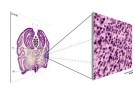
The article is by new SCR staffer, Alice Kim, who works in the lab of pioneering memory researcher Endel Tulving.

Tulving developed the concept of autonoetic consciousness, a ‘feeling of remembering’ that allows us to distinguish when information is coming from memory compared to when it is coming from the senses.

Kim has written an article looking at how autonoetic consciousness helps memory, and how it is damaged in a patient with ‘chronesthesia’, a condition where the awareness of personal past and future is lost, despite a sense of the present being intact.

As well writing for SCR, Kim has also created a wonderful online archive of every Tulving publication, from 1959 (wow!) to the present.

As an aside, Science and Consciousness Review has now fully relaunched after a period of rebuilding since a nasty database crash last year.

Everything seems in perfect working order, so head on over if you want to keep tabs on all things consciousness related.

Link to ‘Which brain regions enable us to remember our past and anticipate our future?’.
Link to SCR front page.

Like Google Earth for the brain

Brain Maps is an online database of high resolution brain images that you can examine on the web or view with a point-and-zoom desktop application called StackVis.

The team behind Brain Maps has uploaded brain images from a number of species, including humans, so you can point click, zoom and scroll your way across the cortical landscape.

Link to Brain Maps.
Link to Brain Maps StackVis download.

MEG scanning the brain

Wired has a brief guide to one of the most recently developed and exciting brain imaging technologies – magnetoencephalography or MEG.

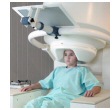
The first thing you’ll notice about MEG machines is that they live in carefully shielded sealed rooms. The second you’ll notice is that they look like giant hair dryers.

MEG works by picking up the magnetic field generated by the brain. You might remember from high school physics that every current produces a magnetic field, meaning neurons produce a magnetic field every time they are active.

However, because even groups of active neurons only have a small current, the associated magnetic field is very weak.

So weak, in fact, that a car passing in a nearby street, and even the earth itself, produces a much stronger magnetic field. This is why the shielded room is needed.

Even with the shielding, to pick up such a weak magnetic field MEG uses ultra sensitive Superconducting Quantum Interference Devices or SQUIDs.

Because they rely on superconductors, they need to be supercooled to work. To achieve this, they’re bathed in a pool of liquid helium held in a large container above the head – this is why MEG machines look like giant hairdryers.

An advantage of MEG over EEG is that unlike electrical fields, magnetic fields travel virtually unaltered across the skull, meaning it’s possible to more accurately measure where activity comes from.

An advantage over fMRI is that MEG can measure brain changes on a millisecond by millisecond basis, meaning it’s much quicker than the typical fMRI 1 second time frame.

Also, MEG is measuring brain activity directly, rather than inferring it from changes in blood flow as fMRI and PET do.

However, as MEG only measures activity on the surface of the brain and can’t distinguish activity from small areas, it doesn’t give the full depth or spatial resolution of fMRI.

As the Wired article notes, MEG is going to become an increasingly important player in our quest to understand psychology and neuroscience, so keep a lookout for an increasing number of important findings based on MEG scans.

Link to Wired article ‘MEG Scanners Are Mega Powerful’.

Freedom is slavery

We have the impression that our free will is supreme, but modern neuroscience is starting to challenge the idea that we are the masters of our fate and captains of our soul.

A recent article in The New York Times looked at some of the philosophical aspects of free will from the perspective of physics and neuroscience.

Newtonian physics suggests that interactions in the physical world are deterministic, that is, the outcome is predictable.

As physical objects, a crucial question is how can we have free will in a universe where every outcome is determined by what went before.

Some people have suggested that the ‘fuzzy’ nature of quantum physics might provide an answer to this, but there have been no convincing accounts of how this might work.

In neuroscience, free will is more to do with whether we have conscious control over our actions.

Two main threads of research have suggested that our experience of having complete conscious control over our actions may be an illusion.

The first is from experiments like those originally completed by Benjamin Libet. He asked people simply to move their hand whenever they felt like it and note the time when they first felt the urge to move.

While they performed this voluntary action, he recorded electrical activity from areas in the brain known to be involved in generating actions.

His experiments, and many subsequent replications, suggest that the brain’s movement areas are active about 200 milliseconds before we feel the urge to move.

In other words, we only become conscious of the intention to move after the brain has initiated the action.

The second source of doubts about our sense of free will is from patients who have suffered brain injury and discover that they have lost conscious control over their actions.

One of the most striking examples is anarchic hand syndrome, linked to frontal lobe damage, where patients find their hand has a ‘mind of its own’ and often have to prevent it from carrying out actions they don’t consciously intend.

An article in The Economist questions whether such findings are eroding the concept of legal responsibility.

This is particularly in light of court cases where evidence of neurological disturbance has been used in an attempt to persuade the jury that the person wasn’t responsible for their actions, and, therefore, not guilty of the crime in question.

Link to NYT article “Free Will: Now You Have It, Now You Don’t”.
Link to Economist article ‘Free to choose?’ (both via 3Q).

Music of the Hemispheres

There’s a great piece in The New York Times on Prof Daniel Levitin and the rapidly developing research field tackling the cognitive neuroscience of music.

We’ve covered material related to Levitin’s recently-released book This is Your Brain on Music (ISBN 0525949690) before, but the NYT article goes into a little more detail into some of the scientific findings than previous articles.

Letivin is an ex-rock producer who eventually became disillusioned with the music industry but maintained his love of music through his work as a neuropsychologist.

For his first experiment he came up with an elegant concept: He stopped people on the street and asked them to sing, entirely from memory, one of their favorite hit songs. The results were astonishingly accurate. Most people could hit the tempo of the original song within a four-percent margin of error, and two-thirds sang within a semitone of the original pitch, a level of accuracy that wouldn’t embarrass a pro.

“When you played the recording of them singing alongside the actual recording of the original song, it sounded like they were singing along,” Dr. Levitin said.

It was a remarkable feat. Most memories degrade and distort with time; why would pop music memories be so sharply encoded? Perhaps because music triggers the reward centers in our brains. In a study published last year [pdf] Dr. Levitin and group of neuroscientists mapped out precisely how.

Observing 13 subjects who listened to classical music while in an M.R.I. machine, the scientists found a cascade of brain-chemical activity. First the music triggered the forebrain, as it analyzed the structure and meaning of the tune. Then the nucleus accumbens and ventral tegmental area activated to release dopamine, a chemical that triggers the brain’s sense of reward.

His book got a glowing review from Salon, although I’ve yet to find any reviews in the academic literature.

However, Levitin’s website has a huge amount of information on it, including the audio of interviews he’s done and the full text of all his papers, so is well worth a visit if you’re interested in checking out the area.

UPDATE: Dr Levitin emailed to say the book has indeed been reviewed in the academic literature. A review that appeared in the journal Cerebrum is available online as a pdf. Enjoy!

Link to NYT article ‘Music of the Hemispheres’ (via BrainWaves).
Link to Salon review of ‘This is Your Brain on Music’.
Link to Levitin’s website.

Brain Surgery – Live on the Wireless!

The always excellent ABC Radio All in the Mind has just had a particularly compelling edition where they covered a neurosurgery operation to fix a particularly dangerous type of problem – an arteriovenous malformation or AVM – in a young woman named Kia.

An AVM is a tangle of veins and arteries meaning that the usually separate arterial (oxygen rich) and venous (oxygen depleted) blood can become mixed or doesn’t flow properly.

The problem is usually present from birth owing to a problem in development, and when intact, might not cause any noticeable symptoms.

However, AVMs are known to be fragile and there is a high risk that the AVM might bleed or cause an aneurysm – potentially causing death or serious brain injury.

Therefore, if treatable (and some are so big, complex or fragile that they can’t be treated) surgeons will often opt to risk an operation to remove the AVM to prevent any catastrophes in the future.

You’d think that radio wouldn’t be a good medium to cover a surgical procedure but the programme makes for compelling listening as the neurosurgeon, Professor Jeffrey Rosenfeld, narrates each stage as the operation progresses.

The patient and other staff also describe their hopes and fears, as well as their role in the treatment.

One of the most striking things is the sound of the drill as it cuts into the skull.

Link to AITM on ‘Brain Surgery – Live on the Wireless!’