The syndrome, where you lose conscious control of one of your hands while it carries out unbidden actions, is normally associated with permanent damage to the brain, often in the frontal lobes, but this version only occurred when an epileptic seizure was in progress.
A 65-year-old right-handed Cuban woman experienced her first seizure while driving. She described an initial tonic posturing of her left foot with march throughout the leg.
This was followed by a counterclockwise truncal contortion and repetitive clonic movements of the foot, followed by her left hand viciously slapping her face, “as if it was fighting with me.”
Subsequent seizure semiology This slideshow could not be started. Try refreshing the page or viewing it in another browser.
has been similar, although her nondominant left hand has refined its movements as to pretend it is applying lipstick.
Because of the embarrassing smearing of her preferred loud cherry-red lipstick, the patient has been forced to use more natural colors.
Link to PubMed entry for paper.
 A new study has surveyed 17 astronauts to see what sort of headaches they experienced while on space missions. Headaches were much more frequent than on earth and didn’t fit a known type, suggesting that zero or micro gravity may be a specific trigger for a pounding head.
Below is the part of the article where the researchers discuss how the weightless conditions of space might affect the brain to cause the headache.
To describe headache, most astronauts used terms such as ‘exploding’ and/or ‘a heavy feeling’, confirming previous observations and suggesting a change in intracranial pressure. This is compatible with headache attributed to disorders of homeostasis, which can change during a state of microgravity. Certain haemodynamic [blood flow] changes might explain the occurrence of space headache. Alteration of cerebral blood flow and volume have been shown during exposure to microgravity.
The most striking change is the cephalad fluid shift, when body fluid redistributes and the blood volume in the upper body increases. The fluid shift towards the brain and probable brain oedema [swelling] could lead to an increase in intracranial pressure. Insofar as microgravity is also known to induce hypoxia [reduced oxygen supply to brain tissue], it also might be considered as a plausible trigger for space headache
Link to article.
Link to PubMed entry for same.
Link to write-up from BBC News.
 I’ve just discovered there’s a form of neurotoxic honey, genuinely known as “mad honey“, created by bees taking nectar from the beautiful rhododendron ponticum flower, pictured on the right.
The nectar from these plants, prevalent around the Black Sea region of Turkey, occasionally contains grayanotoxins, a class of neurotoxin that interferes with the action potential (electrical signalling) of nerve cells by blocking sodium channels in the cell membranes. This leads to problems with the muscles, peripheral nerves, and the central nervous system.
Mad honey apparently causes “a sharp burning sensation in the throat” and poisoning leads to dizziness, weakness, excessive sweating, hypersalivation, nausea, vomiting and ‘pins and needles’ although severe intoxication can cause dangerous heart problems.
Luckily, most cases aren’t fatal and resolve after 24 hours.
Mad honey was known to the Romans, and was specifically discussed by Pliny the Elder.
Link to brief review article on mad honey.
Link to PubMed entry for same.
 New Scientist has a tantalising snippet reporting on a shortly to be released and potentially important new study challenging the idea of ‘mirror neurons’.
Mirror neurons fire both when we perform an action and when we see someone else doing it. The theory is that by simulating action even when watching an act, the neurons allow us to recognise and understand other people’s actions and intentions…
However, Alfonso Caramazza at Harvard University and colleagues say their research suggests this theory is flawed.
Neurons that encounter repeated stimulus reduce their successive response, a process called adaptation. If mirror neurons existed in the activated part of the brain, reasoned Caramazza, adaptation should be triggered by both observation and performance.
To test the theory, his team asked 12 volunteers to watch videos of hand gestures and, when instructed, to mimic the action. However, fMRI scans of the participants’ brains showed that the neurons only adapted when gestures were observed then enacted, but not the other way around.
Caramazza says the finding overturns the core theory of mirror neurons that activation is a precursor to recognition and understanding of an action. If after executing an act, “you need to activate the same neurons to recognise the act, then those neurons should have adapted,” he says.
The study is to appear in the Proceedings of the National Academy of Sciences and apparently is embargoed so the full text is not yet available, although it should appear here when it is.
The announcement is interesting because using adaptation is a novel way of testing ‘mirror neurons’ and the lead researcher, Alfonso Caramazza, is known for a long series of influential neuropsychology studies.
He has a reputation for being a sober and considered scientist so it will be interesting to see if the final study is really the challenge to mirror neurons as it seems.
Although the hype has subsided a little, the years following the initial reports saw these now famous neurons being used to explain everything from language, to empathy, to why we love art.
We’re now in a period where we’re taking, if you’ll excuse the pun, a somewhat more reflective look at the topic and developing more nuanced theories about how this brain system functions.
UPDATE: Grabbed from the comments. Looks like this paper might have the potential to cause a ruckus. A comment from mirror neuron researcher Marco Iacoboni:
Caramazza‚Äôs paper is seriously flawed. The technique of fMRI adaptation seemed very promising ten years ago, but careful studies on its neurophysiological correlates have demonstrated that its findings are uninterpretable. Indeed, Caramazza‚Äôs manuscript has been around for many years and nobody wanted to publish it. Caramazza managed to publish with an old trick that only PNAS allows: he handed it personally to a friend of his. The paper is basically unrefereed (this is what it means ‚ÄòEdited by…‚Äô under its title).
Link to NewSci on ‘Role of mirror neurons may need a rethink’.
 NPR has an interesting audio series on brain function, spiritual experience and the growing field of neurotheology. It’s takes a fairly broad brush approach and has audio, video, an interactive thingy, and plenty of supporting material.
You might get slightly annoyed at some of the section titles (‘The God Chemical’, ‘The God Spot’) but there are some great little audio vignettes in there where people describe their spiritual experiences, whether they’ve been caused by prayer or even psilocybin – the main active ingredient in magic mushrooms.
The project borders on the edge of being a bit hokey at times but it saved by the commentary and interviews with neuroscientists working in the area.
There’s also a good article in June’s Scientific American entitled ‘Why People Believe Invisible Agents Control the World’ which looks at the origin of belief in angels, demons, spirits and the like.
Link to NPR interactive brain / god thingy.
Link to ‘Why People Believe Invisible Agents Control the World’.
 I just found this amazing case study of a female mountaineer who was struck by lighting while climbing the Latemar Peak in the Alps and subsequently experienced a series of unusual symptoms.
She was taken off the mountain by helicopter and was so agitated in hospital she had to be put under for three days. On wakening she was having some remarkably bizarre hallucinations.
On 3 September 2004, a 23-year-old healthy woman was hit by a “bolt from the blue” while climbing on a ridge at 2750 m shortly before reaching the Latemar Peak in the Alps from a southern direction. The accompanying climber was about 50 m from the casualty, and reported that at the time of the incident (about 15:00 Central European Time (CET)), the sky was clear and sunny. He heard cracking thunder and was thrown to the ground by a massive shock wave.
The patient was also thrown to the ground, lost consciousness for a few seconds and was confused afterwards. She had no vision, dazzled by a bright light. On arrival of the air rescue team, her Glasgow Coma Scale was 9. She was hospitalised and because of extreme agitation, set to a drug-induced coma for 3 days. The initial CT scan showed bilateral occipital oedema, but no intracerebral or subarachnoid haemorrhages or skull fractures…
In the evening, still awake and 6 h after extubation, strange phenomena occurred. These exclusively visual sensations consisted of unknown people, animals and objects acting in different scenes, like a movie. None of the persons or scenes was familiar to her and she was severely frightened by their occurrence. For example, an old lady was sitting on a ribbed radiator, then becoming thinner and thinner, and finally vanishing through the slots of the radiator.
Later, on her left side a cowboy riding on a horse came from the distance. As he approached her, he tried to shoot her, making her feel defenceless because she could not move or shout for help. In another scene, two male doctors, one fair and one dark haired, and a woman, all with strange metal glasses and unnatural brownish-red faces, were tanning in front of a sunbed, then having sexual intercourse and afterwards trying to draw blood from her.
These formed hallucinations, partially with delusional character, were in the whole visual field and constantly present for approximately 20 h. At the time of appearance, the patient was not sure whether they were real or unreal, but did not report them for fear that she might be considered insane.
Link to PubMed entry for case study.
 Frontal Cortex has alerted me to an interesting NPR radio segment on the fact that taller people have longer nerves and so will have slight sensory lag in comparison to shorter people.
It prompted me to look up some of the research in the area and I found an eye-opening study looking at a range of factors that can effect nerve conduction.
The researchers found that, after controlling for sex, age and temperature (it turns out your nerves are quicker when you’re warm), there was a 0.27 m/s decrease in the conduction speed of one of the leg nerves (the sural nerve) for each additional centimetre in height.
This is interesting because it is not only a reduction in time because the same speed signal is travelling a longer distance, but it actually seems that nerve signals travel more slower through longer nerves as well, owing to the fact the nerves get thinner the longer they are.
The radio segment suggests that taller people don’t experience the world as any different, because our brains try to make everything seem ‘in sync’.
In fact, this is a problem for everyone, no matter how tall we are, because we know we can update our actions quicker than the sensory signals can reach the brain.
In one of the most popular theories that attempt to explain this it it thought that we have an internal simulation of our actions that we can use to make fast decisions which is updated as and when sensory information arrives.
However, I tried to find some studies on whether taller people actually have slower reaction times, but I couldn’t find any, so let me know if you do.
Link to NPR ‘The Secret Advantage Of Being Short’.
Link to study on nerve conduction factors.
Link to DOI entry for same.
 I’ve just read an elegant study on the neuroscience of gambling that wonderfully illustrates why the dopamine equals pleasure myth, so often thrown around by the media, is too tired to be useful.
I have seen countless news reports that claim that some activity or other causes dopamine to be released; that dopamine is the ‘pleasure chemical’; and that it’s also released by ‘drugs’, ‘sex’, ‘gambling’ and ‘chocolate’ (a quartet I have named the four dopamen of the neurocalypse).
Normally, this breathless attempt to make something sound sexy is followed by a slightly sinister bit where they say that this dopamine activity is also likely to make it ‘addictive’.
Dopamine is involved in drug addiction, but the over-extended clich√© is drivel, not least because the dopamine neurons start firing in the nucleus accumbens when any reward is expected. Whether it be heroin, a glass of water when you’re thirsty, or your favourite book on calculus – if that’s what floats your boat.
And herein lies the subtlety. Our best evidence tells us that while the dopamine system has many functions, it’s not really a reward system – it’s most likely a reward expectancy system of some kind. Theories of exactly what form this takes differ in the details, but it certainly seems to be active when we’re expecting a reward, whether it actually turns up or not.
The study on gambling, led by neuroscientist Luke Clark, demonstrates that this is true even when the actual experience is unpleasant.
The research team looked at the activity differences in the dopamine-rich mesolimbic system in a gambling task – comparing wins, misses and near-misses. Near-misses were where the reels on a slot machine just missed the payout.
It turns out that near-misses activate almost exactly the same dopamine circuits as actual wins – but here’s the punchline – they were subjectively experienced as the most unpleasant outcome, even worse than total misses.
In other words, the dopamine system was firing like a rocket display but the experience was awful.
Interestingly, although near-misses were experienced as aversive they increased the desire to play the game but only when the person had some perception of control, by choosing what the ‘lucky’ picture would be.
Of course, like choosing ‘heads or tails’, it’s only an illusion of control because the outcome is random anyway.
But because of reward expectancy the dopamine system is most active when we think we can control the outcome and modify our strategy next time, even if that sense of control is completely false.
Link to full-text of study on near-misses and dopamine.
Link to good coverage of study from Quirks and Quarks.
 I’ve just found a video of someone with alien hand syndrome – a condition which usually occurs after brain injury or stroke where the affected person loses conscious control over the hand and where it seems to move with a will of its own.
In this case, the video was uploaded by YouTube user frankenerin, who asked someone to video her when she was in intensive care after suffering a stroke and having brain surgery while her ‘alien hand’ was still present.
There’s a couple of things to notice in the video. The first is that the clinician asks the patient to do the actions for using scissors and brushing teeth. This is to check the problem is not a form of general ideomotor apraxia, where common action patterns are damaged.
She can do the actions with one hand but not the other, suggesting her strange movements are not due to global action planning problems.
The clinician then asks whether the patient recognises the arm as hers.
This may seem an odd question, but he’s checking for somatoparaphrenia, where patients can deny ownership of a paralysed or action-impaired limb, sometimes saying that it belongs to someone else.
As it turns out, the patient says she generally knows it is hers, but when it is draped across her body in a certain position and making involuntary movements she can think it is someone else’s limb. In other words, she seems to have fleeting somatoparaphrenia.
The video then shows the hand moving of its own accord and the patient having to use the other hand to keep it out of trouble.
Despite looking like she’s in pretty bad shape, frankenerin later posted a wonderful follow-up video where she is back on her feet and feeling fine, although discusses how she’s had to adjust her career aspirations owing to the longer-term effects of the brain injury.
Unfortunately, the Wikipedia page on alien hand syndrome, also known as anarchic hand syndrome, is dreadful, but there’s an excellent 2005 article from The Psychologist by neuropsychologist Sergio Della Sala that covers the neuropsychology of the condition and what it tells us about free will. You can read it online as a pdf.
Link to alien hand syndrome video.
pdf of The Psychologist on alien / anarchic hand.
 The Boston Globe has a short but interesting article on cerebral folding – the science of why the brain is wrinkled up like a damp walnut.
 According to
  Over the last couple of days, there’s been a great deal of coverage of
 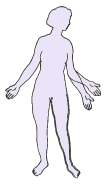 A 64 year old woman developed a phantom third arm after a stroke, but unusually, the patient was able to see and feel the illusory limb. A
  Newsweek has a short but smart
  There is now growing evidence that cannabis use causes a small but reliable increase in the chance of developing psychosis. Traditionally, this was explained by the drug increasing dopamine levels in the brain but a new
  Forbes magazine has an excellent special issue that is rammed full of diverse and interesting
 Mind Hacks